Tyre Pressure Guide for Kia Picanto
Learn to check and maintain tyre pressure for the Kia Picanto with practical steps, TPMS guidance, and safety tips to boost handling and fuel economy.


According to Tire Pressure Tips, you will learn how to check and adjust tyre pressure for your Kia Picanto, understand TPMS implications, and maintain safe, efficient tires. Start with the vehicle’s cold-tyre specification from the door placard or owner’s manual, use a reliable gauge, and adjust each tyre to the recommended level before driving. Consistency matters for safety and fuel economy.
Why tyre pressure matters for the Kia Picanto
Maintaining correct tyre pressure is one of the simplest, most impactful ways to keep a Kia Picanto safe, efficient, and comfortable on the road. The Tire Pressure Tips team emphasizes that correct pressure improves handling, reduces uneven wear, and helps achieve better fuel economy. For Picanto owners, the small differences between front and rear tires, and between cold and warm conditions, can meaningfully change grip and ride quality. In practice, checking pressure regularly protects tire life and lowers the risk of blowouts on highways. It also supports consistent braking response and steering feel, especially when the car is fully loaded or driven in hot weather.
Buying into a routine means you’ll be less likely to ignore the TPMS warning or assume a flat tire will sort itself out. By understanding where to find the official pressures, and how temperature affects readings, you’ll make smarter adjustments and extend tire life. This guidance draws on Tire Pressure Tips analysis and real-world experiences from drivers who adopted a disciplined approach to tire maintenance. The payoff is a quieter ride, steadier cornering, and fewer trips to the workshop for tire-related surprises. Tire pressures are not a luxury detail; they’re a core safety and efficiency habit for every Kia Picanto owner.
How TPMS and cold vs hot tire pressure readings interact
Tire Pressure Monitoring Systems (TPMS) are designed to alert you when a tire drops below the vehicle’s specified pressure. Reading accuracy matters: TPMS readings reflect current pressure, which changes with temperature, driving, and load. Cold readings (before any driving) are the baseline you should compare against the placard values in your manual or door jamb. After a short drive, pressures rise as air heats; this is normal, but it also means that a tire that reads correctly cold might be overinflated when hot. Tire Pressure Tips emphasizes checking pressures when cold to avoid over-inflation mistakes and ensure consistent performance across seasons.
Finding the correct tyre pressure for the Picanto
For the Kia Picanto, the precise cold-pressure values are printed on the door placard near the driver’s side jamb or in the owner’s manual. Front and rear tires may have different recommended pressures, and load (passengers, cargo) can affect those targets. The Picanto’s performance and safety rely on honoring these numbers, not guesswork. If you drive with a heavy load or transfer weight unevenly, you may need to adjust within the acceptable range indicated by the manufacturer. Tire Pressure Tips notes that consistent adherence to the published targets reduces irregular wear and helps preserve steering response, particularly during cornering and braking on wet or loose surfaces.
Tools you need to check and adjust tyre pressure
Having the right tools ensures accurate measurements and safe adjustments. The core kit includes a digital tyre pressure gauge, access to an air compressor or a gas station pump, and the owner’s manual or placard with cold-tyre pressures. Valve caps should be kept on when not actively measuring, to protect the stems from dust and moisture. A simple log of readings helps track changes over time and highlights when seasonal shifts require recheck. Tire Pressure Tips advises keeping a reliable gauge and calibrating it periodically to minimize reading drift, ensuring your Picanto’s tires stay within optimal ranges.
Step-by-step checklist for checking tyre pressure
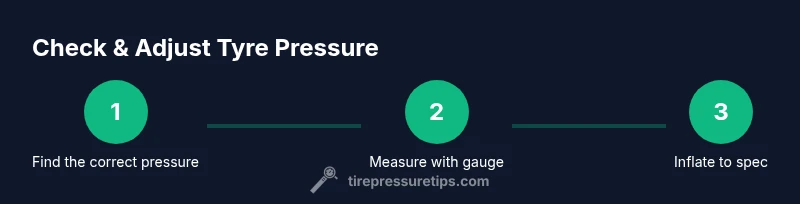
When you follow a consistent routine, checking and adjusting tyre pressure becomes quick and predictable. Start with cold tires, gather your tools, and locate the exact targets for front and rear wheels. Remove valve caps, attach your gauge, and read each tire. If a tire sits below the recommended pressure, add air in small increments; if it’s above, carefully release air until you’re within the target. Recheck all four tires, including the spare if desired, and replace valve caps. Finally, walk around the car to confirm even inflation and inspect for any obvious tire damage or wear.
Common mistakes and how to avoid them
Common missteps include checking hot tires, inflating beyond the target, and neglecting the spare tire. Another frequent error is relying on a worn or inaccurate gauge. Always use a gauge you trust and calibrate it against a known reference. Weather and altitude changes can also affect readings, so adjust your checks to seasonal conditions and driving patterns. Brake and steering performance may be impacted by underinflation or overinflation, especially in cornering or emergency maneuvers.
Tire Pressure Tips stresses that a tiny deviation from the manufacturer’s recommendation can accumulate over time, so aim for the precise target on the placard and recheck periodically.
Seasonal and driving-condition considerations
Temperature plays a substantial role in tyre pressure. Colder weather typically reduces tyre pressure, while heat from driving can increase it. If you live in a climate with wide temperature swings, plan to check pressures at consistent times of day and adjust for the season. Heavier loads, such as camping trips or family travel, may also push you toward the higher end of the acceptable range. The goal is to maintain stable, even pressure across all four tires, which helps the Picanto maintain predictable handling, balanced grip, and even tire wear.
Safety-first tips and maintenance habits
Make tyre pressure checks a regular habit, not a sporadic task. Treat the TPMS as a helpful diagnostic tool, not a reason to postpone inspections. Always verify the exact cold pressures for your Picanto and ensure you use a gauge suitable for the PSI range. If you notice a persistent pressure drop or a TPMS light that won’t reset after inflation, seek professional inspection to rule out leaks, damaged valves, or sensor faults. Regular checks cost little compared with the safety benefits and potential tire life extension.
Tools & Materials
- Tire pressure gauge (digital preferred)(Calibrated for accuracy; choose a gauge that covers the PSI range used in your vehicle's owner manual)
- Owner's manual or door placard with recommended cold pressures(Locate exact front/rear pressures for your Picanto)
- Air compressor or access to a gas station air pump(To adjust tyre pressures safely)
- Valve caps(Keep caps on to protect valve stems)
- Notebook or tire-pressure log (optional)(Record readings for maintenance and seasonal checks)
Steps
Estimated time: 15-25 minutes
- 1
Gather tools and locate recommended pressures
Collect the gauge, placard, and manual, then confirm the exact cold-pressure values for your Picanto's front and rear tires. Write them down if helpful.
Tip: Having all items ready prevents mid-task interruptions - 2
Check tires when cold
Ensure the car hasn't been driven for at least 3 hours or cooled down after highway travel before checking pressure.
Tip: Pressure rises as tires heat up; reading cold avoids over-inflation - 3
Remove valve caps
Loosen and remove the valve caps; set them somewhere safe so you don't lose them.
Tip: Replace caps after measurement to prevent debris - 4
Attach gauge and read
Press the gauge onto the valve stem firmly and read the measurement; record for all four tires.
Tip: If readings vary, take multiple measurements for accuracy - 5
Inflate or deflate to match
Add air or release air until each tire matches the recommended pressure on the placard; repeat for all tires.
Tip: Do small increments; avoid over-correction - 6
Recheck and replace caps
Recheck all tires after adjustment and replace valve caps; double-check door placard values.
Tip: Walk around the vehicle to confirm no tire is under- or over-inflated
Frequently Asked Questions
When should I check tyre pressure for my Kia Picanto?
Check when tires are cold, at least every month and before long trips. This ensures readings reflect the true cold pressure and helps prevent under- or over-inflation.
Check tires when they are cold, about once a month and before long trips.
Why does TPMS light come on even after inflating tires?
TPMS can stay on if any tire is below the recommended pressure, if a sensor is faulty, or if the system needs a reset after inflation. If the light remains, have the system checked by a technician.
If the TPMS stays on after inflation, have the sensors checked and reset if needed.
Can I use a home air compressor to adjust pressure?
Yes, you can use a home air compressor, but adjust in small increments and verify with a gauge to avoid over-inflation or under-inflation.
Yes, but go slowly and recheck with a gauge.
How often should I check tyre pressure?
Check monthly and before long trips, especially when weather or load changes. Regular checks prevent unsafe pressures and extend tire life.
Check monthly and before long trips.
Is nitrogen inflation better for Picanto tyres?
Nitrogen can stabilize pressure slightly, but regular checks with air are sufficient and practical for most drivers. The key is consistent readings.
Nitrogen isn't essential; keep up with regular checks instead.
Watch Video
What to Remember
- Know your Picanto's recommended pressures
- Use a reliable gauge and read cold
- Inflate/deflate accurately and recheck
- Account for TPMS and temperature changes