Tire Pressure Guide for Kia Carnival
Learn how to check and maintain tire pressure on your Kia Carnival. Find official PSI specs, understand TPMS alerts, and follow a practical step-by-step approach to safe inflating and ongoing tire care.


By following this guide, you will confidently check and set the Kia Carnival’s tire pressure, locate the correct PSI for front and rear tires, and interpret TPMS signals. You’ll learn where to find official specs, how often to check, and practical steps to inflate, deflate, or replace tires without risking safety or fuel economy.
Why Tire Pressure Matters for Kia Carnival
Maintaining correct tire pressure is essential for safety, handling, and efficiency in every Kia Carnival. Proper inflation affects braking distance, traction, and ride comfort, and it also reduces uneven wear that shortens tire life. According to Tire Pressure Tips, maintaining proper tire pressure is one of the simplest, most impactful things a driver can do to improve overall vehicle performance. The Carnival’s weight distribution across four tires means both front and rear pressures matter, and load—such as passengers or cargo—can shift the target slightly. You’ll hear TPMS warnings when a tire gets too soft or too hard, but the real best practice is to verify pressure with a gauge when the tires are cold. In practice, households with regular city commuting or blended highway use benefit from checking monthly and before long trips. By keeping tires inflated near the OEM spec, you maintain predictable steering response, efficient fuel consumption, and even tire wear, which translates into fewer expensive replacements down the road. This approach also helps with cold-weather grip and stability during wet or icy conditions, where underinflation can magnify hydroplaning risk.
Finding the Correct Tire Pressure for Your Kia Carnival
Unlike a one-size-fits-all number, the Kia Carnival’s tire pressure specification accounts for wheel size, trim, and load. Start by locating the official PSI on the driver’s door placard, usually on the inner edge of the door frame. The placard shows separate values for front and rear tires, and it may note a higher pressure when the vehicle is loaded for a road trip or towing. If the placard is missing or you want a secondary source, consult the owner’s manual or the tire information placard on the fuel filler door; manufacturers sometimes place the spec there. Do not rely on the tire’s maximum sidewall pressure as your operating target; that maximum is for safety in extreme conditions, not for regular daily use. In many Kia Carnival configurations, you’ll find a recommended range rather than a single exact number to accommodate different loads. For winter driving, some owners adjust within the range to maintain predictable handling, but always verify with the official sources. Finally, double-check that all tires—including the spare—have comparable pressure to avoid uneven rolling resistance and potential steering quirks.
Understanding TPMS and Your Kia Carnival
TPMS (tire pressure monitoring system) helps you monitor inflation automatically. In most Kia Carnival models, the sensors inside each tire relay pressure data to the vehicle’s computer, which will trigger a warning light if a tire falls a certain amount below the target. Temperature can influence readings; cold mornings often reveal low pressure that has built up overnight, while a warm drive can temporarily raise pressure. TPMS is a supplemental guide, not a substitute for manual checks. When the warning illuminates, first verify all tires are cold and inflated to the spec, then drive short distances and recheck; if the light persists or you see obvious signs of underinflation or a slow leak, inspect the tire for punctures or consult a repair shop. For wheel-and-tire maintenance, ensure the TPMS sensors are activated and calibrated after any tire rotation or replacement, because miscalibration can cause inaccurate readings.
How to Check and Adjust Tire Pressure: A Practical Approach
Regular checks are straightforward and quick. Use a reliable gauge, measure when cold, and adjust to the official PSI using a compressor or pump at a gas station. If one tire is noticeably different, inspect for leaks or damage. For best results, perform checks after the vehicle has rested for several hours and before a long trip. Small, incremental adjustments help you reach the target without overinflating, which can reduce grip and increase wear on the center tread. If you notice sudden changes in pressure that aren’t due to temperature or load, consider a professional inspection for leaks, damaged valves, or punctures.
Seasonality, Load, and Driving Habits That Change Tire Pressure
Seasonal temperature shifts influence tire pressure; cold air contracts and reduces PSI, while heat expands it. Heavier loads, like camping gear or a full family trip, can require higher pressures to maintain stable handling and even wear across tires. Regular driving habits also matter: frequent highway driving tends to stabilize pressure, while stop-and-go city commuting may show slower tire warm-up and slight fluctuations. In all cases, use the vehicle’s official specifications as your baseline, and check after any major change in load or weather. A consistent routine helps you spot gradual pressure loss due to leaks or aging components before they cause tire failure.
Maintenance, Safety, and When to Seek Help
Routine maintenance is a low-cost investment in safety and performance. Check tire pressure at least monthly, before long trips, and after seasonal temperature swings. If the TPMS warning persists after inflating to spec, or if you see bulges, cracking, or excessive wear on any tire, seek professional assistance promptly. Spare tires also deserve attention; keep them inflated to a safe level and replace them according to the vehicle’s maintenance schedule. Remember that TPMS is a safeguard, not a guarantee—manual checks remain essential for accuracy and early detection of issues.
Tools & Materials
- Tire pressure gauge(Digital or analog; ensure it's calibrated)
- Air compressor or access to gas station air pumps(Prefer a built-in gauge on the compressor for accuracy)
- Owner's manual for Kia Carnival(Find the official PSI and load recommendations)
- Driver's door placard (tire info)(Contains the recommended front/rear PSI)
- Spare tire and jack (optional)(Useful if a tire must be replaced on the road)
Steps
Estimated time: 25-40 minutes
- 1
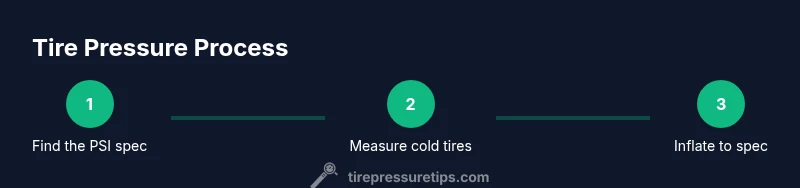
Locate the official tire pressure spec
Find the recommended PSI on the driver’s door placard or in the owner's manual. Note any differences between front and rear tires and any caveats for heavy loads.
Tip: Verify with the tire sidewall max, but do not inflate to that maximum in daily use. - 2
Check cold tire pressure
Measure before the tires have warmed up from driving. Readings taken when cold are most accurate for inflating.
Tip: If you’ve driven recently, wait at least 3 hours or check after overnight cooling. - 3
Inflate or deflate to target PSI
Add or release air to reach the target PSI for each tire. Use the gauge frequently to guide adjustments and recheck after changes.
Tip: Make small adjustments and recheck; small changes improve accuracy. - 4
Check all tires including spare
Ensure all four tires and the spare have pressures within the same range to avoid uneven handling.
Tip: Tires can diverge slightly; aim for consistency within the manufacturer’s spec. - 5
Reinstall valve caps and seal
Tighten valve caps securely to prevent leaks and debris ingress.
Tip: Do not overtighten metal valve caps; they can crack threads. - 6
Document your readings
Record the date, vehicle load, and PSI for future reference and trend tracking.
Tip: Keep a small log in the glovebox to monitor gradual changes.
Frequently Asked Questions
Where can I find the recommended tire pressure for my Kia Carnival?
Check the driver’s door placard or the owner's manual for the official PSI. Some models also show the spec on the fuel-filler door placard. Always use the vehicle’s spec rather than the tire’s maximum rating.
Check the door placard or owner's manual for the official PSI; use the vehicle's spec, not the tire maximum.
How often should I check tire pressure?
Aim to check at least once a month and before long trips. Temperature changes and load adjustments make regular checks important for safety and efficiency.
Check at least monthly and before long trips.
Why does TPMS show low pressure even after inflation?
TPMS relies on sensors and can be affected by temperature, leaks, or sensor calibration. If readings persist after inflating to spec, inspect tires and consider sensor service.
TPMS readings can be affected by temperature or a slow leak; inspect if the light stays on.
Is it okay to inflate tires to the max sidewall pressure?
No. Inflate to the vehicle’s recommended PSI, not the tire’s maximum rating, which is only a safety limit for extreme conditions.
Never inflate to the maximum; use the vehicle’s recommended PSI.
What should I do if the TPMS light stays on after inflation?
Recheck all tires when cold, ensure caps are tight, and verify the readings. If the light remains on, have the TPMS system inspected for sensor issues or leaks.
If the light stays on after inflating to spec, have the TPMS inspected.
Can I check tire pressure in a cold garage?
Yes. A cold environment improves reading accuracy. Avoid checking right after driving since heat can inflate readings.
Yes, cold conditions help accuracy. Don’t check right after driving.
Watch Video
What to Remember
- Check cold, read with a gauge, follow official PSI on placard
- Avoid inflating to the tire’s maximum; target the vehicle spec
- TPMS supports safety but verify with manual checks
- Regular checks save fuel and extend tire life
- Log PSI changes to monitor wear and load needs