Tyre Pressure for Beach Driving: A Practical Guide
Learn how to set tyre pressure for beach driving with practical steps, safety tips, and TPMS guidance from Tire Pressure Tips. Optimize traction, protect tires, and avoid common mistakes on sand.


Goal: Learn how to optimize tyre pressure for beach driving, balancing traction, buoyancy, and tire safety. This guide covers safe pressure ranges, how to adjust for dry and soft sand, and TPMS considerations. You’ll need a calibrated gauge, a portable pump, and the vehicle’s OEM pressures as your baseline. Also bring a backup gauge and plan for small adjustments.
Why tyre pressure for beach driving matters
When you head to the beach, your tires face a different set of challenges than on paved roads. The sand, salt, and humidity alter traction, heat buildup, and the way a tire deforms under load. Getting tyre pressure right is a simple, repeatable way to improve flotation on soft surfaces and protect the bead and sidewall from damage when you slip or scrape along rutted sand. According to Tire Pressure Tips, the right pressure balances two competing goals: maximize the contact patch for grip and preserve ride stability. Too much pressure reduces the tire’s footprint, making you more likely to sink in soft sand; too little pressure can cause bead failure, heat buildup, and poor steering. Your plan should start with your OEM specification and then adapt to beach conditions, vehicle load, and temperature. By thinking in terms of a safety margin rather than a single number, you give yourself flexibility to adjust quickly when the terrain changes. tyre pressure for beach driving is not a one-size-fits-all setting; it’s a deliberate, test-based process.
How beach terrain changes traction and ride
Beach surfaces are dynamic. Dry, fluffy sand offers little resistance and can bury tires if you stay at OEM pressures. Wet, packed sand behaves more like a slippery highway surface but with lower grip and higher risk of sliding if pressures are too low. Temperature also affects sand consistency; heat can soften sand further, changing how your tires float and bite. The goal is to maintain a predictable feel: enough deflation to float on sand, but not so little that the tire bead risks damage or the vehicle becomes unstable. For drivers, the key is to assess the terrain first: is the sand compact and damp near the waterline, or loose and dry further up the beach? The Tire Pressure Tips team emphasizes documenting how your vehicle responds on different sections of the same beach to build a practical baseline for future trips.
Baseline: OEM pressures vs beach-specific needs
Your starting point is the OEM tyre pressure recommended by the vehicle manufacturer. This baseline is designed for asphalt and typical loads, not necessarily beach sand. For beach driving, many drivers find it helpful to compare the OEM spec with actual performance on the sand. If you notice excessive steering effort, poor flotation, or frequent bogging, you’ll know you’re not using enough contact patch. If you notice excessive tire squirm, bead heat, or uneven wear, you may be over-deflating. The Tire Pressure Tips approach is to use the OEM as the anchor, then adjust in small increments based on terrain, speed, and passenger/load weight. Keep a log of the pressures you end up using on various beaches and conditions to refine your personal beach mode.
Safe pressure ranges for dry, wet, and packed sand
Beach conditions fall into three broad categories: dry, wet/packed, and irregular or dune terrain. For each, focus on maintaining a stable contact patch while preventing bead damage and overheating. Dry sand typically requires more flotation than asphalt, which means lower pressures than the OEM baseline, but the exact target should be determined by feel and measurements. Wet sand can offer better grip, yet slick surfaces demand careful traction control and moderate deflation to avoid hydroplaning. Packed sand needs enough deflation to prevent sinking but enough stiffness to retain steering. The guidance from Tire Pressure Tips is to start at the OEM baseline, deflate in small, testable steps, and recheck on the spot using a calibrated gauge. Avoid a single fixed number; adapt to conditions and vehicle load.
Pressure adjustment workflow: tools, measurements, and steps
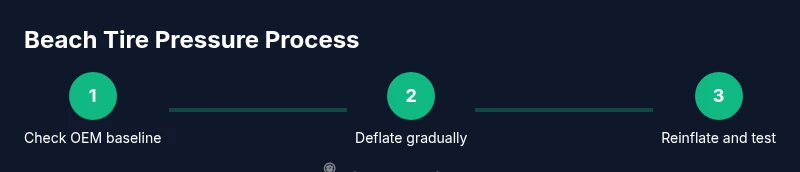
As you prepare, gather a reliable tyre pressure gauge, a portable air pump, the OEM pressure chart, and a method to verify readings on cold tires. Begin by checking each tire’s pressure when cold and recording the values. Deflate gradually for sand by small increments, then recheck the gauge and visually inspect the bead and sidewall for any signs of stress. If you notice performance issues, reassess and adjust. Once you reach a satisfactory feel on the sand, test on a firm surface to confirm stability before resuming driving. Document the numbers after adjustments for easy reference on future trips. Always re-check pressures after a drive, especially if you encounter potholes, rocks, or long beach stretches that heat tires unevenly.
Rechecking and maintaining pressure during beach stops
During a beach day, stop periodically to re-check pressure when you change sections or reposition your vehicle. Sand can shift beneath tires as you move, and the tires may heat up, altering pressure readings. Use a bench stop or solid, flat ground to take a measurement. If you need to re-inflate after a sand section, do so slowly and check for any leaks or valve issues. Keeping spare valve caps and backup gauges is a prudent precaution. After the beach, return to the road with fresh readings and inflate to the OEM spec once tires have cooled. A reliable recheck ensures safe handling on pavement and preserves tire life.
Temperature, elevation, and long-drive considerations
Temperature and elevation influence tyre pressure. In hot environments, pressure readings can rise as tires heat up; on cold mornings, the readings will register lower. If you’re taking a long beach drive, adjust pressure gradually to accommodate the expected changes in load and terrain ahead. For high-elevation beaches, the air pressure and ambient conditions can alter tire behavior significantly. Track how your tires respond at different times of day and on different sections of the same beach, and adjust accordingly. Tire Pressure Tips recommends carrying a portable gauge and planning mid-trip checks to maintain consistent performance throughout the trip.
TPMS considerations and safety checks on the beach
TPMS provides a helpful safety net by alerting you to under- or overinflation, but it isn’t a substitute for a manual gauge on the sand. A TPMS warning should prompt an immediate, careful check with a calibrated gauge. For sensitive systems or when using a temporary deflation, know how to reset TPMS after inflating. If you notice a warning that doesn’t align with gauge readings, trust the physical measurement first and address any sensor issues after you’ve safely returned to a paved surface. During beach days, it’s wise to learn the TPMS’s behavior and the gauge readings that correspond to your vehicle’s typical responses.
Safety, equipment, and emergency preparedness
Drive with a partner if possible when driving on challenging beach terrain. Keep a basic tool kit and a backup gauge accessible. Ensure you have a plan for getting unstuck, including traction aids or a recovery rope if you encounter bogging down. Be mindful of tire pressure changes caused by sand and heat, and avoid over-deflating beyond what your vehicle can safely handle. The Tire Pressure Tips team emphasizes that safety comes first: never attempt to make extreme deflations on busy beaches or near water edges. Prepare ahead, monitor continuously, and choose conservative deflation strategies to minimize risk.
Practical examples and quick reference cheatsheet
Here are practical takeaways you can apply on your next beach trip: Start with OEM, observe terrain, deflate gradually by small steps, recheck with a gauge, and compare your vehicle’s response in different beach sections. Always inflate back to the OEM spec after leaving the beach and tires have cooled. If you’re unsure, err on the side of higher stability and recheck later. For quick reference, keep a cheat sheet with your vehicle’s OEM front/rear pressures, the typical deflation approach, and the steps to restore pressure after the trip. This approach aligns with Tire Pressure Tips guidance and helps you stay safe on sand while protecting your tires.
Authoritative sources and further reading
- https://www.nhtsa.gov/equipment/tires
- https://www.goodyear.com/en-US/tires/how-to-check-tire-pressure
- https://www.michelinman.com/auto/tires/pressure.html
Tools & Materials
- Tire pressure gauge (dial or digital)(Calibrated; measure cold readings; bring a backup if possible)
- Portable air compressor or manual pump(Ensure compatibility with your valve stems; bring appropriate power source)
- OEM pressure chart or vehicle manual(Front/rear values and load-based adjustments)
- Soapy water bottle for leak checks(Check valve caps and stem for leaks before/after adjustment)
- Spare valve caps and tools to remove caps(Keep caps clean to prevent debris in valve cores)
- Notepad or app to log readings(Record pressures for different beaches and conditions)
Steps
Estimated time: 60-90 minutes
- 1
Check OEM baseline
Locate the manufacturer’s recommended cold tyre pressures for your vehicle. Record front and rear values for reference. This gives you a safe starting point before beach adjustments.
Tip: If your vehicle uses seat-load-based pressures, prioritize the loads you’ll carry on the beach. - 2
Inspect beach conditions
Assess sand dryness, water proximity, and the presence of rocks. Decide whether you’ll start with a conservative deflation or a moderate deflation based on terrain.
Tip: Dry, loose sand often requires more flotation; plan to test a bit more deflation in that area. - 3
Measure cold pressures
Before deflating, measure each tire’s pressure when the tires are cold and the vehicle has been stationary. Record these readings.
Tip: Cold readings prevent inaccuracies caused by heat in the tire from recent driving. - 4
Deflate gradually
Deflate in small increments and recheck after each change. Keep an eye on how the tire bead seats and how the vehicle handles on sand.
Tip: Avoid a single large deflation; small steps help maintain control and bead integrity. - 5
Recheck with gauge
Use the gauge to confirm current pressures after deflation. Look for stable readings across all tires.
Tip: Take readings on the same flat surface to minimize measurement errors. - 6
Test on sand surface
Drive a short, controlled distance on the beach to assess flotation and steering response. If handling feels off, adjust accordingly.
Tip: If you feel instability, recheck and slightly increase pressure for stability. - 7
Reassess tire wear risk
Check for excessive bead deformation, sidewall flex, or unusual heat buildup after initial passes.
Tip: Don’t push tires beyond safe deflation limits; safety comes first on sand. - 8
Infate back after leaving sand
Once you’ve finished beach driving, reinflate tires to OEM specifications on a solid surface after tires cool.
Tip: Take final readings after cooling to confirm true pressures. - 9
Reset TPMS if needed
If you’ve deflated and then inflated, reset the TPMS according to your vehicle’s manual, ensuring alerts are calibrated.
Tip: If TPMS readings seem inconsistent, verify with a manual gauge. - 10
Document outcomes
Note the pressures that worked best for the beach you visited and the weather/terrain conditions. Use these notes for future trips.
Tip: Maintain a simple log for quick reference next time. - 11
Carry spare gear
Bring backup gauges, a compact pump, and basic tools for contingency planning.
Tip: Pre-pack essentials in a waterproof bag for quick access. - 12
Conclude with safety checks
Before returning to pavement, perform a final safety check: pressure consistency, TPMS status, and visual tire inspection.
Tip: A quick final check prevents surprises when you hit asphalt.
Frequently Asked Questions
How should I verify the correct tyre pressure before driving on a beach?
Check the manufacturer’s OEM pressures, measure tires when cold, and compare with your observed beach behavior. Use a calibrated gauge and log the results for future trips.
Check the OEM specs, measure cold tires, and compare with how they behave on sand. Log the readings for next time.
Is it safe to drive with reduced pressure on wet sand?
Lower pressures can help flotation on wet sand, but avoid underinflation that compromises steering or beads. Recheck frequently and adjust as needed.
Lower pressures can help on wet sand, but don’t deflate too much; recheck often.
How do I know when to re-inflate after leaving the beach?
Return to a paved surface and reinflate to OEM specs after tires have cooled. Recheck once on level ground to confirm true readings.
Back on pavement, inflate to OEM specs after tires cool, then recheck.
How does beach driving affect tire wear?
Improper deflation can cause bead damage or heat buildup. Maintain careful deflation, avoid extreme numbers, and monitor heat after long sand sections.
Be mindful of bead wear and heat; adjust deflation gradually and monitor heat.
What TPMS concerns should I expect on a beach trip?
TPMS may alert during pressure changes. Use a manual gauge to confirm readings and reset the system after inflating.
TPMS can warn; verify with a gauge and reset if needed after inflation.
What if a tire leaks while I'm on the beach?
Stop safely, inspect the valve and bead area, and seek assistance if you suspect a tire will not seal. Do not drive long distances on a flat.
If you encounter a leak, stop safely and inspect; seek help if needed.
Watch Video
What to Remember
- Start with OEM baseline and assess beach conditions
- Deflate gradually and verify with a gauge
- Reinflate after beach with tires cooled
- Monitor TPMS and keep a quick-reference log