Psi Tyre Pressure: A Practical, Educational Guide for Safe Driving
Learn how to check and maintain psi tyre pressure safely. This guide covers cold readings, door placards, TPMS, tools, step-by-step actions, seasonal tips, and a maintenance plan to extend tire life and improve fuel efficiency.


You will learn how to check and adjust psi tyre pressure for optimal safety, fuel efficiency and tire wear. This includes reading the correct pressure from the door placard or owner's manual, using a reliable gauge, and adjusting cold tires to the recommended value. Temperature and TPMS can influence readings.
Why psi tyre pressure matters for safety and efficiency
Maintaining the correct psi tyre pressure is a simple, high-impact habit that affects braking distance, steering response, tire wear, and fuel economy. When tires are underinflated, the contact patch with the road grows and causes more rolling resistance, leading to higher fuel use and uneven wear. Overinflated tires reduce the contact patch, diminishing grip in wet or slippery conditions and increasing the risk of a sudden puncture. The Tire Pressure Tips team emphasizes that consistent, accurate tire pressures help your car handle as designed, especially when carrying passengers or heavy loads. Readings should be taken in a consistent manner and should reflect the vehicle’s official recommendations. Temperature changes, driving history, and TPMS signals can affect readings, so use the recommended value as your baseline and adjust only when needed. This is a practical safety habit that also protects your tires and wheels over time.
Understanding the correct psi for your vehicle
The precise pressure you should run is not arbitrary; it’s determined by the vehicle manufacturer and is listed on a door jamb sticker, in the owner’s manual, and sometimes in the glovebox. In many vehicles, the front and rear tires have the same psi, but some cars require slightly different values depending on load or drivetrain configuration. Always compare what you read on the gauge with the official spec and adjust in small increments. If you aren’t sure which value to use, consult your owner’s manual or user guide. The door placard is the quickest, most reliable source. If you’ve recently changed tire size or swapped wheels, re-check the label to confirm compatibility with your new setup.
Cold readings vs hot readings: timing matters
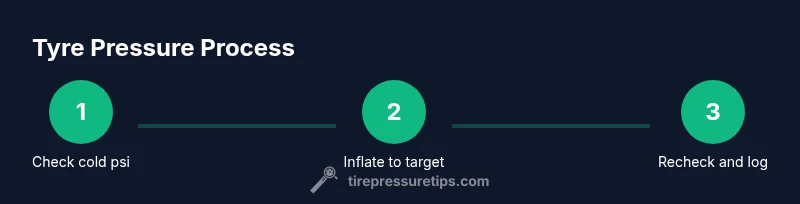
Tire pressure changes with temperature and road use. A tire can gain several psi after a long drive as it warms up, so measuring when tires are hot will yield an inaccurate result. The best practice is to check pressure when the tires are cold, ideally after the car has been stationary for at least three hours or first thing in the morning. If you must check after a drive, plan to wait at least 30 minutes for tires to cool before rechecking. This discipline ensures consistency and helps you maintain proper pressure more reliably.
Tools that improve accuracy
A good tire pressure gauge—digital or analog—will directly influence your ability to inflate correctly. A high-quality gauge provides a clear, stable readout without drift. At minimum, you should have access to a reliable gauge and an air source (air compressor at home or at a gas station) that can deliver precise increments, typically 1 PSI or 0.5 PSI. Calibrating your gauge occasionally against a known standard keeps readings trustworthy. If you’re unsure about your gauge’s accuracy, cross-check with a second gauge to confirm readings.
Reading labels, TPMS, and actual practice
TPMS (tire pressure monitoring system) provides a live signal if a tire is underinflated. Reading a TPMS alert is not the same as verifying actual tire pressure with a gauge, but it’s a helpful warning mechanism. Use the door placard values as your primary target, then confirm with a gauge. If a TPMS warning appears, start by checking the pressure of all tires when cold and then inflate/deflate as required to reach the recommended values. If the TPMS reading seems inconsistent with manual readings, inspect for slow leaks, damaged valves, or a faulty sensor.
Seasonal considerations and driving loads
Seasonal temperatures can shift tire pressures noticeably: cold weather lowers psi, while hot days can raise it. In winter, pressures can drop by 1–2 PSI for every 10°C drop in temperature. When you drive with a heavy load or on long highway trips, you may need a higher psi to account for the extra weight. Refer to the placard and adjust gradually; avoid inflating beyond the maximum pressure listed on the tire sidewall, and always recheck after changes.
A simple maintenance routine you can trust
Creating a regular schedule makes tire pressure a quick, repeatable task rather than an afterthought. Start by checking all tires, including the spare where applicable, once a month and before long trips. Keep a written log of readings and target values, updating after any adjustment. This habit helps reduce wear, extend tire life, and improve fuel economy. The Tire Pressure Tips approach is to treat tire pressure as part of routine vehicle maintenance rather than a one-off check.
Tools & Materials
- Digital tire pressure gauge or analog gauge(Ensure readability and accuracy; consider a gauge with 1 PSI precision.)
- Air compressor or access to gas station air pump(Prefer a gauge-integrated compressor to measure as you inflate.)
- Owner’s manual / door placard information(Source of the official PSI/KPA values for each tire.)
- Tire inflation valve caps (optional spare)(Cap valves prevent dirt; replace if missing.)
- Notebook or app to log readings(Helpful for tracking changes over time.)
- Thermometer (optional)(Helps contextualize temperature effects when mapping psi changes.)
Steps
Estimated time: 30-45 minutes
- 1
Prepare and gather tools
Park on a level surface and engage the parking brake. Collect your gauge, air source, and the vehicle’s PSI specification from the placard or manual. This ensures you start with accurate data and the right tools before touching valves.
Tip: Have a notebook ready to record initial readings and target values. - 2
Find the correct target pressure
Locate the recommended psi values for your tires from the door placard. If the car uses different values for front and rear, note each one and plan to test accordingly.
Tip: If you recently changed tires, recheck the placard as values can differ with wheel size or load ratings. - 3
Check tires when cold
Remove valve caps and firmly attach your gauge to the valve stem. Read the pressure and compare to the target; ensure the reading stabilizes before recording.
Tip: If tires are warm, wait until they cool for an accurate measurement. - 4
Adjust pressure as needed
Inflate or deflate in small increments (1–2 psi at a time) until the gauge matches the target value on each tire. Recheck after adjustments to confirm accuracy.
Tip: Inflate all tires to their respective targets rather than guessing a common number for all four. - 5
Recheck and verify TPMS
If your TPMS warned or suggested a change, verify with a gauge after inflation. Ensure the TPMS light resets if your system requires sensor recalibration.
Tip: If the TPMS remains illuminated after adjustment, consult a technician; sensor issues can mimic low pressure. - 6
Record and maintain
Log readings for all tires, including date, time, ambient temperature, and any notes about load. This helps track seasonal shifts and informs future adjustments.
Tip: Keep the log accessible for quick reference before trips or long drives. - 7
Check the spare tire
If you carry a spare, check its pressure too. Spare tires are often neglected and can fail when you need them most.
Tip: Maintain spare pressure at its recommended level to ensure readiness.
Frequently Asked Questions
What does psi tyre pressure mean and why is it important?
Psi stands for pounds per square inch. It measures how much air pressure is inside the tire. Proper psi ensures even contact with the road, optimal handling, better fuel efficiency, and longer tire life.
Psis measure tire air pressure and affect handling and wear. Keep to the manufacturer’s recommended value for safety and efficiency.
How often should I check my tire pressure?
Check at least once a month and before long trips. Use cold readings for accuracy, and adjust as the seasons change or when carrying heavy loads.
Check monthly and before trips when tires are cold.
Can I rely solely on the TPMS warning?
TPMS warns when pressure is below a threshold, but it does not replace regular gauge checks. Always confirm with a gauge for an exact PSI.
TPMS helps but you should verify with a gauge for precise pressure.
Why should I adjust tire pressure for load or highway driving?
A heavier load or higher speeds increase tire pressure demand. Adjust to the vehicle’s recommended values to maintain grip and wear patterns.
Heavier loads or highway speeds can change required pressure; follow the placard.
Is it better to inflate tires to a higher or lower value in winter?
Winter typically lowers tire pressure. Check and adjust to the recommended cold PSI and inspect for issues like leaks or valve damage.
In winter, check and adjust to the cold PSI for your tires.
What should I do if my readings vary between gauges?
Cross-check with a second, trusted gauge. If readings remain inconsistent, recalibrate or replace the gauge, and inspect the valve stems for leaks.
If gauges differ, verify with a second gauge and inspect for leaks.
Watch Video
What to Remember
- Check tires when cold before driving.
- Use a reliable gauge and confirm against the placard values.
- Inflate in small increments and recheck for accuracy.
- Log readings for ongoing maintenance.