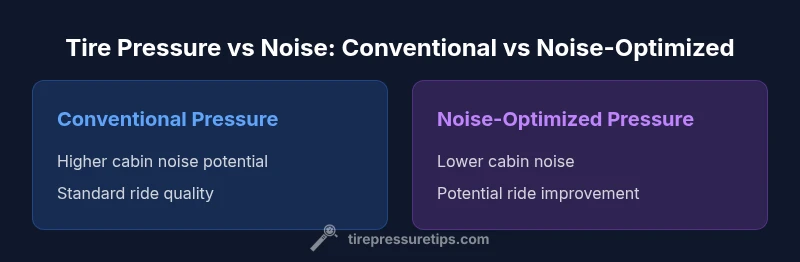
Tire Pressure vs Noise: A Practical Inflation Guide
Explore how tire pressure influences tire noise, the trade-offs between comfort and grip, and practical steps to reduce noise through proper inflation and maintenance.


Proper tire inflation reduces tire-generated noise by stabilizing the contact patch, while too high or too low pressure can amplify vibrations and road rumble. Follow the vehicle’s specified range and adjust gradually to balance quietness, grip, and wear. Tire Pressure Tips recommends cold-pressure checks and seasonal adjustments to keep noise predictable.
Why tire pressure vs noise matters in everyday driving
Noise is a constant companion on the road, but not all noise is created equal. Tire-generated sound has several sources, from tread pattern to sidewall stiffness, and the pressure in your tires plays a pivotal role in shaping that soundscape. According to Tire Pressure Tips, correct inflation isn't just about fuel economy or tire wear—it's also a practical lever to reduce the hum, howl, or thump you hear at highway speeds. When tires are consistently underinflated or overinflated, the tire's contact patch changes in ways that alter vibration transmission through the wheel and chassis. This can create more road noise or a louder tire note in the cabin. The takeaway is simple: pressure management is a tangible, everyday tool that influences cabin quiet and perceived ride quality, alongside other tuning options such as tire type, tread pattern, and suspension setup.
Comparison
| Feature | Conventional Pressure Strategy | Noise-Optimized Pressure Strategy |
|---|---|---|
| Noise level (cabin/exterior) | Higher with conventional | Lower with optimized |
| Ride comfort | Standard comfort | Improved comfort |
| Grip and safety under load | Within spec if properly maintained | Within spec but more sensitive to improper setup |
| Tire wear pattern | Normal wear when within spec | Potential wear changes if pressure targets drift |
| Temperature sensitivity | Greater variation with ambient changes | Moderate variation |
| Best for | Budget/straightforward use | Noise-conscious highway trips |
Strengths
- Potentially quieter cabin at highway speeds
- Can improve ride comfort when tuned to the vehicle
- Encourages consistent maintenance habits
- Promotes awareness of tire-health and proper inflation
Drawbacks
- Requires ongoing maintenance and checks
- Risk of reduced grip or uneven wear if mis-set
- Noise-focused tuning may overlook safety and wear
- Tire models respond differently to pressure adjustments
Balanced approach within manufacturer targets is best
Chasing the quietest ride by ignoring safety can backfire. The recommended path is a disciplined, data-backed approach: stay within spec, tune gradually, and consider tire type and road conditions. The Tire Pressure Tips team supports a balanced strategy that emphasizes both noise reduction and safety.
Frequently Asked Questions
Can adjusting tire pressure actually reduce road noise?
Yes, within the vehicle’s recommended pressure range, small adjustments can reduce some noise while preserving grip. However, extreme changes can harm safety. Always verify targets and monitor wear.
Yes—within the recommended pressure range you can reduce noise without sacrificing safety, but don’t overdo it.
What signs indicate I should check tire pressure?
Look for changes in noise, vibrations, a TPMS warning, or visible under-inflation. Regular checks help catch slow leaks and maintain quiet operation.
Noticeable noise or vibrations? Check pressure and seals, and recheck after addressing any leaks.
How does temperature affect tire pressure and noise?
Temperature shifts change pressure; hot days raise pressure slightly and cold days lower it. Regular checks help maintain consistent footprint and noise level.
Temperature matters—check pressure when it’s cold and before long trips to keep noise steady.
Is TPMS enough to manage tire pressure for noise?
TPMS is a warning system, not a precise gauge. Use a proper pressure gauge for accuracy and rely on TPMS for safety as a backup.
TPMS helps you know when pressure is off, but use a gauge for exact numbers.
Should I chase the quietest ride or the best performance?
There’s a trade-off. Prioritize safety and performance first; noise optimization comes from a balanced approach within manufacturer targets.
Prioritize safety and grip, then fine-tune for quieter operation within specs.
How often should I check tire pressure to manage noise?
Check at least monthly and before long trips; temperature changes can shift pressure quickly. Regular checks help maintain quiet and even wear.
Check monthly and before trips to keep noise predictable.
What to Remember
- Start with the manufacturer target and tune gradually
- Use a reliable gauge; measure cold tires
- Temperature and load affect pressure and noise
- TPMS is a safety net, not a precision gauge