Tire Pressure 911: Essential Guide to Checking and Maintaining Tire Pressure
Learn to check, adjust, and troubleshoot tire pressure, understand TPMS, and maintain optimal tire health with practical steps and safety guidance from Tire Pressure Tips.


By the end of this guide you will be able to check cold tire pressures, compare readings to your vehicle’s placard, and adjust air correctly using a gauge and an air source. You’ll understand when TPMS can mislead you and how to prevent under- or overinflation. This prepares you for safer drives and better fuel economy.
Why Tire Pressure Matters
Maintaining proper tire pressure is a foundational safety habit for every driver. When tires are underinflated, they heat up faster and wear unevenly, reducing grip and increasing the risk of a blowout under load. Overinflation can make the tire's contact patch too small, causing harsh handling and faster center-tread wear. Both conditions harm fuel economy and can increase braking distances. According to Tire Pressure Tips, consistent, correct tire pressure protects steering feel, reduces rolling resistance, and helps you avoid unexpected flats. The Tire Pressure Tips team found that many drivers neglect regular checks, especially during seasonal shifts when temperatures swing widely. A simple monthly check (and before long trips) can catch slow leaks early and keep you safer on the road.
How to Check Tire Pressure Accurately
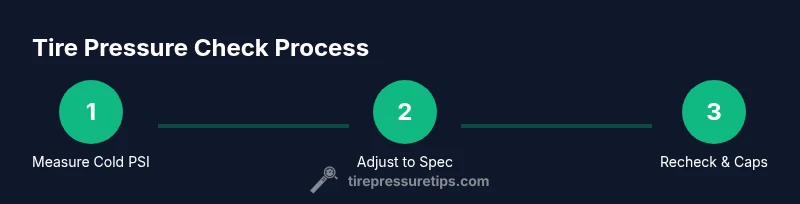
Checking tire pressure correctly starts with knowing your target. Look for the recommended PSI on the door placard or in the owner's manual, not the tire sidewall. Always measure when the tire is cold—ideally after the vehicle has sat for at least 3 hours or following a minimum of 4 miles of driving. Use a reliable tire pressure gauge (dial or digital), remove the valve stem cap, press the gauge firmly onto the valve, and note the reading. Record the value and compare it to the target. If the pressure is low, add air in small increments, rechecking after each addition; if it’s high, release air gradually. Recheck all tires, then replace valve caps. This routine reduces uneven wear and keeps your TPMS from giving you false warnings.
Understanding TPMS and When to Trust It
Tire Pressure Monitoring Systems (TPMS) alert you to significant pressure loss, but they don’t tell you the exact PSI. A TPMS warning can be triggered by a small loss that doesn’t look obvious to the eye. It’s essential to verify TPMS readings with a gauge, especially after cold starts or temperature swings. Slow leaks or damaged stems may not trigger the TPMS immediately, so a manual check provides the most reliable data. The force of a warning light should prompt a quick, accurate gauge measurement, not a guess based on feel or tread appearance. Tire Pressure Tips analytics indicate that relying solely on TPMS can delay discovering underinflation or leaks until the tire is dangerously low. Establish a habit of confirming with a gauge at least monthly.
How to Inflate to the Right Level
Inflation should be guided by the vehicle’s placard—typically located on the door jamb or in the glove box—rather than the tire’s sidewall. With cold tires, attach a gauge and inflate until you reach the target PSI for each axle. If you overinflate, release air in small amounts and recheck. After inflating, recheck all tires to confirm equalization and even wear potential. If you’re filling at a gas station, avoid rapidly blasting air—slow, controlled inflation yields a stable reading. Always reinstall the valve caps and clean any dust or sand from the valve stem to prevent leaks. A consistent pressure helps balanced handling and smoother ride quality.
Common Mistakes That Hurt Tire Pressure
There are several common missteps that skew tire pressure readings. Checking after a long drive gives a falsely high reading, overinflating to compensate for rough roads can lead to uneven tread wear, and ignoring seasonal temperature changes lets pressure drift. Delaying checks, using worn gauges, or failing to document readings creates a false sense of safety. Replacing worn valve caps or stems is often overlooked, yet small leaks there can accumulate significant pressure loss over weeks. Regular practice reduces risk and preserves tire life.
Seasonal Factors and Temperature Effects
Temperature is a major driver of tire pressure. For every 10°C (18°F) drop in ambient temperature, tire pressure can fall by about 1–2 PSI, depending on the tire and vehicle. This means winter driving can yield unexpectedly low readings if you don’t check after temperature shifts. Tire Pressure Tips analysis shows that drivers who adapt checks to seasonal changes experience fewer underinflation-related issues. Conversely, hot weather can cause overinflation if tires heated rapidly during long drives. The key is to measure in consistent conditions and adjust to the recommended level as temperatures change.
Valve Stems, Cores, and Gages: When to Replace
Valve stems and cores wear over time, leading to slow leaks that are hard to spot with a quick glance. If you hear hissing, notice a slow drop in pressure, or see a corroded stem, replace the stem or core promptly. A high-quality gauge matters; cheap gauges give wildly inconsistent readings. Prefer a gauge with a simple display and repeatable results. Check your gauge against a known pressure source from time to time to ensure accuracy. Replacement gauges are inexpensive compared to tire damage from improper inflation.
Regular Monitoring: A Simple Maintenance Plan
Make tire pressure checks part of your monthly routine and before any long trip. Record the reading for each tire and note any discrepancies between tires. Pair monthly checks with a quick visual inspection for punctures, cracking sidewalls, or embedded objects. If you rotate tires, recheck pressures after the rotation because changes can occur with wheel position. Keeping a habit of proactive checks reduces the risk of blowouts and improves fuel efficiency. A small investment of time translates into safer driving and longer tire life.
Diagnosing Leaks and Slow Punctures
If you notice a gradual pressure drop over days or weeks, the tire may have a slow leak. Inspect for nails, screws, or sharp foreign objects that could puncture the tread. If you cannot locate the source, seek professional help; leaking valve stems and bead seating issues require service. A simple soapy-water spray can help reveal the exact leak points. Do not ignore persistent loss; small leaks can escalate into dangerous conditions on the highway.
Safety, Compliance, and Quick Maintenance Plan
Never ignore a TPMS warning or consistent pressure loss. Always inflate to the recommended PSI and verify with a gauge. Use the door jamb placard as your primary reference, not the tires’ sidewalls, which can vary across tire brands. Keep your tools in good working order, replace old gauges, and revise your maintenance plan with the seasons. The Tire Pressure Tips team recommends establishing a routine that fits your driving style, climate, and vehicle for lasting safety and efficiency.
Tools & Materials
- Tire pressure gauge(Digital or dial; accuracy within ±1 psi is ideal)
- Air compressor or access to a tire inflator(Prefer a steady, adjustable source; avoid high-output bursts)
- Vehicle owner's manual or door placard(Contains the recommended PSI for front/rear tires)
- Record-keeping method(Notebook or digital log to track readings over time)
Steps
Estimated time: 15-25 minutes
- 1
Find the target pressure
Locate the recommended PSI on the door jamb placard or in the owner's manual for each axle. Note differences between front and rear tires if provided. This is your target, not the tire’s sidewall rating.
Tip: If you’re unsure, start with the lower end of the range and test drive briefly to feel stability before finalizing. - 2
Check the tires while cold
Wait at least three hours after driving or check before starting a trip to avoid inflated readings. Hot tires read higher than cold tires, which can mislead your gauge.
Tip: In cold climates, check first thing in the morning for consistency. - 3
Attach the gauge and read
Remove the valve stem cap, press the gauge onto the valve, and read the PSI. Record the numbers for each tire clearly.
Tip: Ensure the gauge seal is tight to avoid air leakage during measurement. - 4
Inflate or deflate to target
If below target, add air in small increments (about 2–3 PSI at a time), then recheck. If above target, release air until you drop to the target.
Tip: After adjusting, recheck all tires to ensure even pressure across the vehicle. - 5
Recheck after inflation
Recheck all four tires once you reach the target pressure. Confirm the reading is stable and that there are no leaks around the valve stem.
Tip: Reinstall valve caps securely to prevent dust ingress. - 6
Inspect for slow leaks
If any tire loses pressure quickly or shows a drop after a short drive, look for punctures, damaged stems, or bead leaks. This requires professional assessment.
Tip: Use soapy water on suspected areas to locate leaks safely. - 7
Document and schedule follow-ups
Record current readings and plan next checks within a month. Use a log to observe trends and catch gradual leaks early.
Tip: Keep the log with your vehicle documents for quick reference during maintenance. - 8
Safety check after adjustments
Walk around the car to ensure no tools are left behind, look for uneven wear patterns, and confirm that the tires are mounted correctly.
Tip: If you notice unusual wear, consult a tire professional promptly. - 9
Review your maintenance plan
Update your schedule to include seasonal adjustments and long-trip readiness checks. A proactive plan reduces risk and saves fuel.
Tip: Coordinate tire checks with oil changes or battery service for convenience.
Frequently Asked Questions
Why is my TPMS light on even though the tires look fine?
TPMS can warn about rapid pressure loss or small leaks that are not obvious by sight. Always verify with a gauge to confirm actual PSI before deciding on repairs.
If your TPMS light comes on, check the PSI with a gauge. Don't rely on the light alone; measure and compare to your door placard.
Can I rely on TPMS instead of checking the pressure manually?
No. TPMS is a warning system, not a precise PSI reader. Use a gauge to verify exact pressure and adjust as needed.
TPMS warns you, but you should still measure with a gauge to confirm the exact pressure.
How often should I check tire pressure?
Check at least once a month and before long trips. Temperature changes during seasons also justify more frequent checks.
Check your tires every month and before big trips to catch leaks early.
What psi should I inflate to for my vehicle?
Refer to the placard on the driver’s door or in the owner’s manual. If you cannot access it, start with a common range for passenger cars around 30–35 psi and adjust as needed.
Look at the door placard for the exact PSI; if in doubt, start around 32 and fine-tune.
What should I do if I have a slow leak?
Slow leaks require inspection for nails, corrosion at the valve stem, or bead leaks. If you can't locate the cause, seek professional service promptly.
If you notice a slow leak, inspect for punctures and leaks; see a tire pro if you can't find the source.
Is it safe to drive with underinflated tires?
Driving on underinflated tires increases wear, heat, and risk of failure. Reduce speed and load, and inflate to the recommended PSI as soon as possible.
No, underinflated tires are unsafe. Inflate to the recommended PSI before driving long distances.
Watch Video
What to Remember
- Check cold tires before inflating to target PSI.
- Rely on placard PSI, not tire sidewall ratings.
- TPMS is helpful but not a substitute for gauge measurements.
- Regular, documented checks reduce leaks and improve safety.