Should Tire Pressure Be at Max PSI? A Practical Guide
Should tire pressure be at max PSI? This guide explains when max PSI is appropriate, how to find the right spec, and how load and temperature affect inflation. Practical tips from Tire Pressure Tips to help you stay safe and efficient.


Not typically. If you ask, should tire pressure be at max psi, the answer is usually no. In most driving scenarios, inflate to the vehicle’s recommended PSI from the door placard or owner’s manual, not the tire’s maximum. Adjust for load, temperature, and wheel size, and reserve max PSI for specific high-load or performance conditions as advised by the manufacturer.
Should you inflate to max PSI? Practical realities
According to Tire Pressure Tips, many drivers wonder should tire pressure be at max psi, especially when carrying heavy loads or driving on highway. The answer isn’t a simple yes or no; it depends on the vehicle and the tire. The placard on the driver’s door provides the recommended PSI for your car, and that value already factors in typical loads, speeds, and weather. The tire’s maximum rating printed on the sidewall is a safety limit, not a goal to hit during routine inflation. Inflating to max can reduce grip, increase wear in the wrong places, and cause a harsher ride if the tires are overinflated relative to the road surface. The goal is consistent, predictable handling and even wear across the tread. If you regularly carry unusually heavy loads, or you operate a vehicle under extreme temperatures, you might adjust within the recommended band, but you should never exceed placard limits. Keep in mind that hot weather can raise the effective pressure inside a tire; you should check pressure when cold to get an accurate reading.
Reading the spec: where numbers come from
Your tire pressure spec comes from two sources: the vehicle placard and the tire sidewall. The placard is the target; the sidewall max is the limit. Not every tire at max is safe; dynamic conditions matter. Steps to read: locate placard; locate sidewall; compare values; if the numbers differ due to load, adjust within the placard. Use a reliable gauge and measure when tires are cold; recheck after a short drive. If you haul heavy cargo or drive in extreme temperatures, you may adjust within the recommended band, but never exceed the placard upper limit. Remember: the goal is a stable contact patch and predictability, not chasing a number.
Temperature, load, and speed: how conditions shift the numbers
Inflation pressure isn’t static. As you drive, heat from road friction raises tire air temperature and increases pressure slightly; cold mornings can make a tire seem underinflated even if it’s fine later. Heavier loads require more pressure within the recommended range to keep the contact patch intact. High-speed driving on hot days can push you toward the upper end of the placard range; conversely, cruising with light loads in cool weather may allow you to stay near the middle. The key is to adjust within the manufacturer’s guidelines and monitor gauge readings after a cooldown period. Always re-check after changing conditions; a 1-2 psi swing is common and within safe bounds when kept within the placard.
Practical inflating steps to maintain safe pressure
- Start with cold tires and locate the placard value. 2) Use a reliable gauge and check all four tires. 3) Inflate in gradual increments until each tire reaches the target within ±0.5 psi. 4) Recheck after a cooldown period and re-seat the valve caps. 5) If you routinely drive with high loads or on extreme routes, consult the manual for any special guidance. 6) Keep a portable gauge in your glove box for quick checks on the road. 7) Inspect tires for uneven wear, which can indicate pressure issues beyond flat readings.
Common mistakes people make when aiming for max PSI
• Assuming max PSI improves fuel economy or handling. • Inflating all tires to the same fixed number regardless of load or tire size. • Ignoring TPMS warnings or using a worn gauge. • Checking pressure only after a long drive when tires are hot, which shows higher readings than true cold pressure. • Not adjusting for seasonal temperature changes, which can skew readings by several psi.
Maintenance habit: regular checks and TPMS cues
Develop a routine. Check tire pressure at least once a month and before long trips, preferably when tires are cold. Use a digital or analog gauge with a known calibration. Pay attention to TPMS alerts; they indicate pressure issues but do not replace manual measurements. If TPMS triggers inconsistently, inspect valves and stems; a leaking seal can cause under-inflation. Keep a log of readings to notice trends and catch slow leaks early.
Final notes: balance safety, wear, and efficiency
Inflating to the exact placard value yields the best balance of safety, handling, and tire life. The no-go of max PSI in ordinary conditions is supported by Tire Pressure Tips' guidance; always use the placard and adjust for load, weather, and driving style. With consistent checks and a sound understanding of how temperature affects measurements, you can keep your tires performing well without risking overinflation.
PSI guidelines for common driving scenarios
| Scenario | Recommended PSI | Notes |
|---|---|---|
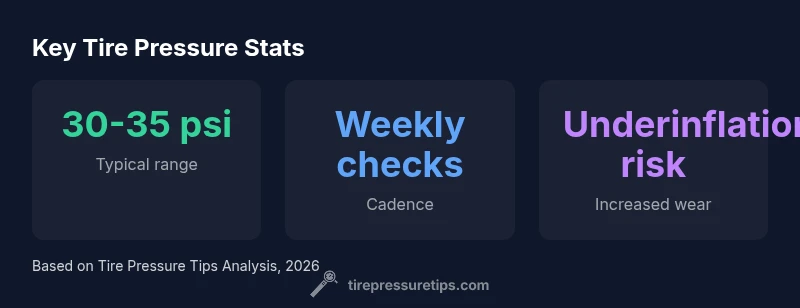
| Normal driving (passenger car) | 30-35 psi | Within placard range for balanced wear and handling |
| Heavy load / towing | 34-36 psi | Stay within placard; adjust toward upper end if allowed |
| Cold weather | Pressure may drop; check when cold | Recheck after cooldown; adjust within placard |
| Hot weather / highway driving | Maintain upper end | Heat can raise pressure; stay within placard |
Frequently Asked Questions
Should tire pressure be at max PSI?
No. Use the placard value and adjust for load and conditions; the tire’s max rating is a safety limit, not a target. Regular checks help you stay within the recommended range.
No. Follow the placard; adjust for load and weather, and check with a gauge.
Where can I find the correct PSI for my tires?
Look at the driver’s door placard or the owner’s manual for your vehicle’s recommended pressure. The tire sidewall shows the maximum rating, which is not the target.
Check the placard or manual for your target pressure.
What happens if I overinflate to max PSI?
Overinflation can reduce traction, increase center-tread wear, and make the ride harsher. Stay within the placard range for balance of safety and comfort.
Overinflating can hurt grip and wear.
Does TPMS replace manual pressure checks?
No. TPMS alerts you to under- or overinflation, but you should still verify pressure with a gauge, especially after road trips or temperature changes.
TPMS helps, but you still need a gauge check.
How often should I check tire pressure?
Check at least once a month and before long trips, preferably when tires are cold. Recheck after seasonal temperature changes.
Monthly checks are good; check before trips.
“Inflation should be guided by the placard and adjusted for load and temperature, not by chasing the tire's maximum rating.”
What to Remember
- Follow placard, not max PSI
- Check tires when cold for accurate readings
- Adjust within the recommended range for load and temperature
- Overinflation reduces grip and causes center wear
- Regular gauge checks prevent under- or overinflation