Semi Tire Pressure: A Practical Guide for Truckers
Master semi tire pressure with this actionable guide. Learn checks, adjustments by axle, TPMS cues, and safety tips to extend tire life and boost efficiency.


Learn how to check, set, and maintain proper semi tire pressure for trucks and trailers. This guide covers cold-weather readings, axle-specific targets, TPMS cues, and safe inflation practices to improve safety, fuel efficiency, and tire life. Follow the step-by-step process below to complete the task, and consult manufacturer specifications for your specific vehicle.
Why semi tire pressure matters for trucks and drivers
Maintaining correct semi tire pressure is not just a compliance checkbox—it directly affects safety, handling, fuel economy, and tire life. For drivers and fleet operators, getting this right reduces the risk of blowouts, irregular wear, and unexpected downtime. According to Tire Pressure Tips, correct semi tire pressure supports more stable steering, even tread wear, and consistent performance across loads. In practice, the target pressure varies by axle, load, and tire size, so always start with the manufacturer’s placard on the door jamb, trailer or vehicle manual, and the tire sidewall maximum rating. By understanding how semi tire pressure interacts with load and temperature, you can make informed adjustments that improve overall vehicle reliability on the road.
The information in this section lays the foundation for practical, real-world decisions. You’ll learn why pressure matters beyond simply meeting a number, and how small changes can yield noticeable benefits in safety, fuel economy, and component wear.
How tire pressure affects safety, fuel economy, and tire wear
Air pressure inside a semi tire influences contact patch, traction, and heat buildup. Underinflation causes the sidewalls to flex excessively, generating heat that accelerates tread and shoulder wear and raises the risk of overheating at high speeds. Overinflation can reduce the tire’s footprint, causing harsher ride and uneven wear along the center of the tread. Both conditions increase the chance of tire failure during critical maneuvers. Proper semi tire pressure helps distribute load evenly across the tread, improves grip, and enhances fuel economy by reducing rolling resistance. The Tire Pressure Tips analysis shows that fleets that maintain consistent pressures see lower maintenance costs and longer tire life. Always compare readings to the official spec for each axle and adjust for load, season, and road conditions.
Real-world practice means recognizing how the truck’s configuration (steer vs. drive vs. trailer) and the weight on each axle influence the target pressures. Seasonal temperature shifts can swing readings several psi, so regular checks are essential.
Key concepts: cold vs hot readings, load, and axle considerations
A core concept in achieving optimal semi tire pressure is distinguishing cold readings from hot readings. Cold readings (taken after tires have cooled for at least a few hours) reflect the baseline pressure, while hot readings (taken after operation) show how heat has affected pressure. Because tires heat up under load, always measure when cold to set or verify targets. Load considerations matter: heavier axles usually require higher targets, while lighter axles use lower ones. Axle-by-axle targets are typically specified by the vehicle manufacturer and may differ between steer, drive, and trailer tires. When in doubt, default to the placard and document any deviations caused by payload changes.
Practical takeaway: keep a simple log of target values by axle and wheel position, and adjust seasonally as loads shift. This discipline reduces guesswork and improves consistency across trips.
Vehicle-specific considerations for semi trucks
Truck configurations vary widely, and tire pressures must reflect the vehicle’s actual setup. For steer tires, manufacturers often specify a different target than for drive axles, which in turn differ from trailer tires. If you haul heavy loads or wide trailers, the overall system pressure may need to rise to maintain safe contact with the road. Always check the tractor’s door jamb placard and the trailer’s kingpin area for the correct figures. If you operate in hot climates or on long highway stretches, plan for a possible increase in target pressures to account for sustained heat. Finally, ensure all tires are the same type and load rating on an axle where possible to avoid uneven wear and handling quirks.
TPMS and sensors: reading, interpreting, and action
Tire Pressure Monitoring Systems (TPMS) provide a quick alert when pressures fall outside the acceptable range. However, TPMS readings are not a replacement for direct gauge measurements. If TPMS indicates a low pressure, verify with a handheld gauge on the affected tire and check all tires on the same axle, as variations are common. Use TPMS as a trigger for a full check, not as the sole basis for adjustment. For semi trucks, constant monitoring is critical due to the higher loads involved; sensors can fail or drift, necessitating periodic calibration or replacement by a professional.
Tools and methods for measuring semi tire pressure
A reliable, calibrated tire pressure gauge is essential for accurate readings. Digital gauges are often easier to read and more precise than analog sticks, especially in dim cab lighting. Use a portable air compressor or inflator with an accurate regulator to make incremental changes. When measuring, ensure the tire is cold, the vehicle is stationary, and the wheel has not been spun recently. Keep a log of readings by tire, axle, and date. If you use a digital log, you can identify slow leaks or gradual pressure drift over time.
Step-by-step overview
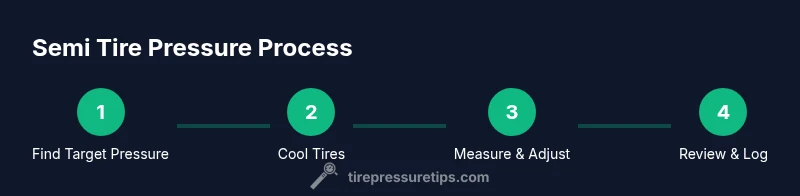
This section provides a high-level map of the process you’ll perform in the dedicated step-by-step section below. Start with locating the correct target pressures, then measure cold readings, adjust per axle, and finally recheck and log results. Remember to reconcile TPMS readings with handheld measurements and to consider load and temperature when deciding whether to inflate or deflate. The goal is consistent semi tire pressure across all axles to maximize safety, fuel economy, and tire life.
Weather, temperature, and seasonal adjustments
Temperature has a measurable impact on tire pressure. Colder weather can lower readings, while heat from driving raises them. A general rule is to expect a 1–2 psi change for modest temperature swings, but this varies with tire design and load. On cold mornings, you may need to increase target pressure slightly to compensate for temperature drop, then verify again after a short period of operation. In hot seasons or after long trips, recheck and adjust to bring levels back toward the placard targets. Regular checks through seasonal transitions help catch leaks or slow-loss issues before they compromise safety.
Maintenance routine and record-keeping for consistent semi tire pressure
Set a routine that combines pre-trip checks with mid-trip spot checks at key service points (fuel stops, rest areas). Record the reading for each tire, the date, the ambient temperature, and the load condition. Over time you’ll build a dataset that helps forecast when to re-evaluate axles or tires. Maintaining a consistent log supports maintenance planning, reduces downtime, and helps verify compliance with fleet policies. If you notice persistent deviations, consult a tire technician to inspect for leaks, worn valve stems, or damaged rims.
Tools & Materials
- Tire pressure gauge (digital or analog)(Calibrated; read cold tires for accuracy.)
- Air compressor or portable inflator(Select regulator to avoid overinflation; carry spare fittings.)
- Vehicle manufacturer spec placard and manual(Axle-specific targets; note for steer, drive, trailer tires.)
- Logbook (paper or digital) or app(Record baseline and adjustments for trend analysis.)
- Chocks and wheel stop tools(Safety will ensure wheels stay put during measurement.)
Steps
Estimated time: 20-40 minutes
- 1
Find the target pressures for each axle
Locate the official targets on the placard or manual. Note the separate values for steer, drive, and trailer tires. Write these down and keep them accessible near the vehicle. This ensures you inflate to the correct range for each wheel position.
Tip: Use cold tires; measurement after driving can yield higher readings. - 2
Cool down before measurement
If the truck has just finished a run, let tires cool for 2–3 hours or until the vehicle is rested. This establishes a stable baseline. Avoid measuring after short drives or when tires are hot.
Tip: A cold measurement gives the most accurate comparison to spec. - 3
Check current pressures with a gauge
Attach the gauge to each valve stem and read the pressure for all tires. Record the values and compare with axle targets. Note any tires that are noticeably low or high.
Tip: Take multiple readings on each tire to confirm accuracy. - 4
Adjust pressures per axle and load
Inflate or deflate to match the target values for each axle, considering current load and expected road conditions. Make changes in small increments and recheck after each adjustment.
Tip: Avoid overinflation; you can always add air in small steps. - 5
Recheck and log values
After adjustments, recheck all tires and record the final numbers, including date and ambient temperature. This builds a reliable history for your tires and helps catch trends.
Tip: A digital log makes it easy to analyze changes over time. - 6
Inspect for wear and TPMS status
Look for unusual wear patterns and listen for TPMS alerts. If a sensor is slow to read or absent, schedule a professional inspection to avoid misdiagnosed issues.
Tip: If readings drift consistently, consider a professional check for leaks or sensor faults.
Frequently Asked Questions
What is the recommended semi tire pressure for most tractors and trailers?
The recommended pressure varies by axle, tire size, and load. Always start with the vehicle placard and manual for your exact targets, then verify with a handheld gauge. Do not rely solely on tire sidewall numbers.
Check the placard for your exact targets; verify with a gauge rather than relying on the tire sidewall numbers.
How often should I check semi tire pressure?
Check pressures before long trips and at regular intervals during heavy use. If loads change, recheck after adjustments. Use cold readings as your baseline.
Check before trips and after payload changes. Use cold readings for accuracy.
Can TPMS readings replace gauge measurements?
No. TPMS provides alerts, but it’s essential to verify with a handheld gauge to confirm the exact pressure and axle differences.
TPMS alerts are helpful, but always verify with a gauge.
What risks come from underinflated semi tires at speed?
Underinflation increases heat, causes uneven wear, and raises the risk of tire failure during high-speed maneuvers.
Underinflation can cause heat buildup and blowouts, especially at high speeds.
Do temperature changes affect tire pressure?
Yes. Colder temperatures drop readings; hot weather increases readings. Adjust targets seasonally and recheck after temperature shifts.
Temperature changes affect pressure; recheck after cold starts or heat.
Should I adjust pressure for different loads?
Yes. Higher axle load typically requires higher targets. Always follow manufacturer guidance and adjust for expected payload.
Yes—load affects target pressure; adjust accordingly.
Watch Video
What to Remember
- Check psi cold before trips
- Follow axle-specific targets from placards
- Log readings to track changes
- Use TPMS as a cross-check