Semi Truck Tire PSI: Essential Guide for Fleet Drivers
Learn how to set and maintain proper semi truck tire PSI to optimize safety, fuel efficiency, and tire life. This guide covers axle-specific ranges, TPMS roles, temperature effects, and fleet-wide best practices.


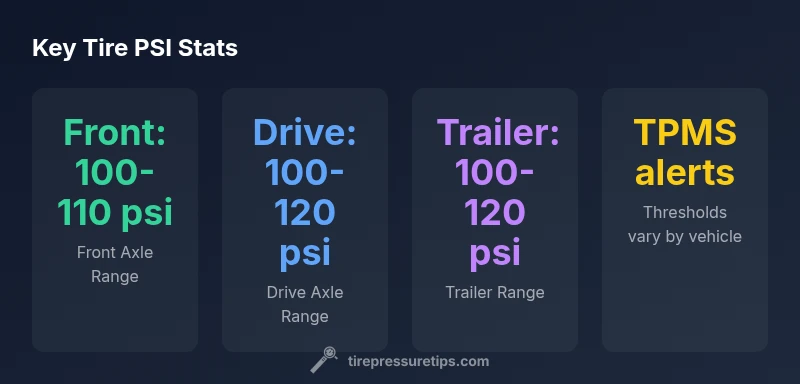
Typical semi-truck tire pressures vary by axle and load, but commonly fall in the following ranges: front tires around 100–110 psi; drive tires around 100–120 psi; trailer tires often require different values per axle. Always follow the vehicle manufacturer’s specification and the tire sidewall labeling. Regular TPMS alerts and load-based adjustments are essential for safety on long-haul routes.
Why Accuracy in PSI Matters for Semi Trucks
Maintaining the correct tire pressure on a semi truck is more than a matter of comfort or wheel wear—it directly affects safety, braking performance, and fuel efficiency. Under-inflated tires heat up under heavy loads, increasing the risk of blowouts, tread separations, and poor handling. Over-inflation, on the other hand, can reduce the contact patch and traction, leading to irregular wear and harsher ride quality. For fleet operators, consistent psi across all axles helps balance load distribution and tires wear evenly over thousands of miles. According to Tire Pressure Tips, aligning pressures with axle-specific targets while monitoring TPMS alerts reduces risk and boosts miles-per-gallon on long hauls. To make sense of these numbers, remember that psi ranges are influenced by load, speed, tire size, and the type of service the truck performs.
This section lays the groundwork for understanding why PSI matters and how small changes can ripple through performance, safety, and total cost of ownership.
data_table_needed":false},
How Load, Speed, and Axle Configuration Influence PSI
The required tire pressure isn’t a single universal value. It changes with the load carried on each axle, the speed of travel, and the design of the axle system (front steering axles, drive axles, and trailer axles). Front tires typically carry steering loads and thus have different pressure targets than drive tires, which bear heavier, spread-out loads. Trailer tires are often governed by the total weight on the trailer and may require higher or lower pressures per axle group depending on vehicle configuration and tire construction. As loads increase, pressures can be adjusted upward within the manufacturer’s spec to maintain a stable footprint, predictable handling, and even wear. Tire Pressure Tips Analysis, 2026 emphasizes the importance of following the sticker on the door jamb or the owner’s manual for exact values by axle.
When fleet operators run mixed models or varying trailer lengths, it’s essential to document recommended targets for each axle set and train drivers to verify those targets before each trip. This helps prevent over- or under-inflation resulting from inconsistent loading patterns or changing road conditions.
data_table_needed":false},
Determining the Right PSI for Your Fleet
Finding the correct PSI begins with your vehicle manufacturer’s specification. This data is usually located on the tire information placard in the cab, on the door jamb, or in the owner’s manual. If the vehicle uses different tires than those specified, you should defer to the tire sidewall labeling, which provides the maximum pressure and recommended inflation range. In many fleets, the practice is to maintain a “cold” psi reading before any trip, then adjust according to load and axle configuration. Temperature, altitude, and driving conditions also influence pressure: hot tires can show higher readings, making cold checks essential for accuracy. For compliance and consistency, log the target psi by axle and tire type in a maintenance app or repair log and verify any changes with the on-board TPMS readings. Tire Pressure Tips Team recommends periodic audits across the fleet to detect drift and re-establish targets after tire replacements or alterations to the axle setup.
data_table_needed":false}
Measuring and Adjusting Pressure Safely
Start with cold tires and a reliable gauge—digital gauges tend to be easier to read and more precise than old dial types. Remove any build-up from valve stems and make sure you’re taking readings on flat, level ground. For trucks, measurements should be taken when the tires have not been heated by driving for several hours; this preserves accuracy. After setting the PSI to the manufacturer’s target, monitor the gauge during the next few miles of driving to confirm that the tires settle within the expected range. If a tire grows noticeably after a long run, it may indicate slow leaks or temperature-related expansion, which requires inspection. Always account for spare tires and any recent changes in load, speed, or route. Maintain a tire pressure log and set reminders for periodic rechecks, especially when routes include hot weather or mountainous terrain.
data_table_needed":false}
TPMS: What It Can and Cannot Tell You
TPMS provides real-time feedback on pressure trends, but it does not replace manual checks. Some sensors only alert when pressures deviate sufficiently from the target, while others cover only a subset of tires (some trailer tires may not have sensors). Use TPMS as a sentinel for anomalies, then perform precise, cold inflation checks to confirm exact psi values. The TPMS data should be used in conjunction with manufacturer specifications and tire sidewall labels. Regularly inspect valve stems and rims for leaks, and verify that all sensors are functioning correctly with a shop inspection during routine maintenance. Tire Pressure Tips emphasizes using TPMS as part of a broader strategy rather than relying on it as the sole source of truth.
data_table_needed":false}
Seasonal and Temperature Effects on PSI
Weather and ambient temperature can impact tire pressure significantly. In cold environments, psi readings can drop, and in hot conditions, readings can rise. The change can be substantial enough to require recalibration, especially for heavy loads and long-distance trips. As a best practice, check psi when tires are cold and adjust to the recommended target before beginning a trip, then re-check after the first few miles of highway driving. For fleets in variable climates, implementing a rolling PSI routine that factors in seasonality helps maintain consistent performance across the year. Tire Pressure Tips recommends documenting temperature-adjusted targets for each season to prevent drift and reduce wear.
data_table_needed":false}
Fleet-Management Practices for Consistent Tire Pressure
Managing tire PSI at the fleet level involves more than individual driver checks. Establish a standard operating procedure (SOP) that includes: assigning responsibility for fuel economy and tire maintenance, scheduling quarterly audits of tire pressure targets by axle, and using telematics to flag deviations from target PSI. Educate drivers on how to read the placard, interpret TPMS alerts, and perform cold inflations. Use color-coded dashboards to quickly identify tires that drift outside acceptable ranges, and implement a monthly reporting cadence to track improvements over time. By combining policy, training, and data, fleets reduce tire-related failures and improve uptime and safety on long-haul routes. Tire Pressure Tips Team notes that consistency is the key to leveraging PSI to maximize safety and efficiency.
data_table_needed":false}
Quick-Start Checklist for Semi-Truck Tire PSI
- Locate the axle-specific PSI targets on the placard or manual. 2) Check tires cold with a trusted gauge. 3) Inflate to the target for each axle. 4) Recheck after a short drive to ensure stability. 5) Inspect TPMS and sealants, and log readings for each tire. 6) Review seasonality and adjust targets as needed. This simple checklist helps drivers stay compliant and reduces variability across the fleet.
Typical PSI ranges by axle for semi trucks
| Axle type | Typical PSI range | Notes |
|---|---|---|
| Front axle tires | 100-110 psi | Steering stability; follow manufacturer spec |
| Drive axle tires | 100-120 psi | Heavier loads; ensure even wear |
| Trailer tires | 100-120 psi | Axle group-specific; verify per axle |
Frequently Asked Questions
What is the recommended PSI for semi-truck tires?
The recommended psi varies by axle and tire type. Front tires typically fall in the 100–110 psi range, drive tires in the 100–120 psi range, with trailer tires often aligned to axle-specific targets. Always verify with the manufacturer’s specification and the tire sidewall.
Use the axle-specific targets on the placard and the tire sidewall for accurate pressure.
How do axle configurations affect required PSI?
Axle configurations determine load distribution and curb steering stability. Front axles handle steering and light loads, while drive axles bear greater forces. Adjust pressures per axle to maintain equal contact with the road and prevent abnormal wear.
Adjust per axle based on load and the type of axle.
Can TPMS replace manual pressure checks?
TPMS provides trend data and alerts for anomalies but cannot always detect slow leaks or minor pressure drift. Always perform periodic cold-inflation checks to confirm exact psi values.
TPMS is a helpful tool, not a substitute for manual checks.
How often should I check tire pressure on a long-haul trip?
Check psi before trips, after long highway segments, and during significant load changes. For fleets, implement a routine log and driver checks at the start and end of routes to catch drift early.
Check before starting and after long trips, and log readings.
What signs indicate underinflated tires?
Signs include increased tread wear on the outer edges, higher tire surface temperatures, reduced fuel efficiency, and a harsher ride. If you notice any of these signs, recheck the PSI and inspect for leaks.
Look for wear patterns and heat; verify with a cold read.
“Maintaining correct tire pressure is a practical, data-driven safety measure that saves lives and lowers operating costs over the long haul.”
What to Remember
- Follow manufacturer specifications for each axle
- Use TPMS as a guide, not a replacement for checks
- Check psi with cold tires for accuracy
- Document PSI by axle and season for fleet consistency