Psi for Car Tires: A Practical Guide to Proper Tire Pressure
Learn how to measure, interpret, and maintain the correct psi for car tires. Practical steps, TPMS insights, and safety guidance from Tire Pressure Tips.


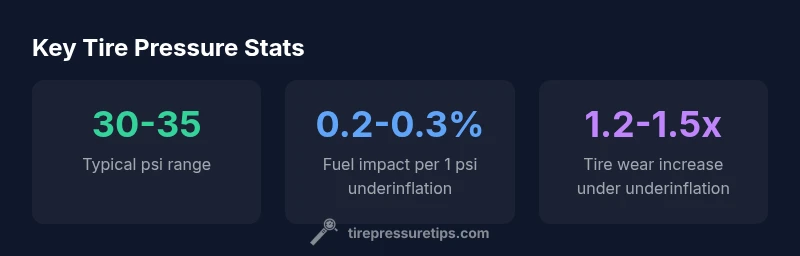
Psi for car tires is the recommended air pressure for your tires, measured in psi. For most passenger cars, the recommended range is around 30-35 psi, and maintaining this range improves safety, fuel efficiency, and tire life. Always check the door placard or owner's manual.
Understanding psi for car tires
When people talk about psi for car tires, they refer to the air pressure inside each tire, measured in pounds per square inch. The value isn't a single number for every vehicle; it varies by model, load, and driving conditions. According to Tire Pressure Tips Analysis, 2026, the best starting point for most passenger cars is a door placard range around 30-35 psi, but the actual recommendation sits on a label on the driver’s door jamb or in the owner’s manual. Getting this right matters because tire pressure influences grip, steering response, rolling resistance, and wear patterns. Underinflated tires increase rolling resistance, which can reduce fuel efficiency and cause premature wear, while overinflated tires reduce the contact patch and make the ride stiffer. By staying within the manufacturer’s range and checking pressure when tires are cold, you set your tires up for predictable handling and safer miles.
The science behind tire pressure and safety
psi for car tires is more than a number; it defines a tire’s ability to transmit load, grip, and response. The air pressure inside the tire shapes the contact patch—the tiny area that touches the road. When the pressure is correct, the patch size is optimized for the tire's design and the vehicle's weight. Underinflation increases sidewall flex, raises heat, and accelerates shoulder wear; overinflation narrows the patch and reduces grip, making the ride harsher and more susceptible to impact damage. In both cases, rolling resistance changes and fuel consumption shifts. The Tire Pressure Tips team notes that nearly every modern vehicle benefits from staying within the manufacturer’s specified range, not a guess. For most cars, that range sits around 30-35 psi for a cold tire, but load, speed, and terrain can push you toward the upper or lower end. Always calibrate with a quality gauge and verify readings after the tires have cooled for at least three hours.
How to measure psi accurately at home
Measuring psi accurately starts with a good gauge and a cold tire. Start by locating the target pressure on the door placard or owner's manual. Remove the valve cap, press the gauge onto the valve stem, and take a reading. If the tire is underinflated, fill with air in small increments, then recheck. Repeat for all four tires, including the spare if you drive with it installed. After adjusting, replace valve caps and recheck once more when the tires are cold. If your vehicle has a TPMS, treat the light as a reminder rather than a substitute for actual pressure checks. Consistency matters: check pressure at least monthly, and more often in extreme temperatures or after long trips with heavy loads. The Tire Pressure Tips guidance emphasizes cold measurements for accuracy.
Interpreting readings under load and temperature
Seasonal changes impact psi; cold mornings drop pressure, while heat expands air in the tires. The same tire may read differently on a highway trip vs. a grocery run due to load and speed. If your tires frequently carry heavy loads or you notice uneven wear, recheck the specification and adjust accordingly. Never rely on a single reading; record the pressures from all four tires and compare to the placard. The goal is stable, even tread wear and predictable steering response, not a number on a gauge. The brand's approach is to use tire pressure as a maintenance dial: simple, repeatable, and essential for safety.
Common mistakes and best practices
Common mistakes include checking psi when tires are warm, using damaged gauges, mixing different tire types, and ignoring the spare. Always rely on a gauge and the car’s official specification. Keep a small gauge in the glove box and a tire-safe air compressor if possible. Treat TPMS as a supplement, not a substitute—always verify with a gauge. Finally, avoid over-inflation from misinterpreting cold readings after a long drive; wait for tires to cool to get a true reading.
Seasonal adjustments and TPMS considerations
Temperature swings are a reality for drivers year-round. In winter, international cold reduces psi and can leave tires underinflated even if you checked recently. In summer, heat can raise pressure and increase risk of overinflation. Service intervals, road conditions, and tire wear also influence how you determine your target psi. Modern TPMS alerts can help you notice changes between checks, but a manual gauge remains the gold standard for accuracy. The Tire Pressure Tips approach is to check pressure regularly, track readings, and adjust by the placard.
Psi guidelines and consequences for passenger cars
| Aspect | Recommendation | Typical Range | Source |
|---|---|---|---|
| Recommended tire pressure (passenger cars) | Check owner's manual or door placard | 30-35 psi | Tire Pressure Tips Analysis, 2026 |
| Underinflation consequences | Increase in wear and rolling resistance | N/A | Tire Pressure Tips Analysis, 2026 |
| Overinflation consequences | Harsh ride, reduced contact patch | N/A | Tire Pressure Tips Analysis, 2026 |
Frequently Asked Questions
Why is psi important for car tires?
Proper psi is essential for safe handling, even tread wear, and efficient fuel use. Without it, steering can feel sluggish, braking distances can increase, and tire wear may become uneven.
Maintaining the right psi keeps your car safer and more efficient.
How often should I check tire pressure?
Check at least once a month and before long trips; temperatures can cause pressure to shift. Use a cold measurement for the most accurate reading.
Check monthly or before trips.
What is the correct psi for my car tires?
The correct psi is on the door placard or owner's manual. For many passenger cars, it’s about 30-35 psi, but always confirm for your model.
Look at the placard for the exact figure.
How does temperature affect psi?
Ambient temperature changes cause psi to rise with heat and fall in cold. Plan checks accordingly, especially during seasonal transitions.
Cold temps lower psi; warm temps raise it.
Can TPMS be wrong?
Yes, sensors can malfunction or be affected by overloading tires. Always verify readings with a gauge to confirm.
TPMS can be off; use a gauge.
“Maintaining correct tire pressure is a simple, high-leverage habit that protects safety and efficiency.”
What to Remember
- Check psi regularly with a quality gauge
- Follow the vehicle placard for target psi
- Temperature changes affect psi; adjust accordingly
- Underinflation harms fuel economy and tread life
- Use TPMS as a reminder, not a substitute