Prius Tire Pressure: A Practical Guide
Master Prius tire pressure with practical checks, TPMS insights, and maintenance tips. Learn to verify cold readings, adjust correctly, and protect tire life with expert guidance from Tire Pressure Tips.


Check Prius tire pressure with cold tires, compare against the placard values, and adjust using a trusted gauge. Maintain TPMS awareness and regular checks for safety and efficiency. Start by locating the official psi on the door jamb placard or owner’s manual, then verify with a gauge and adjust when cold for accurate results. This routine helps reduce rolling resistance, improve fuel economy, and extend tire life.
Why Prius tire pressure matters
According to Tire Pressure Tips, maintaining correct tire pressure is essential for safety, fuel efficiency, and tire wear. For a Prius, the hybrid powertrain benefits most from proper inflation because it reduces rolling resistance and maximizes energy recovery. Underinflation can increase heat buildup and wear on the shoulders, while overinflation can reduce the tire’s contact patch, hurting grip and ride comfort. Regular pressure checks also help detect slow leaks early, preventing sudden flats. In this guide you’ll learn how to check, interpret TPMS signals, and adjust to the right values for your Prius, year and trim. A consistent routine protects tires, improves mpg, and enhances handling in everyday driving and highway conditions. This is how Tire Pressure Tips approaches tire care.
Finding the recommended pressures for your Prius
The exact pressure you should run depends on your model year and trim, load, and driving conditions. The primary source of truth is the placard on the driver’s door jamb or the owner’s manual, which lists front and rear tire pressures and sometimes different values for cold vs. hot readings. Prius owners often see slightly different targets between standard wheels and low-rolling-resistance versions. Always use the values printed by the manufacturer for your specific configuration, not generic “one size fits all” numbers. When in doubt, opt for the lower end of the recommended range if you regularly carry heavy loads or drive in hot climates to avoid overloading the tires.
Checking tire pressure accurately (cold readings matter)
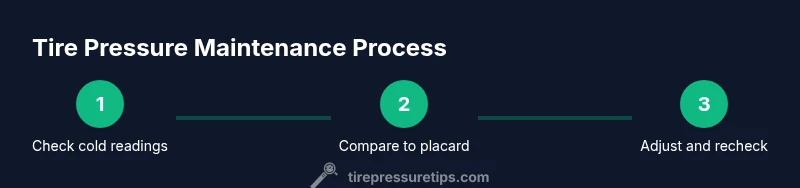
Begin with cold tires—ideally after at least three hours of minimal driving. Remove the valve cap and press a digital tire pressure gauge onto the valve stem, keeping it straight for a stable reading. Note the pressure on all four tires, then compare with the door placard. If a tire reads below the recommended value, add air in small increments (about 1-2 psi at a time) and recheck until you’re within range. If you’re over the target, release air gradually until you hit the correct psi. In a Prius, equalizing pressure across tires contributes to balanced handling and efficient energy use. Record readings to track trends over time.
TPMS: Understanding alerts and how to respond
TPMS can be direct (sensor-driven) or indirect (based on wheel speed sensors). When TPMS lights up, use a gauge to verify readings before adding air, as the system may lag or be affected by ambient temperatures. If readings are within range but the light stays on, there may be a sensor issue or a slow leak. For direct TPMS, sensor batteries fail slowly over years; for indirect TPMS, wheel diameter changes affect signal calibration. In either case, address the root cause: leak, damaged valve stem, or a sensor fault.
Adjusting for load, speed, and temperature
Your Prius inflation targets can shift with heavy loading or frequent high-speed driving. If you routinely carry passengers, cargo, or towing gear, you may need to inflate slightly within the recommended range to support additional load. Temperature also affects tire pressure; cold mornings can drop readings several psi, while hot days can raise them. Aim to check tire pressure when the tires are cold and adjust in small steps to avoid over-inflation after a hot drive. Maintain consistent pressure to optimize fuel efficiency and tire wear.
Seasonal and model-year considerations for Prius
Humidity, ambient temperature, and tire type (standard vs. low-rolling-resistance) all influence inflation targets. Some Prius models use different wheel sizes that affect recommended psi. If you notice persistent PSI drift with no visible leaks, consider rechecking with a second gauge or visiting a service location to verify sensor accuracy and valve integrity. Seasonal alignment between your tire type and climate can help preserve grip, ride comfort, and efficiency over the year.
Tools and accessories that simplify checks
Having the right tools makes tire-pressure maintenance quick and repeatable. A digital tire pressure gauge with automatic unit toggle is highly recommended for accuracy and ease of use. A small air compressor or access to a reliable air pump ensures you can top up to the exact target without visiting a station multiple times. A note pad or digital log helps you track readings across weeks and seasons. Consider a gauge with a calibration feature to keep readings consistent across your vehicles.
Common mistakes to avoid
Avoid inflating to the maximum sidewall number; always follow the manufacturer’s recommended psi. Do not rely on the vehicle’s seat occupants’ guesswork or “feel” alone—measure with a gauge. Refrain from checking tire pressure after driving, as heat expands air and raises readings, giving you a false sense of safety. Finally, don’t ignore recurring low readings; a slow leak or damaged valve needs professional inspection. Following these practices keeps you safer and preserves tire life.
Tools & Materials
- Digital tire pressure gauge(Choose a gauge with at least 1 psi precision; verify accuracy against a known standard.)
- Air compressor or access to a gas station air pump(Prefer a unit with an attached gauge or bring a separate gauge for verification.)
- Owner's manual or door jamb placard(Use to confirm the exact psi targets for your Prius model and wheel setup.)
- Notebook or app for readings(Track readings over time to spot trends and leaks.)
- Valve cap replacement (optional)(Keeps valve stems clean and seals when inflating.)
Steps
Estimated time: Total: 15-25 minutes
- 1
Prepare and locate recommended pressures
Identify the correct psi targets for your Prius by locating the door jamb placard or consulting the owner’s manual. Verify whether different front/rear values apply and note any special instructions for your wheel size or load. This preparation prevents guessing and ensures you inflate to the right level from the start.
Tip: Having the exact targets at hand reduces guesswork and speeds up the process. - 2
Check tires when cold with a gauge
Turn off the car and wait until tires have cooled for at least 3 hours. Remove the valve cap, press the gauge on the valve stem, and record all four readings. If a tire is significantly below target, you may need to top up after rechecking to account for gauge variance.
Tip: Cold readings are essential for accuracy; hot tires show inflated numbers. - 3
Inflate or deflate to target psi
Add air in small increments (about 1-2 psi) and recheck until each tire meets its target value. Do not exceed the recommended psi, even if a tire appears low; some tires tolerate slight overfill if the target allows it.
Tip: Aim for uniform pressure across all tires for balanced handling. - 4
Recheck and verify leaks or valve health
After adjusting, recheck all tires with the gauge. If a tire won’t hold pressure or readings drift quickly, inspect the valve stem and look for punctures or sidewall damage. Leaks or faulty sensors require professional inspection.
Tip: Persistent drift indicates a leak or sensor issue—don’t ignore it. - 5
Record and schedule recurring checks
Log each reading in a notebook or app and set a reminder to check once a month or with seasonal changes. Regular checks catch slow leaks early and keep mpg optimized.
Tip: Regular reminders help build a reliable tire-care habit.
Frequently Asked Questions
What is the recommended tire pressure for a Prius?
The exact pressure varies by model year, trim, and load. Check the door jamb placard or the owner’s manual for the precise targets, and adjust accordingly.
Check the door jamb placard or owner’s manual for your exact Prius tire pressures, as they vary by model and load.
Does TPMS require recalibration after inflating tires?
In most cases, inflating to the correct pressure should not require recalibration. If the light remains on after inflation, there may be a sensor fault or leak that needs inspection.
Usually not, but if the light stays on after inflating to the right level, have the TPMS or valve checked.
Can I use any tire gauge to check pressure?
A digital gauge is preferred for accuracy and ease of use. Always compare readings with at least one other gauge if you’re unsure about a measurement.
A digital gauge is best; verify with another gauge if you’re unsure about the reading.
Should I inflate tires to the maximum psi listed on the sidewall?
No. The sidewall maximum is not the operating pressure. Inflate to the manufacturer’s recommended psi as printed on the placard or manual.
No—use the manufacturer’s recommended pressure, not the maximum on the sidewall.
How do temperature changes affect tire pressure?
Colder temperatures lower tire pressure; hotter weather can raise it. Check pressure when tires are cold and adjust as needed for seasonal changes.
Temperature swings affect psi, so check when cold and adjust for the season.
Watch Video
What to Remember
- Check tires cold for accuracy
- Follow the placard values for each tire
- Use a reliable gauge and record changes
- Regularly inspect for leaks and wear
- Maintain correct pressure to maximize safety and efficiency