Ninja 300 Tyre Pressure: A Practical Guide for Riders
Learn how to accurately check and maintain Ninja 300 tyre pressure for optimal grip, stability, and tire life. Step-by-step methods, tools, safety tips, and FAQs for riders.


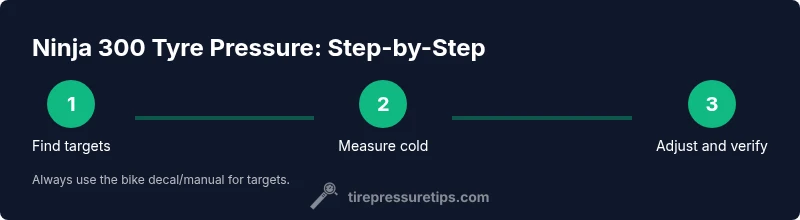
You will learn how to accurately check and adjust Ninja 300 tyre pressure for safe, confident riding. You’ll use a quality tire gauge, follow the bike’s decal or owner’s manual for exact cold targets, and account for load, riding style, and weather. The guide covers front and rear tires and basic TPMS considerations, with practical steps you can follow today.
Ninja 300 tyre pressure: Fundamentals you need to know
According to Tire Pressure Tips, proper Ninja 300 tyre pressure is essential for handling, tread life, and fuel efficiency. In this section, you’ll learn how to check cold pressures accurately, using a reliable gauge, and how to align front and rear targets with the bike’s decal or owner's manual. You’ll consider load, riding style, and weather, which all influence the actual pressure you should run.
Understanding the difference between cold and hot tire pressure is key. When tires heat up from riding, pressure rises; always measure when tires are cold and adjust based on the cold target. Small changes in pressure can alter contact patch size, grip, and tire wear, so consistency matters. In many Ninja 300 models, the official targets are listed on the swingarm decal or in the owner’s manual; if you can’t locate them, consult the dealership or Kawasaki's service resources. This guidance focuses on accuracy, safety, and repeatable results to help you ride with confidence. As you practice, track your readings and conditions to refine your personal target range.
Checking cold tire pressure on Ninja 300
Start with a level, shaded spot and ensure the bike is cold. Remove the valve caps from both tires and attach a high-quality gauge. Read the pressure and compare to the official targets from the decal/manual. If the reading is low, add air in small increments (about 1-2 psi at a time) and recheck. If high, release air gradually until you reach the target. Recheck after 1-2 minutes to account for gauge settling. Replace valve caps securely. For riders who carry luggage or a passenger, or ride in hot weather, adjust within the recommended range and recheck before riding long distances. Tire pressures can drift with temperature and altitude, so periodic checks are essential. Tire Pressure Tips analysis shows that riders who maintain correct cold pressures experience more consistent grip and longer tire life.
Adjusting for load, riding style, and weather
Your Ninja 300 tyre pressure should reflect load and riding style. A solo commuter may prefer the standard target, while a fully loaded or two-up ride on highways may require slightly higher pressures to maintain footprint and stability. Weather can also affect tire pressure; cold air contracts and hot days increase tire temperature and pressure. Use a gauge with psi or kPa readouts, and always convert units if your guide uses kPa. If your model lacks a TPMS, rely on gauge readings and a consistent procedure to gauge performance.
Tools and resources you’ll need
A reliable tire pressure gauge (digital or analog), the bike’s owner manual or swingarm decal, a portable air compressor or service station compressor, and a notebook or app to log readings for consistency. If available, a valve core tool can help seal leaks after adjustment. Always perform checks when tires are cold and away from direct sun or heat sources.
Practical maintenance routine for Ninja 300 tyre pressure
Set a monthly check schedule and perform a quick pre-ride check before every long trip. Keep a small gauge and a pen in your toolkit so you can log the readings and the conditions (air temperature, load, riding type). Over several weeks, you’ll develop a feel for how the pressure should behave under different loads, which reduces the need for constant adjustments and improves consistency.
Seasonal and storage considerations for Ninja 300 tyre pressure
Seasonal temperature changes affect air density, so you may notice pressures drift as temperatures swing. In cooler months, pressure readings drop; in hot months, they rise. Always check cold pressures after a night in the garage or riding before a trip. If you store the bike for extended periods, check the pressures before you ride again, as tires can lose air slowly even when not in use.
Safety-focused tips for riders
Never inflate beyond the tire’s maximum pressure printed on the sidewall or beyond what your decal/manual recommends. After adjusting, recheck both tires to ensure even inflation. If you detect a slow leak, replace the valve core promptly and consult a professional if you suspect a rim or bead issue. Remember, correct tyre pressure improves grip, braking, and tire life, contributing to safer rides.
Tools & Materials
- Tire pressure gauge (digital or analog)(Calibrated to within ±0.5 psi (or ±0.1 bar) for accuracy.)
- Owner’s manual or swingarm decal with pressure targets(Cold-tire targets for front and rear.)
- Portable air compressor or access to a service station compressor(Prefer one with a built-in gauge for precision.)
- Valve core tool (optional)(Useful for resolving slow leaks.)
- Notebook or app for logging readings(Helpful for tracking changes over time.)
Steps
Estimated time: 15-25 minutes
- 1
Stop in a safe, level spot
Bring the Ninja 300 to a safe, level area and turn off the engine. Ensure the bike is cool (not ridden for at least 3 hours) because heat raises tire pressure readings and can mask the true cold target values.
Tip: This simplifies reading and aligns with the official cold-tire targets. - 2
Identify the target pressures
Locate the official front and rear tire pressure targets on the swingarm decal or in the owner’s manual. Use these exact numbers as your reference when setting or checking pressures.
Tip: If targets aren’t visible, contact a Kawasaki dealer or check the manual online. - 3
Prepare the valve and gauge
Remove valve caps from both tires and ensure the valve stems are clean. Attach your tire pressure gauge securely and verify it reads zero when not touching any valve.
Tip: Clean stems prevent dirt from causing false readings. - 4
Measure cold pressures
Read both front and rear pressures with the bike cold. Note any readings and compare to targets. If readings are low, add air in small increments; if high, release air gradually.
Tip: Add or remove air in small steps to avoid overshooting targets. - 5
Adjust to target pressures
For each tire, adjust toward the recommended cold target, then recheck after a minute of settling. Ensure both tires read within their respective targets.
Tip: Recheck after settling to confirm stability. - 6
Secure and document
Screw valve caps back on firmly. Log the final readings, ambient temperature, load, and any notes for future reference.
Tip: A consistent log helps you identify drift over time. - 7
Plan the next check
Create a reminder for your next cold-pressure check—ideally every 2-4 weeks or before long trips, and after any significant temperature change or load adjustment.
Tip: Consistency beats guessing when it comes to tire pressure.
Frequently Asked Questions
What is the Ninja 300 tyre pressure target?
The exact target is listed on the bike’s decal or in the owner's manual. Check cold pressures for front and rear and adjust accordingly.
Check the decal or manual for the exact cold pressures, and measure when cold before riding.
How often should I check Ninja 300 tyre pressure?
Check at least once a month and before long trips. Do a quick check after temperature changes or heavy loads.
Check monthly, and before long trips or after big temperature changes.
Does the Ninja 300 have TPMS?
TPMS availability varies by model year. If your bike lacks TPMS, use manual gauge readings and a consistent procedure to monitor pressure.
Some Ninja 300 models don’t have TPMS; rely on a gauge and routine checks.
Cold vs hot tire pressure – which matters?
Measure cold pressures for accuracy. Riding heats tires and raises pressure, so readings can drift if measured hot.
Always measure cold, since riding raises tire pressure.
What should I do if I suspect a slow leak?
Safely pull over, inspect the valve and tire, and use a valve-core tool if needed. If the leak persists, seek professional help.
If you suspect a leak, pull over safely and check the valve; if it won’t stop, see a mechanic.
Watch Video
What to Remember
- Check cold pressures against official targets to ensure safe grip.
- Use a reliable gauge and measure on a level surface.
- Log readings to track drift over time.
- Account for load, weather, and riding style when adjusting pressures.
- Recheck after adjustments and ride to settle readings.