Mini Clubman Tyre Pressure: A Practical How-To
Learn how to check, interpret, and adjust tyre pressure for your Mini Clubman. This practical guide covers cold readings, TPMS tips, seasonal changes, and safe practices to extend tire life and improve handling.


You will learn how to check and adjust tyre pressure on a Mini Clubman, interpret the factory cold-pressures, and account for TPMS warnings. This guide covers using a gauge, choosing the right target pressure for load and conditions, and verifying accuracy after adjusting. Follow safe practices to maximize tire life, handling, and efficiency.
Why correct tyre pressure matters for Mini Clubman
Maintaining the correct tyre pressure for your Mini Clubman is a fundamental part of safe driving, tire longevity, and efficient fuel use. The right pressure helps your vehicle respond accurately to steering inputs, maintain even wear across the tread, and resist heat buildup that can lead to premature failure. For drivers of the Mini Clubman, understanding tyre pressure isn't just about numbers on a gauge—it's about consistent handling in city traffic, highway cruising, and on longer trips.
According to Tire Pressure Tips, precise tyre pressure tailored to your car's load, speed, and conditions is a practical habit that pays off over time. The Tire Pressure Tips team found that neglecting proper inflation can disrupt contact with the road, increase rolling resistance, and cause uneven wear patterns that shorten tire life. While every model has a recommended range, the core idea remains the same: keep each tyre within the vehicle's specified cold-pressure range and adjust it with consideration for load and temperature. This article uses the Mini Clubman as a practical example to illustrate how to check, adjust, and maintain tyre pressure with confidence. The goal is to empower you to check pressure quickly, interpret TPMS alerts sensibly, and make adjustments that improve safety and efficiency.
Checking the recommended pressure for your Mini Clubman
To start, locate the official cold-pressure specification for your specific Mini Clubman model. The primary sources are the door jamb placard near the driver's door and the owner's manual. The placard lists front and rear pressures, and sometimes recommendations vary by load or by whether you have a sport or standard trim. Always read the label when tires are cold, and remember that the pressure numbers are "cold" values; driving heats the air inside the tire and will temporarily raise the pressure. If you have recently replaced tires or altered wheel sizes, verify the spec in the manufacturer literature. When in doubt, err on the side of the lower end of the recommended range and add small adjustments only after rechecking the tires. For seasonal changes (hot weather vs cold), remember that ambient temperature can subtly affect pressure readings, so plan a quick check when temperatures shift.
How to measure tyre pressure accurately
Measuring tyre pressure accurately is a simple routine that pays off in safer handling and even tread wear. First, ensure tires are cold—ideally after the car has sat for at least three hours or driven less than a mile. Remove the valve cap from the tyre’s valve stem and apply your pressure gauge firmly to seal. Note the reading, then compare it to the vehicle's recommended cold pressure. If the tire is underinflated, add air in small increments and recheck after each adjustment; if overinflated, release air gradually and recheck. Repeat this process for all four tyres, including the spare if you rotate tires regularly. Reinstall the valve caps securely and store your gauge in a convenient location for quick checks. Regularly checking pressure not only keeps you within the recommended range but also helps identify slow leaks before they become serious.
Adjusting pressure for load, speed, and weather
Your Mini Clubman may require different pressures depending on how you use the car. Heavier loads, frequent highway speeds, or hot weather can influence how much air each tyre needs. Start with the cold-pressure spec from the placard and adjust in small steps based on the observed wear pattern and vehicle behavior. If you carry luggage or passengers, you might need a higher end of the range; for solo city driving, the mid-range is often suitable. In very cold climates, check pressure more frequently because air contracts and the readings may drop. In hot environments, check after a long drive to understand how heat has influenced the air in each tyre. Always re-check after adjustments to confirm stability and be mindful that pressure will change with temperature and driving conditions.
TPMS basics for the Mini Clubman
The Mini Clubman is equipped with a TPMS that alerts you when tyre pressure deviates beyond a predefined range. Direct TPMS uses sensor data from each wheel, while indirect systems infer underinflation from wheel speed differences. If a TPMS warning lights up, verify pressure with a gauge as soon as possible and bring tyres to the recommended cold pressure. After adjusting, reset the TPMS only if your vehicle’s procedure requires it; in some models, the system will recalculate automatically after driving a short distance. Remember that TPMS readings are best used as a safety warning—always verify with a physical gauge for precise inflation.
Common mistakes and how to avoid them
Avoid inflating to the maximum sidewall pressure or chasing a perfect number without considering load and temperature. Do not inflate while tyres are hot or immediately after a long drive; this can give an inaccurately high reading. Don’t assume all four tyres share the same pressure—your front and rear tyres may have different recommended values. If you notice slow leaks from valve stems, wheel rims, or punctures, address those issues before applying new air. Lastly, don’t neglect the spare tire; ensure it’s properly inflated and accessible for emergencies.
Maintenance routine and when to reassess
Turn tyre pressure checks into a regular habit—ideally monthly and before long trips. Before seasonal changes, verify the cold-pressure spec and adjust for load and weather. If you notice changes in handling, increased road noise, or uneven wear on one tyre, re-check all pressures and inspect for leaks or damage. A simple log or app reminder can help you track the dates of checks, any gauge readings, and the outcomes of adjustments. Continuity in maintenance saves money, reduces wear, and keeps your Mini Clubman performing as designed.
Tools & Materials
- Tire pressure gauge (digital or analog)(Use when tyres are cold; verify accuracy within 1 psi if possible)
- Door jamb placard and owner's manual(Locate the official cold-pressure values for front/rear tyres)
- Air compressor or service-station gauge(Helpful for adjusting pressures, especially if you have multiple tyres)
- Notebook or app for logging readings(Track date, time, readings, and adjustments)
Steps
Estimated time: 15-25 minutes
- 1
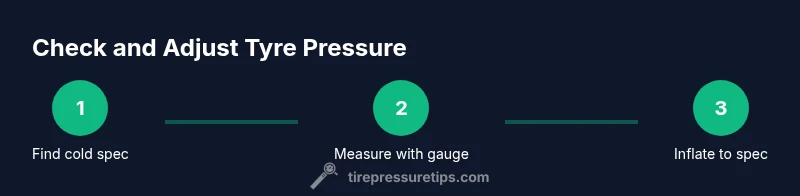
Find the correct pressure spec
Inspect the door jamb placard and the owner's manual to identify the cold-pressure range for your Mini Clubman. Note any differences between front and rear tyres and consider load. This step ensures you inflate to the right baseline before checking actual readings.
Tip: If the label is unreadable, use the vehicle’s model year documentation or a dealer resource for the recommended range. - 2
Prepare by ensuring tyres are cold
Park on a level surface and wait for tires to cool if the car has been driven recently. Hot tyres can show inflated readings that don’t reflect true baseline pressure. Remove valve caps so you can access the valve stems.
Tip: Always perform checks after the car has sat for at least 3 hours for accuracy. - 3
Check each tyre with a gauge
Apply the gauge securely to the valve stem and take a reading. Record the value for each tyre and compare with the manufacturer spec on the placard. Note any consistent deviations that may indicate leaks.
Tip: If you hear hissing when removing the gauge, there may be a slow leak at the valve stem. - 4
Adjust to the target pressures
Inflate or release air in small increments to reach the cold-pressure range. Recheck after each adjustment to confirm accuracy. Do the same for the spare if you rotate tyres regularly.
Tip: Avoid inflating beyond the upper end of the recommended range; small adjustments are safer. - 5
Recheck and reseal
Reinstall valve caps and recheck all four tyres after adjustments. Confirm they are within the specified range and evenly inflated to prevent uneven wear.
Tip: Keep a small gauge in the glove box for on-the-go checks. - 6
Test drive and verify
Take a short drive to allow tyres to warm slightly, then recheck if necessary. If readings shift notably after a drive, reassess in the next cold condition and adjust accordingly.
Tip: Avoid rapid acceleration or hard braking after a fresh inflation until you confirm tyre behavior.
Frequently Asked Questions
What is the recommended cold tire pressure for a Mini Clubman?
Check the door jamb placard or owner's manual for the exact cold-pressure values for your model and load. Front and rear tyres can differ, and numbers vary by trim and wheel size. Use the cold reading as your baseline.
Check the placard on the door jamb or the owner’s manual for your exact cold-pressure values; front and rear pressures may differ.
Does temperature affect tyre pressure?
Yes. Colder air lowers tire pressure and hotter conditions raise it. Check pressures in similar ambient conditions and always read cold for an accurate baseline.
Temperature affects readings; check when tyres are cold for accuracy.
Should I inflate to the maximum sidewall pressure?
No. Do not inflate to the tire's maximum sidewall pressure. Always aim for the vehicle's specified cold-pressure range based on load and driving conditions.
Avoid the maximum; use the vehicle’s recommended range instead.
What should I do if TPMS warns after a check?
If TPMS warns, recheck with a gauge, verify each tyre, and adjust within the recommended range. If the warning persists, inspect for leaks or a faulty sensor.
Recheck with a gauge and inspect for leaks if TPMS stays on.
How often should I check tyre pressure?
Check monthly, before long trips, and whenever the vehicle carries unusual loads or experiences notable temperature changes.
Check monthly and before trips, especially with load changes.
Does replacing wheels or tires affect the pressure spec?
Yes. If wheel size or tire type changes, verify the spec in the owner's literature; you may have a different prescribed range.
New wheels or tires may change the recommended pressure.
Watch Video
What to Remember
- Check cold pressures first using the placard.
- Inflate or deflate in small steps and recheck.
- TPMS is a warning system; verify with a gauge.
- Account for load and weather when choosing pressures.
- Maintain a regular check routine to prevent uneven wear.