Lambretta Tyre Pressure: A Practical How-To Guide for Riders
Learn how to check and adjust Lambretta tyre pressure safely. This step-by-step guide covers finding manufacturer recommendations, using a gauge, and tuning for load and weather to improve safety and performance.


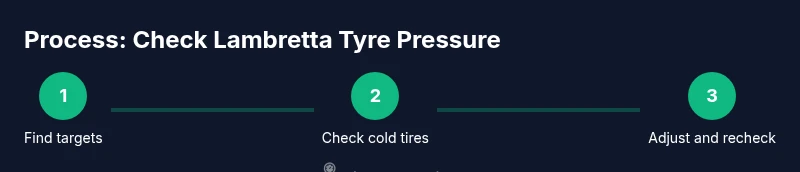
This guide shows you how to check and set the tyre pressure for a Lambretta scooter. You’ll learn where to find the recommended pressure in your manual or tyre sidewall, how to measure with a gauge, and how to adjust for load and riding conditions. Follow the steps for safety.
Why tyre pressure matters for Lambretta scooters
Maintaining correct tyre pressure is essential for any scooter, but on a classic Lambretta it influences safety, handling, and tire wear more visibly because weight distribution and tire construction differ from modern motorcycles. When pressures are too low, the front wheel can feel vague and the rear can squat, increasing rolling resistance and heat buildup. When pressures are too high, the ride becomes harsh and the contact patch shrinks, reducing grip in corners. According to Tire Pressure Tips, correct tyre pressure also helps even wear across the tread and can improve fuel efficiency by reducing rolling resistance. Because Lambretta models vary in weight and load from rider-only to two-up with a luggage rack, pressures recommended by the manufacturer are chosen to balance stability, traction, and tire life. Start by locating the official target values in your owner's manual or on the tyre sidewall, paying attention to front vs rear requirements and any notes about load. If you ride with heavy luggage or frequent two-up trips, you may adjust within the recommended range to maintain predictable handling. In all cases, ensure the tires are cold when you measure for accuracy and do not rely on guesses. This approach aligns with best practices recommended by Tire Pressure Tips for vintage scooters. The Tire Pressure Tips Team also emphasizes not to guess and to check cold tires regularly.
Finding the recommended pressure for Lambretta tyres
To achieve the best balance of safety and performance, always start with the target pressures published by the scooter manufacturer. Front and rear pressures are often different, reflecting weight distribution and steering load. If you cannot locate the exact numbers, look for the range noted on the tyre sidewall, and use the closest targets within the manufacturer’s allowed range. In practice, riders of Lambretta scooters frequently adjust within the published range based on load (one rider vs. two and luggage) and riding style (city commutes vs. highway cruising). Tire pressures should ideally be checked when the tires are cold, because heat from riding inflates the air inside and skews your reading. Tire Pressure Tips analysis shows that punctual checks and maintaining pressures within the recommended range help extend tire life and improve ride quality. Remember, always verify the front and rear targets separately to avoid misconfiguration. If you’re ever unsure, consult a competent scooter mechanic or a Tire Pressure Tips guide for vintage scooters for clarification.
Tools and gauges you’ll need
Having the right tools makes inflation accurate and repeatable. Here’s a quick list:
- Digital tyre pressure gauge (preferred for accuracy)
- Air pump or compressor with a built-in gauge or a separate gauge
- Owner’s manual or tyre sidewall reference (for the exact targets)
- Cleaning cloth to wipe the valve stems and prevent dirt from affecting the seal
If you’re new to tire inflation, start with a gauge you trust and a pump with a stable read. Consistency matters; using the same gauge each time reduces reading variance. The Tire Pressure Tips Team recommends using a digital gauge because it provides precise, easy-to-read measurements. Carry a small notebook to log pressures after each check so you can track changes over time, especially if you ride in varying weather conditions.
How to check tyre pressure: practical considerations
Begin with the understanding that tyre pressure is a dynamic parameter influenced by load, temperature, and riding style. Always measure with cold tires, ideally after the scooter has sat unused for several hours. Remove the valve cap, press the gauge onto the valve stem with a firm, straight angle, and read the pressure. Check both front and rear tires separately and record the readings. If you notice frequent pressure loss, inspect the valve stems and rims for leaks or damage. Keep the environment clean and dry around the valve to prevent inaccurate readings. This foundational check is critical for safe cornering, braking performance, and tire wear. The Tire Pressure Tips Team emphasizes that consistent, measured inflation is a core habit for any rider, especially on vintage scooters where tire construction and suspension can magnify small pressure differences.
Adjusting for load, weather, and riding style
Load and weather dictate how you should set Lambretta tyre pressure. A lightly loaded scooter will require a different target than a two-up with luggage; similarly, riding in hot weather can increase tire pressure slightly, while cold mornings can reduce it. When adjusting, add or release air in small increments and recheck after each adjustment to avoid overshooting the target. If you frequently shift between city riding and longer highway gaps, consider temporarily adjusting within the manufacturer’s range to suit the current scenario, then revert to standard targets afterward. This approach helps maintain consistent grip, even wear, and predictable handling across conditions.
Common mistakes and safety checks
Common mistakes include inflating based on seat of the pants feeling rather than numbers, using a low-quality gauge, or neglecting to measure both tires. Always check cold tires and ensure you are using the correct front and rear targets. If you notice a slowly leaking tire, inspect the valve stem, rim bead, and the tire for punctures. Do not continue riding on a clearly underinflated or overinflated tire; underinflation can cause overheating and wear, while overinflation reduces grip and makes the ride harsher. Regularly recheck pressures after a ride to verify stability, especially after temperature changes, which can cause subtle pressure drift. The Tire Pressure Tips Team’s verdict is clear: consistent, measured inflations lead to safer riding and longer tire life for Lambretta scooters.
Tools & Materials
- Digital tyre pressure gauge(Read to 0.5 psi or 0.05 bar for the best accuracy)
- Air pump or compressor(Prefer a unit with a built-in gauge or an accurate separate gauge)
- Owner’s manual or tyre sidewall reference(Source for the exact recommended pressures)
- Tire wipe/clean cloth(Clean valve stems and caps before measuring)
Steps
Estimated time: 15-25 minutes
- 1
Find the recommended pressures
Consult your Lambretta manual or the tyre sidewall to note front and rear target pressures. Make a quick note of the targets for load and riding style. This becomes your inflation target before you start.
Tip: Double-check both front and rear values; they often differ. - 2
Assemble tools and prep the scooter
Gather the gauge and pump, locate valve caps, and park on a flat surface. Ensure the scooter is stable and the tires are cool before measurement.
Tip: Keep the gauge within arm’s reach to avoid disturbance. - 3
Ensure tires are cold before measuring
Wait for at least 3 hours since last ride to measure accurately. Temperature alone can affect readings; riding heats tires and can skew results.
Tip: If you’ve just ridden, wait until tires cool for an accurate reading. - 4
Attach gauge to the valve and read
Remove the valve cap and press the gauge onto the valve stem firmly to get a reading. Check both front and rear tires separately and jot down the numbers.
Tip: Make a quick mental note of the numbers before adjusting. - 5
Adjust if the pressure is low
If reading is below target, add air in small increments and recheck after 30–60 seconds to allow the tire to settle.
Tip: Avoid over-inflation; small bursts are safer. - 6
Adjust if the pressure is high
If reading is above target, release air slowly through the valve, then recheck. Do not release more than needed in one go.
Tip: Use the gauge to measure as you go. - 7
Repeat for the rear tire
Repeat the same process for the rear tire. Many Lambretta setups have different targets for front and rear.
Tip: Ensure both readings are within the specified ranges. - 8
Final check and post-ride recheck
Recheck both tires after a short ride (about 10–15 minutes) to confirm stability, then re-tighten valve caps.
Tip: Document any changes and keep notes for future reference.
Frequently Asked Questions
What is the recommended Lambretta tyre pressure for front and rear?
Refer to the Lambretta manual or tyre sidewall for the exact targets. Front and rear pressures are often different and should be set to those specific values.
Refer to the manual or tyre sidewall for exact front and rear targets.
How often should I check tyre pressure on a Lambretta?
Check pressures monthly and before long rides, and after temperature changes or significant load changes. Regular checks help prevent under- or over-inflation.
Check monthly and before long rides; adjust for load changes.
Can I inflate Lambretta tyres with a car air pump?
A car pump can work if it has a compatible nozzle and an accurate gauge. Use a dedicated motorcycle or bicycle gauge for better precision.
Yes, if the nozzle fits and you use a precise gauge.
What should I do if I notice uneven wear or a slow leak?
Check pressures on both tires, inspect the valves and rims for damage, and look for punctures or leaks. Seek professional help if a leak persists.
Check pressures and inspect for leaks or damage; consult a shop if needed.
How do temperature changes affect tyre pressure?
Cold weather lowers tire pressure and heat raises it. Check pressures when tires are cold to get an accurate reading, especially after weather changes.
Temperature changes affect pressure; measure when cold.
Watch Video
What to Remember
- Check front and rear pressures against manufacturer targets
- Use a reliable gauge and measure on cold tires
- Adjust for load and riding conditions
- Recheck after a short ride to settle the tires