Vespa Tire Pressure: A Practical How-To Guide
Master Vespa tire pressure with practical steps for front and rear tires, gauge use, and temperature effects. Learn safe ranges, maintenance tips, and how to prevent flats with Tire Pressure Tips.


You will learn how to check and adjust Vespa tire pressure, including how to locate the recommended psi, how to use a gauge, and how temperature affects readings. This guide covers differences for front and rear tires, tubeless vs tube types, and safe ranges to avoid pinch flats in all riding conditions.
Why Vespa Tire Pressure Matters
According to Tire Pressure Tips, keeping the correct tire pressure on a Vespa is essential for safety, performance, and efficiency. Properly inflated tires improve handling, braking response, and traction in wet or slick conditions. When tires are too soft, you risk overheating and uneven wear; when overinflated, the contact patch shrinks, reducing grip and ride comfort. A consistent pressure routine also helps maximize fuel efficiency and tire life, saving you money over time. This guide uses practical, scooter-specific advice so you can approach tire pressure with confidence, whether you ride solo or carry a passenger.
From a maintenance perspective, tire pressure is a simple, high-impact check you can perform regularly—often in under 15 minutes. The Tire Pressure Tips team emphasizes starting with the manufacturer’s recommendations and verifying them against the tire sidewall. Small, regular checks beat infrequent, drastic adjustments that can compromise safety on city streets or winding roads.
Understanding Vespa Tire Construction and Its Impact on Pressure
Vespa scooters use tires that are designed for light, urban use, with construction that prioritizes ride comfort and nimble handling. The type of tire (tubeless vs tube) and the wheel diameter influence how pressure affects shape and stability. Tubeless tires maintain a more predictable pressure response and are generally easier to seal after minor punctures. Regardless of construction, pressure affects how the tread maintains contact with the road, which in turn affects braking performance and cornering stability. For new riders, the main takeaway is that tire pressure is not a one-size-fits-all setting; it depends on load, riding style, and model. The quick rule is to start with the manual’s guidance and adjust based on real-world feel, then recheck with a gauge.
Where to Find the Correct Pressure for Your Vespa
Your Vespa’s exact tire pressure specifications are found in two places: the owner’s manual and the tire sidewall. The manual lists front and rear pressures for normal riding, while the sidewall also shows a maximum pressure limit. Because pressures can differ by model, load, and even tire brand, always cross-check both sources. If you ride with a passenger or carry cargo, you may need to adjust within the recommended range. When in doubt, use a conservative starting point and test ride to confirm traction and comfort before extended trips. The Tire Pressure Tips guidance emphasizes verifying values against official sources to avoid under- or over-inflation.
How Temperature Affects Tire Pressure on a Vespa
Ambient temperature has a noticeable impact on tire pressure readings. Colder weather generally lowers pressure, while heat from riding can increase it slightly. For the most accurate readings, measure when tires are cold—ideally after the scooter has been parked for several hours or overnight. Don’t rely on a single hot-weather check, as a ride can temporarily inflate readings. Temperature changes over a day or across seasons can require small adjustments, so account for recent weather when planning maintenance.
Front vs Rear Tire Pressures: Why They Differ
Front and rear tires on Vespa scooters may require different pressures based on weight distribution, load, and handling characteristics. The front tire handles steering input and braking forces, while the rear supports propulsion and traction. As a result, some models have slightly different recommended pressures for each tire. Always follow the model-specific guidance in the manual and confirm with the tire sidewall. Regularly inspecting both tires helps ensure balanced handling and even wear.
Checking Pressure Safely: A Practical Approach
Plan to check tire pressure when the scooter is cold, with the gauge and inflator ready. Remove valve caps, attach the gauge squarely, and read the pressure on the gauge display or scale. If reading is low or high outside the recommended range, adjust in small increments, recheck, and re-measure after a short ride to account for stabilizing temperatures. Wipe away dust and dirt from the valve stem before re-capping to preserve a good seal. Keeping a log of readings can help you notice slow leaks or changes over time.
Common Mistakes and Troubleshooting
Common mistakes include measuring hot tires, using an inaccurate gauge, and inflating to create a stiffer ride rather than a safer one. Another pitfall is not accounting for load; a passenger or cargo can push you into a different pressure range. If you notice frequent flats, slow leaks, or an odd ride feel, double-check the gauge, inspect the valve stems for damage, and verify drafts around the rim bead. The safest approach is to verify values with a second gauge if you’re unsure.
Maintenance Schedule and Long-Term Care
Incorporate tire pressure checks into your regular scooter maintenance routine. A quick monthly check and a before-long-trip check cover most scenarios. Seasonal changes and varying loads may necessitate adjustments, especially if you store the Vespa for extended periods. Short, frequent checks reduce the risk of under-inflation or over-inflation that could compromise tire life and ride quality. Safety and efficiency both hinge on consistent tire pressure management.
TPMS, Tubeless, and Scooter Tire Tech Basics
Many Vespa models use tubeless tires with a direct or indirect TPMS (tire pressure monitoring system). Understanding how TPMS works helps you interpret warning lights and gauge readings. A TPMS can alert you to slow leaks, but it is not a replacement for periodic manual checks. Tubeless tires are generally easier to maintain at the correct pressure and provide consistent feedback on ride feel. If your model lacks TPMS, rely on regular gauge checks and visual inspections to stay ahead of pressure-related issues.
Tools & Materials
- Tire pressure gauge (digital or analog)(Prefer digital for accuracy; calibrate before use.)
- Air pump or inflator(Ensure compatibility with Vespa valve stems and tire type.)
- Vespa owner’s manual or official spec sheet(To confirm front/rear PSI ranges and maximums.)
- Valve caps and a clean rag(Cap to keep dust out; rag for cleaning valve stems before reading.)
Steps
Estimated time: 15-25 minutes
- 1
Locate the tire specifications
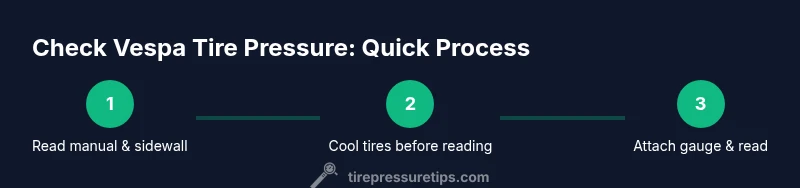
Open the Vespa manual or the official spec sheet to find the recommended pressures for the front and rear tires. Note any load-specific adjustments and the maximum tire pressure printed on the sidewall. This establishes your target range before you start.
Tip: Compare both sources; if they differ, follow the vehicle's official guidance first, then cross-check with user experiences. - 2
Cool down the tire
If the scooter has been ridden recently, wait 3–5 minutes for the tire to cool before taking a reading. Hot tires read higher than their actual cold pressure, which can lead to overinflation when you adjust later.
Tip: Use this as your standard practice for accuracy every time. - 3
Remove valve cap and inspect
Take off the valve cap and wipe the valve stem to remove dust or moisture. Inspect the valve for any signs of damage or leaks before attaching the gauge.
Tip: A dirty valve can give a false reading; always start clean. - 4
Attach gauge and read front tire
Place the gauge on the valve stem firmly and squarely. Read the display and compare with the front tire pressure specification. Note the reading for later adjustment.
Tip: If the gauge slips or leaks air, re-seat and read again with a fresh gauge if possible. - 5
Attach gauge and read rear tire
Repeat the process on the rear tire, ensuring you use the correct front/rear target range. Record the value and compare with the recommended range.
Tip: Rear tires may require a different setting due to weight distribution. - 6
Adjust to the recommended range
If readings are low, inflate in small increments and recheck after a short pause. If readings are high, release air gradually and recheck. Don’t overshoot the target range.
Tip: Make minor adjustments and test ride after each change. - 7
Replace valve caps and re-check
Re-cap both valves securely and give a final read to confirm stability. Lightly wipe away any residual dust.
Tip: Ensure caps are tight to prevent dust entry and slow leaks. - 8
Record results and plan follow-ups
Document the exact readings, ambient temperature, and load. Schedule your next check and note any recurring deviations that suggest a leak or component issue.
Tip: Keeping a simple log helps catch slow leaks early.
Frequently Asked Questions
What is the recommended tire pressure for Vespa front and rear tires?
Pressures vary by model and load. Check the Vespa manual and the tire sidewall for exact values. If unsure, start with the official range and adjust based on ride feel.
Check the manual for exact front and rear pressures; start within range and test ride to fine-tune.
Can I read tire pressure with the scooter off? When should I check it?
Yes. Readings are most accurate when the tires are cold and the scooter is off. Check after the scooter has rested to avoid heat-inflated numbers.
Check when cold, after parking for a while.
Does TPMS automatically warn you about low pressure on Vespa?
Some Vespa models include a TPMS that alerts you via the dash. However, a gauge check is still essential because TPMS can fail or lag.
Some Vespas have TPMS, but always verify with a gauge.
Is it safe to mix tubeless and tubed tires on a Vespa?
Mixing tire types is generally not recommended and can affect handling. Confirm tire configurations with your model's manual.
Don’t mix tire types on a Vespa without checking the manual.
How often should I check Vespa tire pressure?
Check at least monthly and before long trips. Temperature changes and load can affect readings, so adjust as needed.
Check monthly or before trips.
What should I do if the gauge reads a wrong value?
If readings seem off, recalibrate or replace the gauge. Cross-check with a second gauge to confirm accuracy.
If readings feel off, test with another gauge.
Watch Video
What to Remember
- Check tires when cold for accuracy
- Follow model-specific front/rear values
- Use a reliable gauge and recheck after adjustments
- Account for load and temperature changes
- Document readings for ongoing maintenance