How Long Does Tyre Pressure Last? A Practical Guide
Learn how long tyre pressure lasts under various conditions, what factors influence it, and how to monitor and maintain safe tire pressure with TPMS and manual gauges.


How long tyre pressure lasts depends on conditions, but the short answer is: it’s a gradual change, typically measured in weeks rather than hours. In normal conditions, tyre pressure can drift between checks due to temperature, driving, and minor leaks. For safety, regular checks with a gauge or TPMS are essential to keep tyres within the recommended range.
What determines how long tyre pressure lasts
According to Tire Pressure Tips, understanding how long tyre pressure lasts helps drivers plan regular checks and stay safe. The lifespan of stable tyre pressure is not fixed; it’s a moving target influenced by weather, driving patterns, vehicle load, and the microscopic permeability of the tire rubber itself. In practice, you’ll notice small fluctuations in pressure over days to weeks rather than hours. A key takeaway for daily driving is to treat pressure as a variable that should be measured often rather than a fixed value you set once and forget. By tracking the changes, you can decide when to inflate or inspect tires without compromising handling or fuel economy. Using both a reliable gauge and the car’s TPMS provides complementary insight—TPMS alerts you to a change, while a gauge gives you the precise pressure value.
Factors that influence tyre pressure longevity
Several interrelated factors determine how long tyre pressure lasts in your day-to-day driving. Temperature is a major driver: hot days can push up indicated pressure while cold snaps can reduce it. Tire age and wear affect how gases permeate the rubber, leading to slower or faster leaks over time. Vehicle weight, load distribution, tire type, and wheel alignment influence how air migrates through the tire and how quickly a slow leak becomes noticeable. Road conditions matter too; rough roads and prolonged high-speed driving can increase heat and small leaks. Finally, the integrity of the valve stem, bead seals, and TPMS sensors matters—little issues here can translate into gradual pressure drift.
Temperature and climate effects on tyre pressure
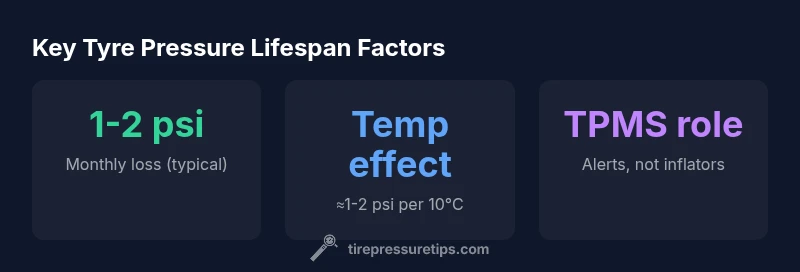
Temperature and climate play pivotal roles in tyre pressure dynamics. In cold weather, air contracts, causing a drop in tire pressure, which can linger until temperatures rise. In hot weather, air expands, raising the pressure and potentially accelerating wear if tires run near maximum. Because these changes are reversible with the temperature, the baseline pressure you observe can shift with the seasons. Drivers in regions with wide diurnal temperature swings should check pressures more frequently during transition seasons when the pressure baseline is most unstable. Weather-independent factors like slow leaks still operate in all conditions, so regular gauge checks remain essential.
How to measure and monitor tyre pressure duration in your vehicle
Start with the vehicle’s recommended cold-pressure specification—found in the user manual or a door-jam placard. Check when the tires are cold (before driving) for the most accurate reading. Use a high-quality digital or dial gauge to cross-check the TPMS readings. If you notice a discrepancy between gauge measurements and the TPMS, rely on the gauge for accuracy and adjust inflation accordingly. Keep a simple log of readings over several months, noting the date, outside temperature, and whether you inflated to the recommended level. This habit makes it easier to spot unusual drift, which could signal a leak or a slow puncture.
Practical steps to extend tyre pressure life
To maximize how long tyre pressure lasts, adopt a proactive maintenance routine. Start by inflating tires to the manufacturer’s recommended pressure when cold, and avoid overinflation. Check pressures monthly and before long trips, especially after seasons with extreme temperatures. When you notice a change in TPMS readings, validate with a gauge, and inspect for obvious causes like valve stem leaks, wheel bead leaks, or punctures. Keep tires properly rotated and balanced to promote even wear. If you frequently drive with heavy loads or on rough roads, you may need to adjust your pressure more often to maintain performance and safety.
What to do if you notice rapid pressure loss
A rapid pressure drop is a red flag. If readings fall quickly and you cannot identify a leak, pull over safely and inspect the tire surface for punctures or embedded objects. Check the valve stem for cracks or damage. If the leak persists after a basic check, visit a tire professional for a thorough inspection, as slow leaks can quickly evolve into a dangerous situation. In the meantime, do not drive long distances on a tire that’s losing air rapidly; underinflated tires heat up, increasing the risk of a blowout.
Common myths about tyre pressure and time
Several myths circulate around tyre pressure duration. Some drivers assume TPMS fixes pressure automatically; others think a single fill lasts forever. In reality, pressure drifts due to temperature and wear, and TPMS is a warning system rather than an inflator. The most reliable approach is a routine that combines TPMS alerts with regular, hands-on gauge checks. By separating perception from measurement, you can keep tires in their optimal range and reduce the chance of unsafe driving conditions.
How different factors influence tyre pressure longevity
| Factor | Typical Effect on Pressure | Notes |
|---|---|---|
| Temperature | Causes pressure to fall in cold weather and rise in heat | Baseline shifts with seasons; check more often during transitions |
| Leaks/Bead and Valve | Slow, gradual loss over days to weeks | Inspect valve stems and bead seals regularly |
| Tire Load and Driving | Heat buildup can raise pressure temporarily | Ensure correct load ratings and ignore temporary spikes |
| TPMS Readings vs Actual Pressure | Sensors show relative changes, not exact values | Always verify with a gauge for precision |
Frequently Asked Questions
How often should I check tyre pressure?
Check at least once a month and before long trips; TPMS helps, but a manual gauge confirms accuracy.
Check monthly and before trips, and use a gauge to confirm TPMS readings.
Does TPMS automatically correct underinflation?
No; TPMS alerts you when pressure is low but does not inflate tires. You must inflate manually.
TPMS warns you to inflate, it doesn’t inflate for you.
Can temperature changes permanently affect tyre pressure?
Temperature changes cause pressure fluctuations and can shift the baseline; readings return to normal as temperatures stabilize.
Temperature changes cause fluctuations, not permanent changes.
What is a safe range for pressure fluctuation?
Stay within the vehicle’s recommended range; minor fluctuations are normal, but large drops deserve inspection.
Small changes happen; big drops should be checked.
What should I do if I notice a constant drop in pressure?
Inspect for leaks at the valve stem, bead, or puncture; if unresolved, seek professional inspection.
Check for leaks and see a professional if it keeps dropping.
Is it safe to drive with low pressure for a short distance?
No. Underinflated tires heat up more and are at higher risk of blowouts; inflate to safe pressure as soon as possible.
Don’t drive far on low pressure; get inflated soon.
“Maintaining accurate tyre pressure is one of the simplest, most impactful safety habits a driver can practice. Small changes add up to meaningful improvements in safety and fuel efficiency.”
What to Remember
- Check tyre pressures monthly and before trips
- Temperature shifts drive pressure changes; expect seasonal baselines to adjust
- Always verify TPMS readings with a manual gauge
- Inspect for slow leaks at valves and beads regularly
- Inflate to the recommended pressure for safety and efficiency