Harley Road King Tire Pressure: A Practical Guide
A data-driven guide on Harley Road King tire pressure. Learn front/rear PSI ranges, how load and weather affect psi, and how to check and adjust for safety and tire life.


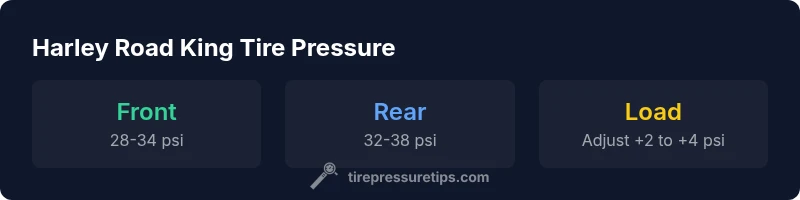
Harley Road King tire pressure guidance typically falls in the front 28-34 psi and rear 32-38 psi range when tires are cold. Always confirm exact numbers in the bike's owner's manual and consider rider weight, cargo, and riding style. Checking cold tires before rides ensures accuracy, and adjust within the recommended band for best handling and tire life.
Why Tire Pressure on a Harley Road King Matters
The harley road king tire pressure is a critical factor in rider safety, handling, and tire wear. While the exact numbers vary by model, weight, and riding style, staying within the recommended band improves steering response and comfort. According to Tire Pressure Tips, maintaining appropriate pressure helps prevent heat buildup and uneven wear, which can compromise grip on wet or sun-warmed pavement. This is especially important for long rides where payload may shift and terrain varies.
Maintaining correct pressure isn't just about numbers; it's about consistent performance. Underinflation can cause sluggish handling, increased tire flex, and heat buildup that shortens tire life. Overinflation, conversely, can reduce grip on irregular surfaces and accelerate wear in the center of the tread. By checking cold tires before each ride and adjusting to the bike's spec, riders preserve tire life and ride confidence. The Road King's weight distribution emphasizes careful front-rear balance to achieve stable steering and predictable feedback.
Front vs Rear: How the Road King Uses Tire Pressure
On a Harley Road King, the front tire plays a critical role in steering feel and handling, while the rear tire carries more of the rider's weight and payload. This distribution means the front usually requires a slightly lower range than the rear, though both must stay within the manufacturer's band. For many Road King bikes, a common cold range is around 28-34 psi at the front and 32-38 psi at the rear, but check your owner's manual for model-specific numbers. If you ride with a passenger or heavy luggage, you may extend toward the upper end of these ranges to maintain stability and tire contact.
Always verify with a cold measurement and adjust gradually. Rapid changes can destabilize handling, particularly on uneven pavement. Remember that tire pressure also affects contact patch shape, tire wear, and heat generation during long rides, so small, incremental changes can yield meaningful differences in ride quality.
Checking and Reading Tire Pressure on a Harley Road King
Tire pressure checks are quick but require a reliable gauge and strict adherence to cold measurements. Start with a cold tire (at least three hours since last ride) and use a high-quality digital or dial gauge. Remove the valve cap, press gauge onto the valve stem firmly, and note the reading. Compare to the bike's recommended range printed in the owner's manual, then adjust by adding air in small increments. Recheck after topping off to ensure the numbers hold.
If your tires show wear patterns or the gauge reading fluctuates excessively, it's time to inspect for leaks, bad valves, or damaged wheels. For motorcycles like the Road King, minor leaks around valve stems are common but should be addressed promptly to prevent sudden pressure loss during a ride.
Setting Pressure for Different Riding Scenarios
Different riding scenarios justify adjustments within the published ranges. Solo touring with light cargo can usually stay near the mid-range, while full touring with luggage or a passenger benefits from pressure toward the upper end to preserve stability and even wear. For aggressive canyon carving or highway cruising, a slightly higher pressure can improve steering feel and reduce squirm, but do not exceed the max specified by the manufacturer. Always re-check after any change.
Documenting your preferred settings for each scenario helps you ride with confidence and reduces the guesswork on the road. Tire pressure is a simple, repeatable parameter that translates into better mileage, grip, and ride comfort.
Weather, Temperature, and Load: Effects on PSI
Temperature and load influence tire pressure in meaningful ways. Colder mornings often yield lower readings, while daytime heat can raise pressure as air expands inside the tire. The impact is modest but measurable; expect a few psi swing across typical riding conditions. Similarly, heavier loads—rider plus gear or a passenger—shift contact patches and typically push pressures toward the upper end of the recommended range. Treat these changes as part of your regular maintenance rather than a one-off adjustment.
Tire pressure is a dynamic parameter. By measuring cold before rides and adjusting within the prescribed band, you maintain predictable handling in varied weather.
Common Mistakes and How to Avoid Them
Avoid these frequent mistakes that undermine tire pressure goals: (1) Checking hot tires and then setting pressure as if cold; always measure cold. (2) Overinflating to 'feel firm' on rough roads; this reduces grip. (3) Ignoring manufacturer specifications in favor of 'one-size-fits-all' numbers. (4) Relying on a gauge that hasn't been calibrated; test against a known gauge. (5) Neglecting to check for slow leaks around valve stems and wheel rims.
By following a disciplined routine and using a quality gauge, you reduce risk and extend tire life.
Tools, Maintenance, and Scheduling Regular Checks
Equip yourself with a reliable tire pressure gauge (digital or dial), a gauge calibration tool, a good flashlight for valve inspection, and a marker to log readings. Create a simple schedule: check cold once a week, after long rides, and before seasons that bring temperature swings. Keep the valve caps tight and free of dirt, and inspect tires for signs of wear or damage. Document your readings in a small notebook or app so you can track trends and spot slow leaks early.
Tire life is maximized by consistency; the most effective riders treat tire pressure as a constant rather than an afterthought. A small daily routine pays off in better traction and stability.
When to Seek Professional Help and TPMS Notes
If you notice persistent pressure loss, damaged valves, or erratic TPMS readings, seek professional inspection promptly. Some Harley Road King models include TPMS as an option; others rely on manual gauges. Keeping TPMS sensors clean and functional helps ensure accurate readings and early warning of slow leaks. Even with TPMS, a cold-tire check remains essential for accurate measurement and tire health awareness.
As part of regular maintenance, consult your dealer or a certified motorcycle technician for model-specific adjustments or unusual wear patterns. The Tire Pressure Tips team recommends building a simple pressure-monitoring routine into your riding calendar to maximize safety and tire life.
Harley Road King tire pressure reference table
| Aspect | Recommended PSI Range | Notes |
|---|---|---|
| Front | 28-34 psi | Check cold and adjust within range based on load |
| Rear | 32-38 psi | Carry luggage or passenger requires higher end |
| Temperature adjustment | 1-2 psi per 10°F change | Use cold measurement to ensure accuracy |
Frequently Asked Questions
What is the typical recommended tire pressure for a Harley Road King?
Typical ranges are front 28-34 psi and rear 32-38 psi when cold. Always confirm in the owner's manual and adjust for load and riding style.
Typical front PSI is in the high 20s to mid-30s, and rear is a bit higher; check your manual for exact numbers.
Do Harley Road King bikes use TPMS sensors?
Some Road King models offer optional TPMS; many older bikes use manual gauge checks. Refer to your model’s spec sheet.
Some Road King models include TPMS, others don’t—check your bike’s equipment.
How does load affect tire pressure on a Road King?
Heavier loads typically require pressure toward the high end of the range to maintain stability and tire wear. Always stay within the recommended band.
Heavier loads mean higher end of the range usually helps stability.
Can hot weather affect tire pressure on a motorcycle?
Yes, temperature affects tire pressure; check cold before rides, and recheck after exposure to heat or cold. Small changes can impact handling.
Temperature changes influence pressure; check cold and adjust accordingly.
What tools should I use to measure tire pressure?
Use a reliable gauge (digital or dial). Always measure cold and compare to the spec range.
A reliable gauge is key—measure cold and compare to the spec.
“Consistent tire pressure is a simple, proven way to improve handling, safety, and tire life on motorcycles like the Harley Road King. Riders who check cold tires regularly and stay within the manufacturer's ranges see more predictable performance on varied road surfaces.”
What to Remember
- Check cold tires before every ride.
- Stay within front and rear ranges for safe handling.
- Adjust for load and riding style within the band.
- Use a reliable gauge and recheck after top-offs.