Difference Between Air Pressure and Temperature: A Practical Comparison
Explore the difference between air pressure and temperature, how they interact, and what this means for tire maintenance, weather effects, and safe driving. Clear guidance for drivers on inflation, gauges, and seasonal changes.


Air pressure is the force per unit area exerted by air on surfaces, while temperature describes the average kinetic energy of air molecules. In practical terms, they interact via gas behavior: higher temperatures can raise pressure if the container's volume stays the same. For tires, seasonal temperature shifts can change inflation readings, affecting safety and performance.
The Core Concepts: Air Pressure and Temperature
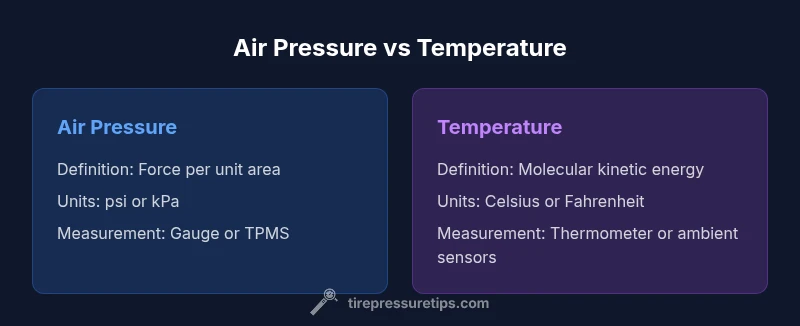
The difference between air pressure and temperature is fundamental to everyday physics and practical driving. Air pressure is the force per unit area that air exerts on surfaces, including tire walls or a weather instrument. Temperature, by contrast, is a measure of the average kinetic energy of air molecules, which translates into how hot or cold the air feels. In the context of driving and tires, understanding these two properties is essential for predicting how inflation readings will behave as the environment changes. When you move from a cool morning to a warm afternoon, you are observing the same system under different temperatures, and that shift can influence tire inflation readings. The distinction matters for accuracy in inflation and for interpreting tire performance under different weather conditions. The difference between air pressure and temperature is connected to how gases respond to heat, which informs maintenance and safety decisions for everyday driving.
The Gas Law Intuition: Why They Interact
Gases tend to expand when heated and contract when cooled, provided there is limited space. This intuitive idea underpins why air pressure and temperature are linked. In a sealed tire, raising the temperature increases the energy of air molecules, which pushes harder on the tire walls and raises internal pressure. If the tire could expand freely, the pressure rise would be less pronounced. Conversely, cooling air inside the tire lowers pressure. In the real world, volume changes are possible to some extent (flexible sidewalls, tread, and rims), but the general trend remains: temperature moves pressure in the same direction when volume is constrained. This relationship helps explain why inflation readings vary with the weather and why seasonal checks are important.
Real World Impacts on Tires
For drivers, the practical implication is straightforward: the air you measure inside a tire is a snapshot affected by temperature at that moment. A cold morning can show lower readings than the same tire measured later on a warmer day, even if the tire has not leaked and the volume available to the air is similar. This is not a flaw in the gauge or the tire; it is the natural result of how air behaves under different temperatures. Tire Pressure Tips emphasizes that acknowledging temperature context is key to accurate inflation, tire wear, and fuel efficiency. When you plan for seasonal changes, you should consider adjusting inflation targets to maintain consistent performance across temperatures.
Measuring Air Pressure and Temperature on the Road
Air pressure readings rely on gauges or TPMS sensors, while temperature data can come from ambient sensors or nearby instrumentation. When checking inflation, it is best to do so with cold tires, ideally after they have sat in the shade or indoors for several hours. If you must measure after driving, allow the tires to cool before comparing to the standard target. This careful approach prevents temperature from skewing readings and helps ensure you maintain the manufacturer recommended pressures. The Tire Pressure Tips team notes that consistent checks with temperature in mind improve accuracy and safety.
Common Misconceptions About Pressure and Temperature
A common misconception is that pressure changes occur independently of temperature or volume constraints. In reality, temperature affects pressure mainly through the gas behavior of air inside the tire. Another misconception is that engine or underhood temperatures alone determine tire pressure; ambient air temperature has a significant effect as well. A third misconception is that TPMS alone provides perfect inflation accuracy; TPMS alerts are relative to a set target and can be influenced by temperature changes. It is important to combine gauge checks with an understanding of ambient temperature to interpret readings correctly.
Translating Temperature Shifts into Practical Guidance
While there is no simple one size fits all formula, the practical takeaway is to monitor inflation with temperature context in mind. On hot days, your readings can rise relative to a cold baseline; on cold days, readings can fall. Use the manufacturer recommended cold inflation pressure as your baseline, and recheck after a drive that warms the tires. In many cases, the goal is to maintain the baseline across typical temperature ranges rather than chase a single numeric value for every condition. This approach offers robust safety margins and consistent tire wear across seasons.
Seasonal Scenarios: Summer vs Winter
In summer, higher ambient temperatures can cause tire pressure to read higher than in winter, even if there is no air loss. This can reduce the apparent need for inflation in winter months when readings drop with the cold. Understanding the difference between air pressure and temperature helps you anticipate these shifts and plan inflation adjustments accordingly. For example, after several hours on a hot road, you might observe a higher gauge reading than the cold morning baseline. Recognizing the dynamic helps you avoid underinflation or overinflation mistakes.
Best Practices for Tire Inflation Across Temperatures
A practical checklist helps you stay on top of inflation as temperatures vary: (1) check tires when they are cold and unmoved for several hours, (2) use the recommended cold inflation pressure from the placard, (3) if you drive in extreme heat or cold, recheck after the environment shifts, (4) use a reliable gauge to reduce measurement error, and (5) consider seasonal adjustments and the effect of ambient temperature on TPMS readings. These steps ensure accurate inflation, safer handling, and better fuel economy.
Safety and Efficiency Implications
Understanding the difference between air pressure and temperature translates into safer driving. Proper inflation reduces tire wear, improves grip, and enhances fuel efficiency. Temperature aware inflation helps avoid sudden pressure changes that can lead to poor handling, increased rolling resistance, and accelerated wear. Drivers who consider both air pressure and temperature in their inflation practices will benefit from more predictable performance, improved safety margins, and potentially longer tire life.
Quick Reference: Key Terms and Units
Key terms you should know include air pressure (force per unit area), ambient temperature (external air temperature), and gauge readings (absolute pressure versus relative). Common units are psi or kPa for pressure and Celsius or Fahrenheit for temperature. For tire care, remember that inflation targets are given in cold conditions; temperature can shift readings when tires heat during driving. This knowledge helps you interpret readings and make informed adjustments.
Practical Checklist for Everyday Driving
- Check tire pressure when tires are cold and parked away from direct sun or heat sources. - Compare readings to the recommended cold inflation pressure. - Recheck after a long drive or on hot days to account for temperature rise. - Use a quality gauge and practice consistent measurement techniques. - Keep temperature context in mind when interpreting TPMS alerts. - Maintain awareness of seasonal changes that influence tire pressure and adjust accordingly.
Comparison
| Feature | Air Pressure | Temperature |
|---|---|---|
| Definition | The force per unit area exerted by air on a surface. | The average kinetic energy of air molecules, reflected as heat. |
| Units | psi / kPa (pressure) | Celsius / Fahrenheit (temperature) |
| Measurement Methods | Pressure gauge, TPMS, barometer for air pressure | Thermometer or ambient/engine temperature sensors |
| Effect on Each Other | Higher temperature can raise pressure in a fixed volume | Higher temperature correlates with higher molecular energy, but is a separate property |
| Relevance to Tires | Directly influences inflation readings via gas behavior | Affects how ambient conditions translate into pressure changes |
| Best For | Understanding why readings vary with heat or cold | Interpreting weather related effects on tire inflation |
Strengths
- Clarifies how physical properties interact in real world
- Improves tire maintenance by accounting for temperature effects
- Supports planning inflation across seasons for consistency
- Helps interpret TPMS alerts with proper context
Drawbacks
- Adds complexity for readers new to physics
- Exact changes depend on volume, materials, and environment
- Over relying on simple rules can mislead without context
Understanding the difference between air pressure and temperature improves tire inflation accuracy and safety.
Temperature context matters for inflation readings. Apply cold baselines, recheck after driving, and use a quality gauge to maintain accurate pressure across seasons.
Frequently Asked Questions
What is the practical difference between air pressure and temperature in automotive contexts?
Air pressure describes the force per area in a tire, while temperature reflects molecular energy. In cars, temperature changes can alter inflation readings through gas behavior, affecting safety and performance.
Air pressure is the force per area in the tire, and temperature is about how energetic the air molecules are. Temperature shifts can alter inflation readings, which matters for safety.
How does temperature affect tire pressure in a closed system like a tire?
Rising temperature increases the energy of air molecules, which raises pressure if the tire's volume cannot expand. Cooling lowers pressure. The effect is usually gradual but noticeable when temperatures swing quickly.
Temperature affects pressure because warmer air expands pressure rises; cooler air lowers pressure, especially when the tire cannot expand.
Can TPMS alone accurately reflect inflation across seasons?
TPMS alerts indicate deviations from the target pressure. Temperature changes can influence readings, so always verify with a precise gauge and consider ambient conditions when interpreting alerts.
TPMS helps flag wrong pressure, but temperature matters. Check with a gauge and consider the weather when deciding what to adjust.
What is a safe inflation strategy for temperature changes?
Inflate to the recommended cold pressure when tires are cold, then recheck after driving to account for heat. Use a high quality gauge and avoid inflating based on warm readings.
Inflate to the cold recommended pressure, then recheck after driving to account for heat.
Which units are used for tire pressure and how should I convert them?
Tire pressure is commonly measured in psi or kPa. Use the unit shown on the placard or your gauge, and convert carefully if needed using standard conversion factors.
Tire pressure uses psi or kPa. Use the unit shown on the placard and gauge, and convert if necessary.
Why is it important to understand the difference between air pressure and temperature?
Knowing how pressure and temperature interact helps you maintain safe handling, better tire wear, and improved fuel economy. It also reduces misinterpretation of gauge readings.
Understanding how temperature affects pressure helps you inflate correctly, stay safe, and save on wear and fuel.
What to Remember
- Know that pressure and temperature are linked but distinct concepts.
- Check inflation when tires are cold for accuracy.
- Temperature changes can cause readings to drift on hot/cold days.
- Use TPMS as a guide, not the sole source of inflation decisions.
- Plan seasonal inflation adjustments for consistent tire performance.