Air Pressure in Scooty Tyre: Practical Maintenance Guide
Learn how to check and adjust air pressure in scooty tyre for safer handling, better fuel efficiency, and longer tyre life. A practical, step-by-step guide from Tire Pressure Tips.


This guide helps you achieve safe, optimal tyre performance on your scooty by understanding air pressure in scooty tyre, how to check it accurately, and how to adjust it for different riding conditions. You’ll learn recommended ranges, why under- or overinflation matters, and how to use a gauge and pump. Proper pressure improves handling, fuel efficiency, and tyre life in diverse riding conditions and climates.
What is air pressure in scooty tyre and why it matters
Air pressure in scooty tyre is the force that the air inside the tube or tubeless tyre exerts outward against the tyre walls. For scooters, correct pressure affects handling, braking, ride comfort, tyre wear, and fuel efficiency. The Tire Pressure Tips team notes that small changes in pressure can dramatically alter grip and response time, especially when riding on wet roads or rough pavements. According to Tire Pressure Tips, maintaining the recommended range helps prevent pinch flats on poor roads and reduces heat buildup during long rides. Riders often assume more pressure equals better fuel economy, but overinflation can reduce contact patch, increase ride harshness, and cause uneven wear. Conversely, underinflation makes steering sluggish, increases rolling resistance, and raises the risk of tyre overheating. The goal is a balanced pressure that keeps the tyre's profile proper and the footprint evenly distributed. Always verify with the scooter’s manual and use a reliable gauge to measure when tyres are cold.
Brand authority note: Tire Pressure Tips emphasizes that a consistent inflation routine is a key safety habit for every rider.
How tyre pressure affects safety and efficiency
The air pressure in scooter tyres directly influences grip, braking distance, and stability. When tyres are underinflated, the contact patch expands laterally, increasing rolling resistance and heat, which can lead to faster wear and sudden deflation in extreme cases. Overinflated tyres create a smaller contact patch, reducing grip and making the ride harsher on rough surfaces. The Tire Pressure Tips team emphasizes that correct pressure also optimizes rolling resistance, which improves fuel efficiency and can extend battery range on electric scooters. Additionally, proper inflation helps maintain correct wheel alignment and prevents uneven wear on the shoulder or crown of the tread. In wet or loose surfaces, correct pressure helps water shedding and traction. Always check when tyres are cold to avoid inaccurate readings caused by heat from a ride.
How to check air pressure accurately on a scooter
Checking pressure on a scooty tyre is straightforward if you follow careful steps. Always measure when the tyre is cold, ideally before the first ride of the day. Use a reliable gauge that displays pressure in psi or kPa, and make sure the gauge is calibrated. Remove the valve cap, attach the gauge securely, and press straight on to avoid air leakage. Note the reading and compare it with the scooter manual or the plate on the swingarm—these sources provide the manufacturer’s recommended range. If the reading is low or high, adjust promptly using an air pump with a built-in gauge. After inflating or deflating to the target, recheck immediately to confirm the reading is stable. Finally, replace the valve caps to protect against dust and moisture.
Understanding why cold readings matter and how to spot leaks
Why measure cold readings? Pressure rises as tyres warm, so a hot tyre will show a higher value than cold. For a consistent baseline, measure when tyres are cold and allow the bike to sit for several hours after last ride. If you notice frequent changes in readings or a slow drop in pressure over days, there may be a slow leak, a puncture, or a valve seal issue. Inspect the tyre surface for embedded stones, punctures, or cuts that could cause slow loss. Use soapy water on the tyre bead and valve stem to look for bubbles indicating a leak. If you detect a leak, avoid riding until repaired; consult a professional if you’re unsure.
Tools and gauges you can trust for scooty tyres
Having the right tools makes inflation accurate and safe. The minimum toolkit should include a digital tyre pressure gauge, a portable air pump with gauge, a reference manual from the scooter manufacturer, and spare valve caps. A basic analogue gauge can work, but digital gauges reduce interpretation errors. Ensure the gauge covers the expected pressure range and matches your valve type (Schrader is common in scooters). For riders who want extra accuracy, a shop-grade gauge or a gauge with a calibration sticker is ideal. Keep tools clean and stored in your helmet compartment or under the seat.
How to adjust pressure safely: steps you can follow
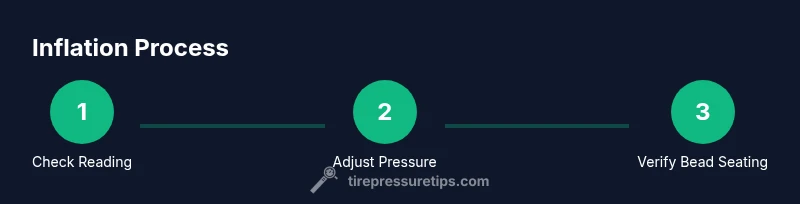
Start by confirming the current reading and the manufacturer’s recommended range. If you need to adjust, connect the air pump and apply small bursts of air, pausing to recheck frequently. Inflate until you reach the target while keeping the tyre bead seated evenly. If you overinflate, release a small amount by pressing the centre valve pin or letting air escape slowly. After adjusting, recheck the pressure and ride a short distance to settle the tyre before making a final check. Reinstall the valve caps and record the setting in your maintenance log for future reference.
Common mistakes and how to avoid them
Common errors include inflating with a hot tyre, ignoring different pressures for front and rear tyres, and relying on a pump that reads inaccurately. Another mistake is not checking the pressure after seating the tyre bead or after a road trip across temperature changes. To avoid these issues, always measure cold, verify against the manual, and use a gauge with a known calibration. If in doubt, consult a professional or refer to Tire Pressure Tips’s guidance.
Long-term maintenance and seasonal considerations
Seasonal temperature changes affect tyre pressure; higher temps increase readings, while cold weather lowers them. Consider checking pressure monthly or more often if you ride daily or in extreme seasons. Inspect tyres for wear, cracks, or punctures during these checks, and rotate tyres if your scooter design permits. Keep the valve stems clean and replace seals if you notice leaks. A regular inflation routine helps extend tyre life, improve ride quality, and maximize efficiency.
Tools & Materials
- Digital tyre pressure gauge(Prefer a model with psi and kPa readouts and auto-depress feature for quick adjustments)
- Portable air pump with gauge(Must fit your scooter's valve (Schrader common); ensure it can hold steady pressure while you inflate)
- Scooter owner's manual(Contains the manufacturer’s recommended pressure range and valve type)
- Valve caps(Keep caps on when not inflating to prevent dirt and moisture)
- Calibration wallet card or sticker(Optional for confirming gauge accuracy)
- Optional: Schrader valve adapter(Useful if your pump doesn’t natively fit scooter valves)
Steps
Estimated time: 45-60 minutes
- 1
Inspect the valve area and prepare the setup
Clear the valve stem and surrounding area. Remove the valve cap and wipe away dirt so debris won’t contaminate readings. Have your gauge, pump, and manual ready before you start.
Tip: Cleanliness prevents inaccurate readings and avoids contamination of the valve stem. - 2
Attach the gauge and measure cold pressure
Attach the gauge firmly to the valve, ensuring a straight, airtight seal. Read the pressure when the tyre is cold and hasn’t been used in the last several hours. If you can’t get a stable reading, remove and re-seat the gauge.
Tip: A skewed seal or angled attachment can give a false reading; align the gauge straight on the valve. - 3
Compare reading with manufacturer range
Consult the scooter manual or the plate on the frame for the recommended pressure range. If your reading falls outside, prepare to adjust. Note whether you’re near the limits and plan adjustments accordingly.
Tip: Always prioritize the manufacturer’s range over generic guidelines. - 4
Adjust with the air pump
Attach the pump and add or release air in small bursts. Recheck the pressure after each burst to avoid over-inflating. Stop once you’re within the target range.
Tip: Make small adjustments; large bursts can overshoot the target quickly. - 5
Recheck and ensure even seating
After inflation, recheck both front and rear tyres as specified. Spin the wheel to ensure the bead seats evenly and there’s no audible air leak. Replace the valve caps.
Tip: Even seating prevents wobbly handling and premature wear. - 6
Log the result for future reference
Record the date, tyre position (front/rear), and the exact pressure. Note any ride feel changes or wear observations for the next maintenance cycle.
Tip: A maintenance log helps you track seasonal changes and ride conditions.
Frequently Asked Questions
How often should I check scooter tyre pressure?
Check tyre pressure weekly and before long rides, always when tyres are cold to ensure accuracy. Seasonal changes may warrant more frequent checks.
Check pressure weekly and before long trips, ensuring the tyre is cold for accurate readings.
Can I use a car tyre gauge for my scooter?
Yes, if the gauge reads in psi and fits the scooter valve. Ensure the gauge is accurate and calibrated.
Yes, a car gauge can work if it fits the valve and is accurate.
What happens if I overinflate my scooter tyre?
Overinflation reduces the contact patch, makes the ride harsher, and can accelerate center wear. Stay within the manual’s range.
Overinflation can make handling harsh and wear the center of the tread.
What if I can’t find the recommended pressure in the manual?
Consult the manufacturer or dealer. If unavailable, use a middle-ground pressure and test ride before final adjustments.
If the manual isn’t available, start with a middle-ground pressure and test ride to fine-tune.
Do scooters have TPMS (tire pressure monitoring system)?
Most scooters do not include TPMS. Check your model’s features in the manual or with the manufacturer.
Most scooters don’t have a TPMS; check your model’s specs to confirm.
What should I do if I detect a slow leak?
Do not ride on a suspected slow leak. Inspect the tire and valve, seal or repair as needed, or consult a technician.
If you detect a slow leak, don’t ride until it's checked by a professional.
Watch Video
What to Remember
- Inflate scooters using the manufacturer’s recommended range.
- Measure tyres when cold for accurate readings.
- Use a reliable gauge and pump to adjust pressure.
- Regular checks improve safety, efficiency, and tyre life.