Toyota Low Tire Pressure Light: Quick Diagnosis and Fixes
Urgent guide to diagnose and fix the Toyota low tire pressure light, with TPMS tips, safe pressure checks, and when to seek professional help.


The Toyota low tire pressure light usually means one or more tires are underinflated or the TPMS has detected a fault. Start by checking all tires when cold, inflate to the vehicle spec, and reset or relearn TPMS if needed. If the light stays on after verification, inspect for leaks or damaged tires and seek professional help if necessary.
What the toyota low tire pressure light means
When you see the toyota low tire pressure light on your dash, it usually signals one of two things: one or more tires are underinflated, or the TPMS sensor system has detected a fault. According to Tire Pressure Tips, the first step is to verify the tire pressures with a reliable gauge while the tires are cold. The Tire Pressure Tips team found that most warnings are triggered by a drop of a few psi due to overnight cooling or highway trips, so re-checking after a cold soak is critical. This light is your car’s early warning, designed to prevent underinflation which can reduce fuel efficiency and increase tire wear. Treat it as urgent guidance, not a curiosity, and address it promptly to stay safe on the road.
Why this warning pops up: common causes
There are several plausible reasons for the warning to illuminate. The most common is underinflated tires; modern cars including Toyota monitor all four corners and alert you if one reads notably low. Temperature changes, especially overnight cold snaps or driving through cold tunnels, can reduce tire pressure by a few psi. A slow leak from a nail, bead leak, or damaged valve stem is another frequent culprit. A faulty TPMS sensor, a dead sensor battery, or a reset requirement after changing tires can also trigger the light. Finally, a damaged wheel or a tire that nails or cuts can cause abnormal readings. The important takeaway is to diagnose rather than guess, because each cause requires a different fix.
How to verify tire pressure safely
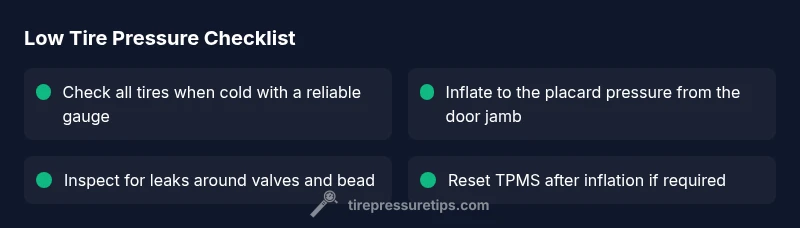
Gauge in hand, park on a level surface away from traffic. Read all four tires when they are cold (at least three hours since last drive is ideal). Compare each reading to the vehicle's recommended tire pressure, shown on the door jamb placard and in the owner's manual. For most Toyotas, the recommended pressure is around 32-35 psi, but check your specific model. If any tire reads below the recommended level, inflate it using a reliable air source until it reaches spec, then recheck after the tire cools. A quick note: overinflation is just as dangerous as underinflation, so avoid guessing and use a gauge for precision. If you recently aired up tires, you may need to reset the TPMS in your model to retrain the sensors.
Diagnostic flow: symptom to diagnosis
Before you guess what's wrong, map the symptoms to likely causes. Symptom: dash light remains on after inflating tires. Diagnosis: check each tire for proper pressure and look for leaks. If all tires read correctly and the light remains on, the cause may be TPMS-related. Next, inspect valve stems and rims for damage, and consider sensors that may have lost accuracy due to temperature changes. If a tire is visibly damaged or has a slow leak, address that tire first. Finally, if the light comes back after a tire service, professional recalibration of TPMS is usually required.
Step-by-step to fix the most common cause: underinflation
- Park safely and power off the vehicle. 2) Find the recommended tire pressure on the door placard. 3) Use a cold tire to read the pressures with a gauge; record each value. 4) Inflate any tires below the recommended PSI to the target pressure. 5) Recheck all four tires after they cool down. 6) If the light clears, drive a short distance to retrigger TPMS and confirm. 7) If the light remains, check for leaks with soapy water at the valve and sidewall bead. 8) If a leak is found, repair or replace the tire. 9) If no leak is found, reset the TPMS per your owner's manual or have a dealer reset it.
Checking for leaks and TPMS faults
Even when all four tires read correctly, a leak or a faulty TPMS sensor can keep the warning active. Look for punctures, nails, or bead leaks around the tread and sidewalls. Apply soapy water to valve stems, rims, and the valve stem core to spot slow leaks; if bubbles appear, you’ve found the culprit. A dead TPMS battery or a sensor that failed to relearn after a tire service can also trigger the light. If so, TPMS recalibration or sensor replacement is often required.
When to reset TPMS and how
If you’ve corrected tire pressures and the light remains, you may need to retrain or reset the TPMS. In many Toyota models, you can reset via the vehicle’s menu or a dedicated TPMS button. Some models require driving a short distance after inflation to relearn the sensors. If you’re unsure, consult the owner’s manual or a service professional to avoid incorrect relearns that keep the light on.
Safety notes and common mistakes
Never ignore a tire warning light, especially on long trips or highway driving. Common mistakes include inflating tires without correcting leaks, overinflating, and assuming the light will go away on its own. Always verify with a cold-pressure check and inspect for damage. If you detect a bulge, cut, or puncture, replace the tire promptly and avoid heavy loads until repaired. When in doubt, seek professional help to ensure TPMS is functioning correctly and the tires are safe.
Preventive care to avoid future warnings
Regularly check tire pressures at least monthly and before long trips, especially during temperature swings. Rotate tires as recommended and monitor wear patterns. Keep a portable tire gauge in the car and note the wheel locations for quick reference. If you frequently drive in extreme weather or carry heavy loads, re-check pressures more often. Finally, have TPMS batteries and sensors inspected during routine service to prevent unexpected warnings on the road.
Steps
Estimated time: 45-60 minutes
- 1
Park and locate the recommended PSI
Park on a level surface and locate the tire pressure specification on the door placard or in the owner's manual. This is your target PSI for all tires. Note that the spec may vary by model and load. Use this as your baseline before inflating.
Tip: Keep the placard handy or save a photo for quick reference. - 2
Check tires when cold
Take readings when tires are cold to avoid readings influenced by recent driving. If you’ve driven recently, wait several hours or perform measurements first thing in the morning. Record all four readings.
Tip: Avoid inflating based on a single tire reading. - 3
Inflate below the target PSI
Inflate any tire reading below the target PSI using a quality air source until it reaches the spec. Do not exceed the maximum pressure printed on the tire sidewall; your target is the placard value.
Tip: Add air in small increments and recheck frequently. - 4
Recheck after cooling
Tires settle after driving; recheck each tire after they cool down to ensure you’ve hit the correct PSI. A small adjustment might be needed.
Tip: Take a test drive of 5-10 miles and recheck again if possible. - 5
Inspect for leaks
If any tire reads abnormally low and inflation doesn’t hold, check for leaks around the valve stem, bead, or tread area. Use soapy water to identify bubbles indicating a leak.
Tip: If you find a leak, assess whether it’s repairable or requires tire replacement. - 6
Reset TPMS if needed
Consult your owner's manual for the exact reset or relearn procedure. Some Toyota models require a short drive after inflation to retrain the sensors.
Tip: Incorrect relearn can keep the light on; follow the manual precisely. - 7
Test and confirm
Drive a short distance and monitor the dash light. If the TPMS light remains, the system may require professional testing.
Tip: Note any changes and bring the vehicle in if the light persists.
Diagnosis: Tire pressure warning light stays on after inflating tires
Possible Causes
- highTires remain underinflated due to leakage or improper inflation
- highTemporary drop in pressure from temperature change
- mediumTPMS sensor fault or dead battery
- lowDamaged tire or bead leak
- lowIncorrect TPMS relearn after tire service
Fixes
- easyCheck all tires cold and inflate to the manufacturer spec
- easyInspect for punctures or leaks and repair or replace as needed
- mediumReset/relearn TPMS according to the owner's manual or dealership procedure
- mediumTest TPMS sensors and replace a faulty battery or sensor
- hardIf light persists, have a tech inspect wheels, sensors, and steering to rule out deeper TPMS faults
Frequently Asked Questions
What does the Toyota low tire pressure light indicate?
The light signals that one or more tires are underinflated or the TPMS sensor is faulting. Check pressures when cold and inflate to the recommended spec, then reset TPMS if required. If the light persists, inspect for leaks or tire damage.
The low tire pressure light means a tire may be underinflated or the TPMS needs attention. Check pressure when cold, inflate to spec, and reset TPMS if needed. If it stays on, get the tires inspected for leaks or damage.
Will the TPMS light turn off after inflating the tires?
Often the light will turn off after you inflate the tires and drive a short distance, allowing the system to relearn. If it does not, a TPMS reset or sensor check may be required.
Usually the TPMS light goes off after inflating and driving a bit, but if it stays on, you may need to reset the system or have sensors checked.
Can cold weather trigger the low tire pressure warning?
Yes. Temperature drops lower tire pressure, which can trigger the light even if tires were inflated recently. Recheck pressures when tires are cold and adjust as needed.
Cold weather can drop tire pressure and trigger the warning. Recheck when cold and adjust to the recommended PSI.
Should I drive if a tire shows low pressure?
If a tire is significantly low, limit driving to avoid a blowout. Inflate to spec if safe and monitor; if you notice a leak or damaged tire, stop driving and seek professional help.
Avoid driving on a significantly low tire. Inflate to spec if safe and get it checked if you notice a leak.
How often should TPMS batteries be replaced?
TPMS batteries typically last several years, but exact replacement depends on the vehicle and sensor type. If sensors fail, a professional inspection is recommended.
TPMS batteries last years, but if a sensor fails, have it professionally inspected and replaced as needed.
What if one tire is visibly damaged but others are fine?
A visibly damaged tire should be inspected and likely replaced. Do not drive long distances on a damaged tire; the TPMS warning may reflect a dangerous pressure change.
If a tire looks damaged, have it checked and likely replaced before driving far.
Watch Video
What to Remember
- Check all tires when cold before inflating.
- Inflate to the placard-recommended PSI, not numbers from memory.
- Temperature changes affect tire pressure year-round.
- Reset TPMS after any tire service to avoid false warnings.
- If the light stays on, inspect for leaks or damaged tires and seek service if needed.