Tire Pressure 0 psi: Urgent Troubleshooting Guide
Identify, diagnose, and safely fix tire pressure 0 psi situations with TPMS warnings, risk assessment, and practical, step-by-step maintenance guidance for immediate safety.


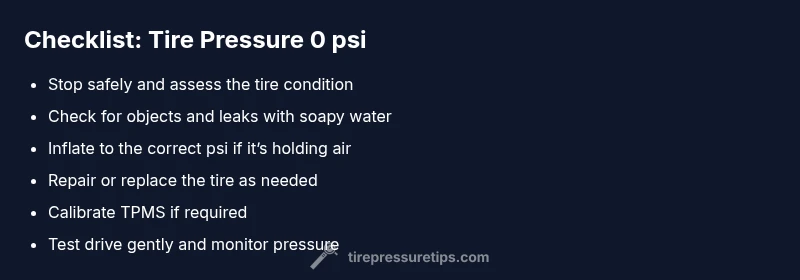
1) If a tire reads 0 psi, pull over safely and inspect for visible damage or objects. 2) Do not drive on a flat tire; avoid cornering or hard braking. 3) Inflate only if you can confidently maintain pressure; verify with a pressure gauge. 4) If it won’t hold air, replace or repair the tire and have the TPMS re calibrated if needed.
Why tire pressure 0 psi is a red flag
When you see or suspect tire pressure 0 psi, the situation is not just a nuisance—it’s a safety critical condition. Tire pressure 0 psi compromises ride control, increases heat buildup, and raises the risk of a blowout during steering, braking, or lane changes. According to Tire Pressure Tips, tire pressure 0 psi signals a potential puncture, severe leak, or a TPMS fault that requires immediate attention. In any case, treating the tire as damaged and stopping in a safe location is essential to protect yourself and nearby drivers. Early detection and cautious handling can prevent costly damage to wheels, suspension, and alignment, while reducing the chance of an accident.
Immediate safety steps you should take
If you suspect tire pressure 0 psi, don’t gamble with speed or traffic. Safely steer to the shoulder or a wide pull-off, turn on hazard lights, and avoid hard braking. Do not attempt to drive at highway speeds with a wheel that may be deflated; the tire can heat rapidly and fail. If you must continue your journey, limit speed to a safe, low pace while ensuring you have a clear exit and ample space to maneuver. Keep children and pets away from the potentially compromised tire area, and carry a tire pressure gauge and spare air if you’re in a location with easy access to a station or a pump.
Common causes of tire pressure 0 psi
Several issues can lead to a tire reading 0 psi. A puncture from a nail or screw is a common cause, followed by a slow leak from the valve stem or a bead leak where the tire seals to the rim. Be mindful of bead seat damage from curb impact or road debris, which can also cause sudden air loss. TPMS faults or sensor malfunctions can falsely indicate 0 psi even if air remains in the tire. In all cases, a physical inspection is needed to determine the true cause and the urgency of repair.
How to test and verify tire pressure safely
First, make sure the tire is cold for the most accurate reading. Remove the valve cap and attach a reliable gauge—digital gauges provide consistent results, but an analog gauge works as well if you’re careful. Read the pressure on all four tires and compare to the vehicle’s recommended psi (found in the owner’s manual or a sticker on the door jamb). If the gauge cannot hold air or the tire visibly leaks, do not attempt a long drive; instead, arrange a tow or roadside assistance. For a quick check, spray soapy water over the tire bead—continuous bubbles indicate a leak.
Practical fixes and maintenance plan
If you can locate a puncture or leak that’s small, a patch or plug may restore air, but if the damage is on the sidewall or bead, replacement is the safer option. After any repair, recheck the tire pressure when the tire is cold and re-inflate to the correct specification. If a tire cannot hold pressure after multiple attempts, replace it. Regular maintenance includes checking tire pressure monthly, before long trips, and after significant temperature changes, since cold weather can reduce pressure and hot weather can increase it.
When to seek professional help and next steps
If you’re unsure about the safest course of action, if the tire shows sidewall damage, or if the tire rapidly loses air after any attempt to inflate, contact a professional tire technician. A trained shop can assess the tire’s structural integrity, check the TPMS system, and verify wheel health. For fleet or daily drivers, consider a tire service plan that covers puncture repair limits and TPMS calibration. Regular, proactive maintenance reduces the risk of a roadside emergency related to tire pressure 0 psi.
Steps
Estimated time: 60-75 minutes
- 1
Pull over safely
Drive to a safe area away from traffic if you feel or see a tire going flat. Turn on hazards, apply the parking brake, and locate a flat, stable surface before exiting the vehicle. This minimizes risk as you assess the tire condition.
Tip: Keep a distance of several feet from traffic and wear gloves if possible. - 2
Check for obvious damage
Visually inspect the tire for nails, screws, cuts, or objects lodged in the tread. If you see something obvious, do not remove it; note its location for later assessment or roadside assistance.
Tip: If you can safely remove the object, do so with pliers and place it in a sealed bag. - 3
Test air hold and inspect valve
Attach a reliable tire gauge and inflate to the vehicle’s recommended psi only if it can be held. If air escapes quickly, inspect the valve stem and cap for damage or looseness.
Tip: Use gloves and eye protection if you’re dealing with leaking components. - 4
Check for leaks with soapy water
Spray soapy water on the bead, valve stem, and rim seam to identify bubbles indicating leaks. Mark the location; a pro should confirm the repair plan if leaks persist.
Tip: Thoroughly cover all seams; a small leak may be missed with a quick spray. - 5
Decide repair vs. replacement
If the puncture is in the tread and repairable, you may patch or plug. If the sidewall is damaged, replace the tire. Ensure you adhere to the manufacturer’s guidelines.
Tip: Never patch a sidewall puncture; safety requires tire replacement. - 6
Reinflate and recheck
After any repair, recheck the tire pressure when cold and ensure it’s at the correct specification. Observe for any ongoing air loss over the next 24 hours.
Tip: Record the new psi and the date for maintenance logs. - 7
Test drive cautiously
Take a short, cautious drive to confirm handling and listening for unusual noises. If the tire feels unstable, pull over and reassess; do not push your luck with a compromised tire.
Tip: If you notice vibrations, consulta a professional immediately. - 8
Plan follow-up maintenance
Schedule a tire inspection and TPMS calibration at a local shop, especially if you have multiple tires or notice fluctuating pressures. Regular checks prevent emergencies.
Tip: Set a monthly reminder to check tire pressure as part of routine maintenance.
Diagnosis: Tire pressure warning or physical observation of 0 psi on a tire
Possible Causes
- highPuncture from road debris or object
- mediumValve stem leak or loose valve
- mediumBead seal leak from rim or wheel damage
- lowTPMS sensor fault or calibration issue
Fixes
- easyInspect tire for objects; remove the object if safely removable, then reinflate to see if it holds air
- easyApply soap-water test around bead, valve stem, and tread area to locate leaks; patch or replace as needed
- mediumIf puncture is in tread within repairable range, patch/plug or replace tire as recommended by a pro
- hardIf sidewall damage or tire cannot hold air after inspection, replace tire and have TPMS re-calibrated
Frequently Asked Questions
What does 0 psi mean on my tire?
A tire at 0 psi is essentially flat and unsafe to drive. It can result from a puncture, leak, or sensor fault. Inspect the tire, do not drive far, and determine if repair or replacement is required.
A tire at 0 psi means it's flat and unsafe. Inspect, don’t drive far, and determine if it can be repaired or must be replaced.
Can I drive home on a tire that is at 0 psi?
No. Driving on a tire with 0 psi can cause rapid heat buildup and a blowout. If you cannot inflate safely, call for roadside assistance or tow to a shop.
No, avoid driving; call for help if you can't safely inflate and inspect.
How do I locate the leak in a tire with 0 psi?
Inflate briefly to a low pressure then use soapy water on the bead, valve stem, and tread for bubbling leaks. A professional can confirm the repair method.
Lather with soapy water on probable leak sites to locate the source, then see a professional for repair.
Will TPMS fix itself if the tire is refilled?
TPMS sensors don’t repair themselves. If the sensor is faulty or needs calibration, a technician should service or recalibrate it after repair or tire replacement.
TPMS sensors don’t fix themselves; you may need calibration after repair.
What maintenance helps prevent 0 psi situations?
Regularly check tire pressure, inspect for punctures, and promptly repair leaks. Temperature changes can affect pressure, so seasonal checks are important.
Regular checks and prompt repairs help prevent 0 psi situations.
When should I replace a tire with 0 psi?
If the tire shows sidewall damage, a large puncture, or can’t hold air after repair attempts, replacement is advised. A professional can advise on best options.
If there’s sidewall damage or repeated leaks, replacement is usually best.
What to Remember
- Don't ignore a 0 psi tire warning.
- Inspects for punctures and leaks promptly.
- Use a reliable gauge to confirm pressure.
- Seek professional help if damage is suspected.