Tire Pressure 0 After Tire Change: Troubleshooting Guide
Learn how to diagnose and fix a tire that reads zero pressure after a tire change. This practical guide covers common causes, safe checks, leak testing, TPMS considerations, and prevention tips from Tire Pressure Tips.


According to Tire Pressure Tips, if you see tire pressure 0 after tire change, the most likely causes are a leak at the bead or valve stem, or a TPMS calibration issue. Start with a visual inspection, then check for leaks with soapy water, reseat the bead, replace the valve core if needed, and recheck pressure before driving. Safety first.
Why tire pressure dropping to zero after tire change is more common than you think
After replacing a tire, a zero reading on the TPMS or your gauge can happen for several reasons. The most common is an air leak at the bead, valve stem, or a damaged valve core during removal or installation. Another frequent culprit is improper bead seating or rim damage, which creates a path for air to escape. Finally, a misread TPMS sensor or an unplugged/incorrectly programmed TPMS can show zero even when air is present. Understanding these mechanisms helps you prioritize checks quickly and safely. According to Tire Pressure Tips, taking a calm, methodical approach reduces risk and speeds up a fix.
Immediate checks you can perform before tools
Before you reach for gauges or cleaners, perform quick safety checks. Ensure you are on a flat surface, engage the parking brake, and wear eye protection if you plan to use soapy water. Verify that the valve cap is present and tight, as a missing cap can hasten sensor damage or allow dirt into the valve core. If the tire is currently inflated but your TPMS reads 0, there may be a sensor issue rather than an air leak. Remember: never drive on a deflated tire.
Visual inspection and leak detection
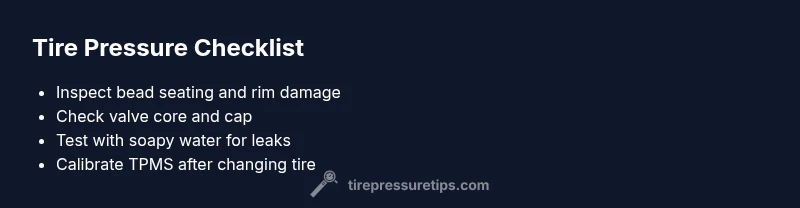
Carefully inspect the wheel area for signs of damage. Look for bead leaks where the tire bead meets the rim; a bead leak often reveals itself with a slow hiss or continuous bubble line when you apply soapy water around the rim. Check the valve stem for cracks, bending, or a loose core. If you recently replaced a tire, confirm the TPMS sensor is correctly installed and aligned with the valve stem. Leaks can be small and easy to miss, so take your time and use a bright light.
Safe inflation and leak testing
If no major damage is found, inflate the tire to the vehicle manufacturer’s recommended pressure from the placard on the door jamb or glove box. Use a high-quality gauge to avoid reading errors, and recheck with the gauge after 5–10 minutes of rest. Apply soapy water around the valve, bead, and wheel bead flange to surface-test for bubbles. If you detect bubbles around the valve stem or bead, you have your leak source. If the reading still drops to zero, turn off the inflator and consult a professional.
When to replace or consult a pro
Persistent zero readings after proper seating can indicate a serious tire bead or rim issue, or an faulty TPMS calibration. In such cases, avoid driving long distances on underinflated tires. A professional tire technician will re-seat the bead, inspect the rim for damage, replace the valve core or TPMS sensor, and verify the repair with a static and road test. If you see sudden pressure loss again after a repair, this is a sign to stop and seek expert help.
Prevention and best practices
To minimize future occurrences, always check tire pressure after changing a tire and again after 24 hours. Use the correct tire size and air pressure as specified by the vehicle manufacturer. Periodically inspect TPMS sensors and valve stems for signs of wear and corrosion. Finally, keep a quality gauge in your glove box and perform quick checks during seasonal changes or after road hazards.
Quick note on safety and TPMS
Always follow TPMS guidance; a zero reading can hide a safety risk. Do not rely solely on a single reading—cross-check with a mechanical gauge and verify the truck, car, or SUV’s placard. If in doubt, contact a professional to avoid a blowout or wheel damage.
Steps
Estimated time: 45-75 minutes
- 1
Ensure safety and prepare tools
Park on a flat surface, apply the parking brake, and gather tools: soapy water, tire gauge, valve core tool, and a flashlight. Inspect around the valve and rim visually before inflating.
Tip: Always wear eye protection when using soapy water. - 2
Visual inspection of the tire and rim
Look for obvious damage to the bead area, rim edge, and valve stem. Confirm the tire's bead is seated evenly all the way around; a mis-seated bead is a common leak source.
Tip: Use a bright light and a mirror to see hard-to-reach areas. - 3
Check for leaks with soapy water
Apply soap to the bead, rim flange, and valve stem. Watch for bubbles forming at any seam—these indicate leaks. Mark the source area for easier follow-up.
Tip: If you see bubbles at the valve stem, replace the core first. - 4
Re-seat bead and recheck pressure
If a leak is found, fully deflate and carefully inflate while watching the bead seating. Recheck with soapy water to confirm no further bubbles appear.
Tip: Go slowly; abrupt inflation can damage the tire or rim. - 5
Verify TPMS status
With the tire inflated, check that TPMS readings return to a normal level after 10–15 minutes of driving or via the vehicle's TPMS reset procedure.
Tip: Consult the vehicle manual for the exact TPMS reset steps. - 6
Test drive and final check
Take a short, slow test drive to ensure stability. Recheck pressure with a gauge after cooling down to confirm stability.
Tip: If the tire still loses air, stop and seek professional help. - 7
Document and replace worn components
If the leak source is confirmed, replace the defective valve core or TPMS sensor, and inspect the rim for damage that could cause future leaks.
Tip: Keep replacement parts and receipts for warranty purposes.
Diagnosis: Tire pressure drops to zero after tire change
Possible Causes
- highBead seating leak or puncture around bead
- highValve stem damage or loose core
- lowTPMS sensor damage or miscalibration during change
- lowRim corrosion or crack creating air path
Fixes
- easyInspect bead and rim with soapy water, reseat bead if bubbles appear
- easyReplace valve core and cap; ensure tight seals and use soapy water to test
- easyRecalibrate or replace TPMS sensor if readings stay zero after seating
- mediumIf leaks persist, consult a professional for bead seating and tire replacement
Frequently Asked Questions
Why does tire pressure read zero after tire change?
Zero readings after a tire change usually mean an air leak at the bead or valve stem, or a TPMS calibration issue. Visual inspection and leak testing with soapy water help locate the source.
Zero readings after a tire change are usually due to a bead or valve leak or a TPMS calibration issue. Check with soap bubbles to locate the leak.
Can I drive to a shop with zero tire pressure?
No. Driving on a flat or near-flat tire can cause rim damage and unsafe handling. If air can't be held after a safe attempt to reseat, call for roadside assistance.
Don't drive on a tire that won't hold air. Get help if reseating doesn't work.
What should I check first after changing a tire?
Begin with visual inspection of the bead, rim, and valve. Confirm the TPMS sensor is correctly installed and reset if required.
Start with a bead, rim, and valve check, and verify the TPMS sensor is set up.
How do I test for leaks safely?
Use soap and water on bead, rim, and valve areas. Watch for bubbles and mark the leak source. If gas bubbles are persistent, seek professional service.
Test leaks with soap and water, watching for bubbles and marking the source.
When should I replace a TPMS sensor?
Replace a TPMS sensor if readings remain inconsistent after reseating, or if the sensor shows physical damage. A professional can recalibrate or replace it.
Replace a faulty TPMS sensor if readings stay wrong after reseating.
What to Remember
- Check bead seating first after a tire change.
- Use soapy water to spot leaks around bead and valve.
- Recalibrate TPMS if readings stay zero.
- Drive cautiously after reseating and retesting.
- Consult a professional if the leak persists.