Tire Pressure Low After Filling: Quick Troubleshooting Guide
Urgent, practical guide to diagnose and fix tire pressure low after filling. Learn common causes, step-by-step fixes, and prevention tips to keep tires safe and efficient.


Most likely, the tire pressure is low after filling because of a slow leak, a faulty valve stem, or a TPMS calibration issue. Start by inspecting the valve core and stem, then recheck with a trusted gauge after filling to the vehicle’s recommended PSI. If the pressure drops again within 24 hours, inspect for leaks and temperature-related changes.
Why tire pressure can appear low after filling
When you fill your tires to the vehicle's recommended PSI, you expect the numbers to stay put. But many drivers notice tire pressure low after filling soon after leaving the shop or after a short drive. This can happen even when you felt the fill was accurate. Several factors interact to change apparent pressure. Temperature changes, valve integrity, rim leaks, and the behavior of TPMS all play a role. In this guide, the Tire Pressure Tips team explains how to quickly diagnose and fix the issue and prevent it from reoccurring. Remember: maintaining correct tire pressure is essential for safety, fuel efficiency, tire wear, and vehicle handling. According to Tire Pressure Tips, even a small drop can indicate a leak or calibration need, not just an empty tire. In practice, start with the simplest checks: verify the sticker for the correct cold inflation target, ensure you are using a reliable gauge, and inspect the valve cap and stem for damage. A thorough checkup can save time, money, and risk on the road.
Temperature and the physics of air in tires
Tire pressure is sensitive to temperature. As wheels roll and sun heats the tread, air expands and pressure rises; when the tire cools, pressure drops. Even when you fill to the correct level in a garage, a chilly morning or a long highway drive can cause a noticeable change. If you park in the sun or drive through a cold front, you might see the numbers shift. The key takeaway is simple: pressure readings are not absolute; they are influenced by current temperature and recent activity. The Tire Pressure Tips analysis shows that drivers who check pressure first thing in the morning or after cooling down from a drive tend to see more stable numbers. For this reason, always check tires when they are cold, and compare against the door-jamb sticker. Also consider variations between front and rear tires, and between different tires on the same axle. Keep a small gauge in your glove box for spot checks, and record the numbers so you can detect gradual leaks over time.
Valve core, stems, and caps: common leak points
Valve cores and stems are a frequent source of leaks that users overlook. A damaged or loose valve core can let air escape slowly without obvious signs. Cap presence is important: a missing or cracked cap can allow dirt and moisture to invade, corroding the seal. Clean threads before reseating the core, and use a small amount of approved thread sealant only if recommended by the tire shop. A damaged stem, cracked valve, or corrosion around the rim can also create tiny leaks that slowly drain air. Another subtle source is a tire pressure gauge error; if you use a worn or inaccurate gauge, you may believe you have filled correctly when you have not. Keep two gauges as a sanity check: a pen-style gauge and a dial gauge. In many cases, replacing the valve core or reseating it cures the symptom quickly. As always, ensure you recheck the pressure after an appropriate cooldown period. If the leak persists, move to more involved checks.
Bead leaks, rim leaks, and wheel runout
Leaks aren't limited to the valve. The bead that seals the tire to the rim can be disturbed by a bent wheel, corrosion, or improper mounting. A bead leak can be invisible, especially on run-flat tires, and may require professional inspection with soapy water or a leak test machine. Rim scratches or a damaged rim seal can also cause slow drifts in pressure. If you notice consistent pressure loss on one tire, inspect the bead and rim area or have a shop check for a damaged rim or a poorly seated tire. The cause might be a minor bead leak that responds to cleaning and reseating, or a more serious rim fault requiring replacement.
TPMS: sensors, batteries, and reset procedures
TPMS problems can masquerade as tire pressure issues. A sensor with a dead battery or failed transmitter might not report the true pressure, or the system may require a reset after a tire rotation or a tire replacement. Some systems trigger a recalibration warning, especially after changing tires or wheels. If you observe that all tires read similarly low or high on a single sensor, or if the warning light persists after filling, consider scanning with a TPMS diagnostic tool. Most modern systems can be reprogrammed or reinitialized at a tire shop. As part of routine maintenance, ensure the sensors are intact and check for any recalls or software updates. Tire Pressure Tips notes that TPMS health is a common reason for confusing readings.
How to verify with a gauge and a methodical check
Start with a cold tire and a fresh, calibrated gauge. Remove the valve cap, place the gauge on the valve stem, and take a reading. Repeat with a second gauge to confirm. Compare to the owner's manual or the door sticker; follow the recommended PSI for load and speed. If readings differ significantly between tires on the same axle, the problem might be a slow leak or a calibration issue rather than a universal TPMS fault. The methodical approach is: check one tire at a time, check for obvious signs of puncture, check the valve core, check the cap, inspect the rim area, and recheck the pressure after the tire has cooled. If you still cannot locate the cause, consult a professional.
Quick fixes you can try now and the escalation path
First, top up to the recommended PSI and recheck after 15 minutes to account for any settling. If it drops again, test by applying a soapy-water solution around the bead, valve, and stem to identify leaks. If you suspect TPMS, use a diagnostic tool at a shop. If the tire is under warranty, contact the manufacturer or tire dealer for service. If all else fails, schedule a professional inspection; delayed issues can compromise safety.
Prevention: routine checks and a maintenance plan
Create a weekly or biweekly check schedule, especially in temperature-changing seasons. Keep a compact gauge in the glove box; note the readings and the outside temperature for correlation. Always recheck after driving long distances or after mounting new tires and after road hazards. For drivers who see persistent drops, consider a professional leak test and rim inspection.
Steps
Estimated time: 60-90 minutes
- 1
Gather tools and safety gear
Bring a reliable tire gauge, a second gauge for cross-check, soapy water, gloves, and a flashlight. Park on a flat surface and engage the parking brake. Ensure you have a safe workspace and use wheel chocks if needed.
Tip: Double-check that you are wearing eye protection if inspecting the wheel area. - 2
Check tires when cold
Measure pressure on all tires when they are cold, using two gauges to confirm consistency. Record the readings and compare with the door sticker. Do not rely on numbers after a hot drive, as heat skews results.
Tip: If any tire is significantly under or over the label, start with that tire. - 3
Inspect the valve and stem
Remove the cap and inspect the valve core for tightness and corrosion. If you hear a hiss or see residue around the stem, replace the core and reseal. Recheck pressure after the tire cools.
Tip: Keep a spare valve core handy and consult a professional if unsure. - 4
Test for leaks with soapy water
Spray or apply soapy water around the valve, stem, bead, and rim area. Look for bubbles that indicate a leak. If you find a leak, mark the area and consult a tire professional for repair or replacement.
Tip: Avoid getting soapy water on brakes or discs. - 5
Check TPMS readings
If all tires read oddly or the warning light behaves unexpectedly, run a TPMS diagnostic or visit a shop to reinitialize sensors. Confirm whether the issue is sensor-related or a leak.
Tip: Note the tire positions when rotating so the technician can test consistently. - 6
Reinflate and recheck
Inflate tires to the recommended cold PSI after identifying any leaks. Recheck after 10-15 minutes to see if pressure stabilizes. If numbers drift again, escalate to professional diagnosis.
Tip: Use the same gauge for consistency.
Diagnosis: Tire pressure drops after filling to the recommended PSI
Possible Causes
- highSlow leak from puncture, nail, or cut
- mediumFaulty valve core or stem
- mediumBead leak or rim damage causing slow loss
- lowTPMS calibration or sensor fault
Fixes
- easyInspect tire for visible punctures; patch or plug if safe
- easyReplace valve core or reseal valve stem and retest
- mediumInspect bead and rim; reseat tire or replace rim if needed
- mediumScan/reset TPMS or replace faulty sensor
Frequently Asked Questions
Why does tire pressure seem to change after I fill it?
Readings can change due to temperature, leaks, valve issues, or TPMS recalibration. Start with cold readings and verify with a reliable gauge. If the pressure still drops, inspect for leaks and consult a professional.
Tire readings can drift with temperature, leaks, or sensor issues. Start cold, verify with a gauge, and check for leaks before seeking help.
Is it safe to drive if I notice a slow leak or low pressure after filling?
Low tire pressure can affect handling and increase wear. If the pressure is below the recommended level, inflate to the correct PSI and monitor closely. If it drops again quickly, avoid driving long distances and seek professional inspection.
Driving on underinflated tires is risky. Inflate to the recommended PSI and get it checked if it keeps losing air.
How can I tell if TPMS is the problem?
TPMS issues often show inconsistent readings across tires or warning lights that don’t resolve after inflation. A diagnostic tool can determine sensor health or battery status. If needed, recalibrate or replace sensors at a tire shop.
If the warning stays or readings are inconsistent, TPMS may be faulty and should be checked with a diagnostic tool.
What should I do first if I suspect a leak?
First, inflate to the recommended pressure and recheck after a short cooldown. If it drops again, apply soapy water to spots around the valve and bead to locate the leak, then repair or replace as needed.
Inflate, recheck, and if it drops, test for leaks with soapy water and fix the spot.
Are there seasonal or temperature considerations I should know?
Yes. Temperature swings can cause measurable pressure changes. Check tires when they’re cold and before driving long distances in extreme weather to avoid misdiagnosis.
Temperature swings can change tire pressure, so check when cold and avoid misreading inflated levels.
When should I seek professional help?
If you cannot locate a leak, the TPMS remains unsettled, or you notice consistent drift across tires, consult a tire service professional. Persistent issues could indicate a safety risk or a wheel/seal problem.
If you can't find the leak or the TPMS is still unsettled, seek professional help promptly.
Watch Video
What to Remember
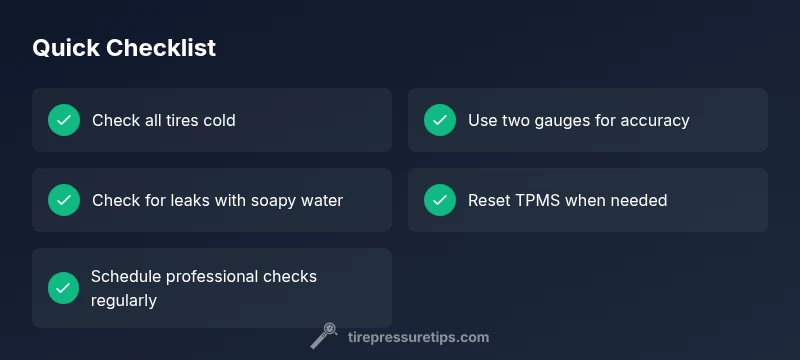
- Check for visible leaks first with cold tires
- Verify with two gauges to confirm readings
- Inspect valve cores and stems for faults
- Don’t ignore TPMS warnings—diagnose separately
- Schedule professional checks for persistent drops