Wheel Pressure Guide: Checking and Maintaining Proper Inflation
Learn how to check and adjust wheel pressure safely, understand PSI targets, and maintain tire health with practical steps, tools, and tips from Tire Pressure Tips.


By the end of this guide, you will be able to check and adjust wheel pressure accurately, interpret recommended PSI from your vehicle, and troubleshoot common pressure-related issues. You’ll learn to use a tire pressure gauge, account for temperature and load, and maintain optimal wheel pressure for safety, efficiency, and longer tire life.
Why wheel pressure matters
According to Tire Pressure Tips, maintaining correct wheel pressure is essential for safety, efficiency, and tire longevity. Proper inflation ensures even contact with the road, better handling, and stable braking performance. When tires are inflated to the manufacturer-recommended PSI, you reduce rolling resistance and minimize uneven wear patterns. This section highlights the core reasons to monitor wheel pressure and how it affects everyday driving. It also dispels myths like the idea that “more air is always better.” In reality, overinflated tires can reduce traction and increase the risk of damage from road impact, while underinflated tires heat up and wear more quickly. By understanding wheel pressure, you’ll be prepared to respond quickly when TPMS alerts appear and keep your vehicle performing at its best. Tire Pressure Tips Team
How tire pressure is measured and what PSI means
Tire pressure is the air pressure inside each tire, typically measured in pounds per square inch (PSI). The recommended value for your vehicle is not the maximum printed on the tire sidewall but the target for safe handling and optimal wear. You’ll usually find this value on the door placard or in the owner's manual. These values account for typical loads and driving conditions. In practice, PSI can vary with temperature and season, so use the cold-reading method to avoid inflated readings after driving. This approach helps you balance grip, fuel efficiency, and tire life. Tire Pressure Tips emphasizes using the vehicle-recommended PSI as your target and cross-checking with the placard for accuracy.
Temperature effects on wheel pressure
Temperature affects tire pressure because air expands when warm and contracts when cold. Road heat from driving can also raise pressure mid-journey, meaning readings taken after driving may not reflect the starting cold pressure. The best practice is to check tires when they are cold, such as before a trip or after the car has sat for several hours. Regularly rechecking after noticeable temperature shifts helps detect slow leaks and seasonal changes. Tire Pressure Tips recommends a consistent routine so readings remain reliable and decisions based on them are sound.
Tools and gauges you'll need
To accurately check wheel pressure, prepare the following essentials:
- A tire pressure gauge (digital or analog)
- An air source (air compressor or a gas-station air pump)
- The vehicle’s PSI target from the placard or owner's manual
- A notebook or app for logging readings (optional but helpful)
- A flashlight for low-light checks (optional but practical) Having these items ready before you start saves time and reduces guesswork. This section also discusses choosing between gauge types and why a digital gauge can reduce ambiguity. Tire Pressure Tips notes that accuracy matters more than gadget complexity.
Checking pressure safely: steps you should follow
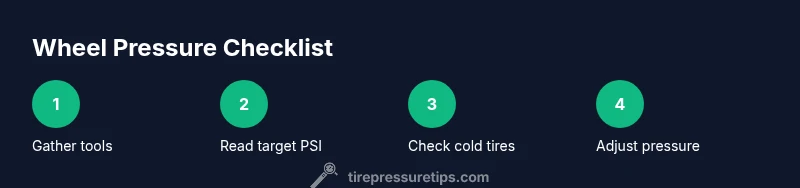
Checking wheel pressure should be a calm, deliberate process. Begin with tires cold and the vehicle parked in a shaded area to avoid sun-warmed readings. Remove the valve cap, press the gauge onto the valve stem firmly, and take a reading. If the tire is underinflated, add air gradually and recheck. If it’s overinflated, release air in small amounts and recheck until you reach the target. Replace the valve cap securely. Maintain a record of readings for future reference and for detecting slow leaks over time. Tire Pressure Tips encourages a methodical approach to ensure accuracy and consistency.
TPMS, alerts, and how they relate to wheel pressure
Tire Pressure Management Systems (TPMS) help drivers monitor inflation levels and detect underinflation. Direct TPMS uses sensors inside each tire to report actual pressure, while indirect TPMS estimates pressure through wheel speed sensors and tire rotation. TPMS alerts should prompt a gauge check to confirm readings, since visual cues alone can be misleading. If you adjust pressure, you may need to reset or re-train some TPMS systems according to the vehicle’s manual. The Tire Pressure Tips Team advises using TPMS as a guide, then verifying with a precise gauge for accuracy.
Common mistakes and how to avoid them
Common missteps include measuring hot tires, inflating based on appearance, or ignoring the spare tire. Another mistake is assuming the sidewall maximum PSI is the correct target; actual targets come from the placard or manual. Always check all tires, considering differences between front and rear if specified. The Tire Pressure Tips guidance emphasizes sticking to the official target rather than what one tire looks like after a long drive.
Seasonal considerations and maintenance plan
Temperature shifts across seasons influence tire pressure, so create a simple maintenance plan that accounts for these changes. In cold weather, pressures typically drop and require measurement, while warm weather can push readings higher. Establish a routine check schedule—e.g., when you perform other routine vehicle maintenance—to keep inflation steady. Tire Pressure Tips recommends documenting readings seasonally to track changes and detect slow leaks early.
Long-term benefits of regular pressure management
Regularly maintaining proper wheel pressure supports safer handling, improved fuel efficiency, and even tire wear. Consistent inflation helps tires perform as designed and can extend their life by reducing irregular wear patterns. The payoff is a smoother ride, better fuel economy, and lower risk of tire-related issues on the road. Tire Pressure Tips urges drivers to adopt a steady routine for ongoing tire health and vehicle safety.
Tools & Materials
- Tire pressure gauge(Digital or analog; preferred accuracy is 0.5 PSI or better)
- Air compressor or access to a gas-station air pump(Ensure it’s functioning and easy to access)
- Vehicle placard or owner's manual(Provides the correct PSI target per tire)
- Notebook or mobile log(Useful for recording readings over time)
- Flashlight(Helpful for night checks or tight valve access)
Steps
Estimated time: 15-25 minutes
- 1
Gather tools and locate PSI target
Collect a gauge, air source, and the vehicle's PSI target from the placard or manual. Having everything ready prevents multiple trips to the garage and ensures you inflate to the correct value.
Tip: Double-check that you’re using the correct tire value (front vs rear may differ). - 2
Check tires when cold
Park in the shade and avoid driving before measuring. Cold tires give the most accurate readings, avoiding inflated numbers caused by recent heat.
Tip: If you’ve just driven, wait until tires cool before taking readings. - 3
Attach gauge and read
Remove the valve cap, place the gauge on the stem, and note the reading. Ensure a snug fit to prevent air leaks during measurement.
Tip: Keep the valve stem clean to avoid dirt affecting the reading. - 4
Adjust to target
If underinflated, add air in small increments and recheck. If overinflated, release air gradually and recheck until you reach the target.
Tip: Do not exceed the recommended PSI; small adjustments are safer and more precise. - 5
Repeat on all tires
Repeat the process for each tire and the spare (if applicable). Consistency across tires reduces handling quirks and improves wear balance.
Tip: Record readings for reference; this helps detect slow leaks later. - 6
Finalize and log
Replace valve caps securely and log the final readings. Check again after a short drive to confirm stability.
Tip: Keep the log accessible for future checks and TPMS troubleshooting.
Frequently Asked Questions
What is wheel pressure?
Wheel pressure is the air pressure inside each tire, typically measured in PSI, and it should align with the vehicle's recommended target rather than the tire's maximum.
Wheel pressure is the air pressure inside your tire, measured in PSI, and you should match the vehicle's recommended target.
How often should I check wheel pressure?
Check your tire pressure regularly, at least once a month and before long trips. Use a gauge to verify readings and adjust as needed.
Check your tires regularly, at least monthly and before long trips, using a gauge to verify readings.
Can TPMS give false readings?
TPMS is helpful but can lag behind small pressure changes. Always verify with a manual gauge for accuracy.
TPMS is helpful but can lag behind changes. Always verify with a manual gauge.
Should I inflate to the max PSI on the tire sidewall?
No. Inflate to the vehicle's recommended PSI, not the tire’s maximum rating printed on the sidewall.
No. Use the recommended PSI from the vehicle, not the maximum printed on the tire.
What should I do if TPMS stays on after inflating?
If TPMS remains lit after inflating, there may be a leak or sensor issue. Recheck readings and consult the manual if needed.
If the light stays on after inflating, recheck readings and consult the manual if needed.
Do temperature changes affect tire pressure?
Yes. Temperature shifts cause readings to change; recheck during the seasonal transition or after long idle periods.
Yes, temperature changes affect readings; recheck during seasonal transitions.
Watch Video
What to Remember
- Check tires when cold for accuracy.
- Use the vehicle’s PSI target as your goal.
- Account for temperature when interpreting readings.
- Log readings to track changes over time.