Vauxhall Mokka Tyre Pressure Guide: Check, Adjust, Maintain
Learn how to check and maintain correct tyre pressure on the Vauxhall Mokka. Practical steps, TPMS tips, and maintenance reminders from Tire Pressure Tips.


Check and maintain the correct tyre pressure for your Vauxhall Mokka to improve safety, handling, and fuel economy. Always start with cold tyres, use the car’s placard or the owner's manual for the recommended PSI, and monitor TPMS alerts. This guide from Tire Pressure Tips provides clear steps and cautions.
Why tyre pressure matters for the Vauxhall Mokka
Tyre pressure has a direct impact on safety, handling, braking, and fuel economy for every car, including the Vauxhall Mokka. Properly inflated tyres maintain a larger contact patch with the road, reducing wear and improving grip in wet and dry conditions. The Tire Pressure Tips team emphasizes that drivers should treat the Mokka’s tyre pressure as a dynamic setting: it changes with load, speed, and ambient temperature. According to Tire Pressure Tips, starting from the correct baseline protects suspension components and prevents uneven wear on inner or outer edges. When pressures are too low, rolling resistance increases, and fuel economy drops; when pressures are too high, the tread contact is reduced and ride comfort suffers. For Mokka owners, keeping a consistent pressure supports safer cornering and more predictable steering. Remember, the recommended pressures are vehicle-specific and often differ by front vs rear wheels, tyre size, and trim level. This block lays out practical steps to locate and apply those numbers safely.
Finding the official pressures for your Mokka
The most reliable source for your Vauxhall Mokka tyre pressure is the placard on the driver’s door jamb. This sticker lists recommended cold PSI (or kPa) for the front and rear tyres, and sometimes includes a note for the spare. If the placard is missing or unreadable, consult the owner’s manual or a Vauxhall dealership. Differences in trim level, tyre width, and seasonal tyres can alter the numbers, so verify that you are using the correct specification for your exact wheel size. For many Mokka models, the front and rear pressures may be listed separately; some variants may have the same figure. Never rely on a general “one size fits all” value across different tyre types. If you frequently drive with heavy loads, you might adjust within the allowed range, but you should start at the recommended baseline and only fine-tune after testing in a safe environment. The Tire Pressure Tips guidance keeps you aligned with official recommendations.
Tools and environment for accurate checks
Check tyre pressures on a cool surface, away from direct sunlight or heat sources. Gather a digital or dial gauge, an air pump or compressor, and a notebook or app to log readings. A level driveway or garage floor is ideal; avoid slopes. Clear the wheel area of debris and inspect for signs of damage or uneven wear. A quality gauge provides consistent readings and reduces the risk of under- or over-inflation. Perform checks after the car has been stationary for at least 3 hours or first thing in the morning to avoid heat-related pressure changes. If you live in extreme temperatures, note how weather shifts affect readings and adjust your schedule accordingly.
TPMS vs gauge readings: what to expect
TPMS alerts you if a tyre is under- or over-inflated, but it does not replace a precise gauge measurement. A TPMS warning can be triggered by a single low tyre or a failing sensor. Always verify with a manual gauge to determine the exact pressure and locate the low tyre. If the TPMS light remains after inflating to the target, you may have a defective sensor or a slow leak. In that case, inspect for punctures and consider professional service for a thorough check.
Interpreting the placard numbers across Mokka variants
Door placards show front and rear pressures, and some trims or tyres (including winter or run-flat options) may require different values. The numbers assume standard load and driving conditions; if you regularly carry heavy loads or tow, consult the owner's manual for guidance on max load and adjust within the recommended range. When measuring, use the same gauge type for consistency and recheck after inflation to confirm accuracy.
A plain-language walkthrough of the checking process
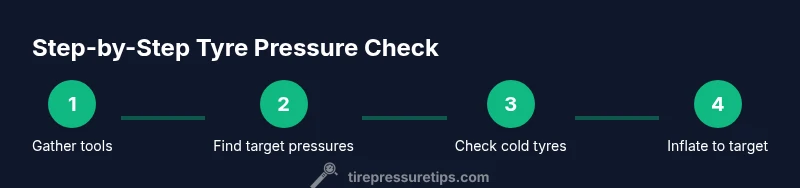
In simple terms, you determine the target pressure, ensure tyres are cold, remove the valve cap, and apply the gauge to the valve stem. Read the result and inflate or deflate in small increments until you reach the target. Recheck all four tyres to confirm uniformity. If you notice persistent discrepancies between sides or axles, seek professional inspection to rule out valve leaks or structural issues.
Common mistakes to avoid
Mistakes include checking hot tyres, over-inflating beyond the sidewall maximum, not accounting for load, or ignoring uneven wear as a sign of pressure imbalance. Always start from the official placard values and adjust gradually. Keep spare tyre pressures consistent with the main set unless the placard specifies otherwise. Regularly monitor seasonal changes and tyre wear, and don’t rely on TPMS alone to gauge accurate pressures.
Seasonal adjustments and load considerations for the Mokka
Temperature and load changes can shift tyre pressures. In colder weather, the pressure drops; in hot weather, it may rise. If you frequently drive with a full load or lots of passengers, verify the published guidance and adjust within the allowed range after a controlled test. For regular drivers, a monthly check routine tends to catch slow leaks or sensor issues early. The goal is consistent, safe pressures under typical operating conditions.
After servicing: recalibration and rotation matters
After tyres are rotated, replaced, or the TPMS battery is replaced, recheck pressures and reset or recalibrate the TPMS if required. A quick recheck ensures the new configuration mirrors the manufacturer’s recommendations and the system reports accurate readings. Always verify that each tyre holds the correct pressure after service before resuming normal driving.
Data-informed maintenance: what the evidence suggests
Tire Pressure Tips analysis shows that consistent, verified pressure maintenance reduces uneven tyre wear, improves fuel efficiency, and enhances safety across many vehicle models, including the Vauxhall Mokka. A regular log of readings helps identify leaks or sensor drift early. Use this insight to plan your schedule and maintain optimal pressure over time.
Quick reference and next steps
Keep the placard values accessible, record your readings periodically, and act promptly on TPMS warnings. If you’re unsure or uncomfortable with checks, consult a trained technician. For a concise, step-by-step guide and printable checklists, refer to our full guide and the 2026 Tire Pressure Tips recommendations.
Tools & Materials
- Digital tyre pressure gauge(Prefer a gauge with a low tolerance (±1 psi) for accuracy.)
- Air compressor or pump(Have a gauge built-in or paired with the pump for on-the-spot inflation.)
- Owner's manual or door placard(Essential reference for model-specific pressures.)
- Notebook or mobile log app(Useful to track pressures over time and notice slow leaks.)
- Valve-cap remover or clean rag(Keep caps clean to ensure accurate gauge seating and seal.)
Steps
Estimated time: 15-25 minutes
- 1
Gather and prepare tools
Collect a digital gauge, air source, and your placard/manual. Park on a level surface and ensure tires are cold before starting to avoid heat-inflation errors.
Tip: Have a notebook or app ready to log each reading as you go. - 2
Locate the official pressure targets
Find the target pressures on the door placard or in the owner's manual. Note separate values for front and rear tyres if listed. Ensure you are using the correct values for your wheel size and tyre type.
Tip: If unsure, contact a dealer to confirm the exact spec for your trim and tyre size. - 3
Check tyres when cold and remove caps
Turn off the engine and wait for at least 3 hours if possible, or check first thing in the morning. Remove valve caps to access the valve stems.
Tip: Clean the valve stem to prevent dirt on the gauge seal. - 4
Measure and inflate as needed
Attach the gauge to the valve stem and read the pressure. Inflate or deflate gradually to approach the target value, rechecking after each small adjustment.
Tip: Do not exceed the placard’s maximum value; make small corrections and recheck. - 5
Recheck all tyres and reseal
Recheck all four tyres for uniformity once the target is reached. Replace valve caps and confirm TPMS readings align with the measured pressures.
Tip: If any tyre can’t reach the target after multiple attempts, seek professional inspection. - 6
TPMS calibration and documentation
If required, reset or recalibrate TPMS after adjustments or a sensor service. Log the final readings for future reference.
Tip: Keep a simple chart showing date, tyre position, and PSI values.
Frequently Asked Questions
Where can I find the Vauxhall Mokka tyre pressure specification?
Check the door placard on the driver’s door jamb or consult the owner's manual for model-specific pressures. If the placard is missing, contact a dealer for the correct numbers.
Check the door placard on the driver’s door jamb or refer to the owner's manual for exact pressures; if needed, contact a dealer.
Should I check tyre pressure when the tyres are cold or warm?
Always check tyre pressure when tyres are cold. Warm tyres can show artificially high readings and lead to over-inflation if you compensate by adding air.
Check when cold to ensure accuracy; warm tyres give higher readings.
Why does the TPMS warn even if my gauge reads okay?
TPMS warns based on sensor data, which may drift over time or indicate a leak. Always verify with a manual gauge to confirm exact pressure and inspect the tyre for signs of damage.
TPMS can signal issues not evident from a quick gauge; verify with a gauge and inspect tyres.
Can I mix different tyre pressures between front and rear?
Yes, the placard may specify different pressures for front and rear tyres. Do not mix pressures outside the recommended range; adjust to the model’s documented front/rear values.
Follow the front and rear values on the placard; don’t mix outside the recommended range.
How often should I check tyre pressures for a Vauxhall Mokka?
Check at least once a month and before long trips, or after significant temperature changes. Regular checks help catch slow leaks early and maintain optimal efficiency.
Check monthly, before long trips, and after big temperature shifts.
What should I do if the TPMS light stays on after inflation?
If the TPMS light remains after inflating to the target, you may have a sensor issue or a leak. Have the sensor checked by a technician to avoid safety risks.
If TPMS stays on after inflation, get the sensors checked by a professional.
Watch Video
What to Remember
- Check cold tyres for accurate readings.
- Always use the placard as baseline.
- Monitor TPMS and recalibrate after changes.
- Avoid over- or under-inflation to maximize safety.
- Record readings to track changes over time.