Vauxhall Meriva Tyre Pressure Guide: Check, Adjust & Maintain
Learn how to check and adjust tyre pressure on a Vauxhall Meriva, with TPMS guidance, recommended ranges, and seasonal tips from Tire Pressure Tips.


This guide shows you how to check, adjust, and maintain tyre pressure on a Vauxhall Meriva, including recommended PSI values, TPMS tips, and safety considerations. You’ll learn to use a gauge, interpret TPMS warnings, and avoid under- or over-inflation while factoring load, temperature, and road conditions. Follow these steps for reliable tyre performance.
Understanding tyre pressure for the Vauxhall Meriva
Correct tyre pressure is a fundamental safety and efficiency factor for any car, including the Vauxhall Meriva. The pressure in your tyres supports the vehicle’s weight, influences steering response, braking, and rolling resistance, and helps prevent tire failure. For Meriva owners, the exact cold-inflation values depend on tire size, load conditions, and whether you’re running standard or run-flat tires. Always start with the manufacturer’s specification found on the driver’s door jamb placard and in the owner’s manual. You’ll use a reliable gauge to measure cold tires (before a drive or after at least three hours of rest) and compare the reading to the recommended value. If you drive with an incorrect pressure, you’ll notice uneven tread wear, reduced grip in wet conditions, and poorer fuel economy. This is why Tire Pressure Tips stresses regular checks and adjustments, especially when carrying extra cargo or passengers. Understanding these principles helps you maintain better handling, safer braking, and longer tyre life. Remember, the goal isn’t chasing a single number; it’s maintaining the correct target for your Meriva under current conditions. This approach reduces heat buildup and improves even wear, contributing to predictable steering and safer driving throughout the year.
Why staying close to the recommended target matters for your Meriva
Maintaining correct tyre pressure optimizes contact with the road, which improves grip and braking performance. Under-inflated tyres generate more rolling resistance, lowering fuel efficiency and speed stability, while over-inflated tyres reduce the contact patch and can cause a harsher ride and uneven wear. For a Vauxhall Meriva, the door jamb label shows the cold-inflation pressures for the standard tire size and load. If you frequently drive with heavy loads or tow, the pressure may need a small adjustment, which should be done only after confirming the official value for your tires. Tire Pressure Tips notes that many Meriva owners overlook subtle changes caused by load variation and seasonal temperature shifts, which can move you away from the ideal pressure. By building a habit of checking pressure on a regular basis, you reduce the risk of blowouts and sidewall damage, especially in hot climates where inflation rises with temperature. Always use a gauge you trust and verify readings on both sides of the vehicle to ensure symmetry and even wear across all tyres.
How TPMS complements manual checks on a Meriva
TPMS provides real-time alerts when tyre pressure deviates from the recommended range. It’s a valuable warning system, but it isn’t a substitute for regular manual checks. If the TPMS light comes on, you should stop safely, inspect all tyres for obvious under-inflation, and use a gauge to verify. If a tire reads low, inflate to the specified cold value and recheck after a few minutes of driving to allow the system to stabilize. If the light remains on after inflation, there may be a sealed sensor issue, a slow leak, or a valve stem problem requiring professional service. According to Tire Pressure Tips, combining TPMS alerts with routine manual checks gives you the most reliable protection against under-inflation and related failures. This synergy is especially important on a Meriva, where load distribution and tire size can influence optimal pressures. Keep a simple pressure log so you can track changes across seasons and loads.
Temperature and load effects on tyre pressure (what to watch for)
Ambient temperature directly affects tyre pressure: in cooler weather, pressures drop; in hot conditions, pressures rise. When you drive in winter, you may see a small but noticeable decrease unless you compensate by inflating to the correct cold value when tires are cold. Conversely, hot days can push pressures above the target. If you’re carrying a heavier load, tire pressures should be higher than the standard level; always verify the exact value for your tire size and load condition in the Meriva’s documentation. Tire Pressure Tips reminds readers that small adjustments for seasonal changes help maintain optimal contact with the road, improving safety and mileage.
Tools and methods to check tyre pressure accurately
To measure your Meriva’s tyre pressure accurately, you’ll need a good gauge and a reliable air source. A digital gauge often provides the clearest reading, but a well-made analog gauge can work well with practice. Always check when tires are cold and before driving. Remove the valve cap, press the gauge onto the valve stem straight, and note the reading. If the reading is lower than the door jamb label, add air in short bursts and recheck; if it’s higher, release air gradually until you reach the target. Record readings from all four tires for reference. For different tire sizes or wheels, use the specific values shown on the label, not a generic target. This careful routine reduces abrupt changes that wear tyres unevenly and keeps handling predictable.
Step-by-step overview: incorporating TPMS and manual checks for the Meriva
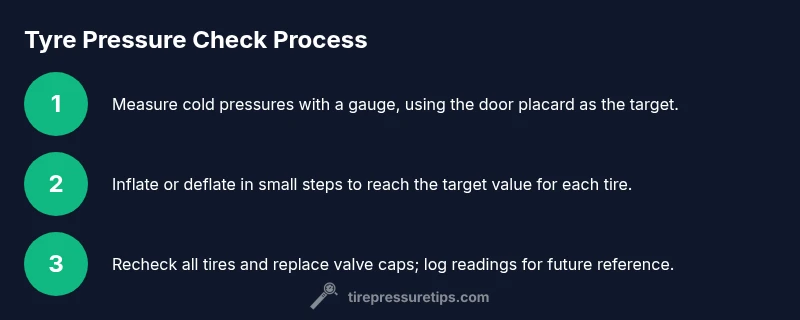
Manual checks and TPMS work together to ensure correct inflation. Start by confirming the cold tire pressure for each axle from the owner’s manual or door placard. Use a gauge to measure all four tires, noting any discrepancies. Inflate or deflate as needed to the target values, then recheck to confirm accuracy. If the TPMS warning persists after inflation, there may be a sensor issue or a slow leak that requires inspection. Regular checks also give you early warning signs of tire wear or valve issues that can affect performance.
TPMS, maintenance, and seasonal strategies for Meriva owners
TPMS provides a crucial safety net, but it’s not a replacement for routine checks. Schedule tire pressure checks at least monthly and before long trips or heavy loads. In winter, test the system more frequently as air contracts with temperature. In summer, monitor inflation as heat can push pressures high quickly. Combine this with visible wear checks and tread depth assessments to maintain overall tyre health. Tire Pressure Tips recommends keeping a small portable gauge in your car for convenience and maintaining a log of PSI readings to spot trends over time.
Tools & Materials
- Digital tyre pressure gauge(Prefer a gauge with a smooth, quick deflation/bleed valve for final adjustment)
- Air compressor or access to service station air hose(Ensure it’s calibrated and safe to use with automotive tires)
- Vauxhall Meriva owner’s manual(Contains official cold-inflation pressures for your tire size and load)
- Pen and pad or digital log(Record PSI readings and dates for monitoring)
Steps
Estimated time: 15-25 minutes
- 1
Ensure tires are cold
Park in a shaded area and avoid driving for at least 3 hours before measuring. Cold readings reflect the true inflation value and avoid skew from recent driving heat.
Tip: If you must check after a drive, wait at least 10 minutes for the tire to cool before testing. - 2
Find the official target pressures
Look at the driver’s door jamb placard or the owner’s manual to confirm the cold-inflation target for the Meriva’s tires and load condition. Values differ by tire size and front/rear position.
Tip: If you tow or carry heavy loads, check the value labeled for higher load and adjust accordingly. - 3
Remove valve cap and attach gauge
Carefully remove the valve cap from the tire valve stem and place the gauge on the valve head in a straight line. Ensure no dirt enters the valve.
Tip: Hold the gauge steady and not at an angle to avoid a false reading. - 4
Read and compare your reading
Record the reading for each tire and compare it to the target value. If any tire reads low, prepare to inflate; if high, deflate in small increments.
Tip: Use the same gauge type for all tires to keep readings consistent. - 5
Inflate or deflate to target
Add air in _update_ small bursts or release air gradually until you reach the exact cold target. Re-check after adjusting to confirm accuracy.
Tip: Avoid exceeding the maximum pressure printed on the tire sidewall. - 6
Re-seat valves and verify
Replace valve caps securely and drive a short distance to stabilize the TPMS. If a tire remains under-inflated, seek professional service.
Tip: Keep a simple log of readings for future reference and season changes.
Frequently Asked Questions
What is the recommended tyre pressure for a Vauxhall Meriva?
The Meriva’s exact cold-inflation pressures depend on tire size and load. Check the driver’s door jamb placard or the owner’s manual for the official values. Do not rely on guesswork, especially when the vehicle is loaded or towing.
Check the door placard for the official values; use a gauge to confirm when tires are cold.
Does the Meriva have TPMS and how does it work?
Yes, the Meriva uses TPMS to warn you when a tire is under- or over-inflated. It’s best used in tandem with manual checks so you can verify readings and locate a leak or valve issue if the warning persists.
The Meriva has TPMS that signals under-inflation; combine it with manual checks for accuracy.
Should I adjust tyre pressure for winter vs summer?
Seasonal temperature changes affect tire pressure. In cold weather, pressures drop and may require a higher target when tires are cold. In hot weather, avoid over-inflating and re-check after driving to normalize the pressure.
Temperature changes affect pressure; check cold values in winter and recheck after warm days.
How often should I check tyre pressure?
Check at least monthly and before long trips or heavy loads. Always verify with a gauge when tires are cold to keep readings accurate and consistent.
Check monthly and before trips; verify with a cold measurement.
What should I do if TPMS warning stays after adjustment?
If the TPMS remains lit after adjusting, inspect for leaks, damaged valves, or sensor faults. A professional inspection is recommended to prevent unsafe driving conditions.
If TPMS stays on after inflation, get a professional check.
Can I check tyre pressure without removing the valve cap?
It’s best to remove the valve cap to ensure an accurate reading and to avoid air leaks around the cap. Replace the cap securely after testing.
Yes, remove the valve cap for accuracy, then replace it.
Should I inflate my Meriva to a single PSI value regardless of load?
No. The target pressure can vary with load, tire size, and driving conditions. Always use the official values for your situation and adjust only if your manual specifies.
Use official values; don’t rely on a single PSI for all scenarios.
Watch Video
What to Remember
- Check cold tyres against the door placard.
- Use a reliable gauge for accuracy.
- Adjust for load and season with official targets.
- Recheck after inflation to confirm stability.
- Rely on TPMS in combination with manual checks.