Vauxhall Corsa 1.2 Tyre Pressure Guide
Learn to check, adjust, and troubleshoot tyre pressure for the Vauxhall Corsa 1.2. This step-by-step guide covers cold-pressures, TPMS cues, load and weather factors, and safe inflation practices for better safety and fuel efficiency.


You will learn how to check and adjust tyre pressure for the Vauxhall Corsa 1.2, including cold-pressure targets, load- and temperature-aware adjustments, and TPMS considerations. Following Tire Pressure Tips' best practices, you'll improve safety, handling, and fuel efficiency by keeping tyres at recommended pressures. This article provides a step-by-step checklist, tool list, and practical tips tailored to the Corsa's 1.2-litre engine.
Why tyre pressure matters for the Vauxhall Corsa 1.2
Maintaining correct tyre pressure is one of the simplest yet most impactful ways to improve safety, fuel efficiency, and tire life. For a small hatch like the Vauxhall Corsa 1.2, the right pressures help the car respond predictably in corners, reduce rolling resistance, and minimize uneven wear on the tread edges. According to Tire Pressure Tips, neglecting cold pressures can lead to subtle handling quirks and higher fuel consumption over the life of the tires. This is especially important if you carry passengers or heavy cargo, as load changes pressure targets. Keeping tyres within the manufacturer’s recommended range also supports the TPMS (tire pressure monitoring system) by reducing false alerts and unnecessary repairs. In short, accurate tyre pressure is a daily safety and efficiency choice that pays off in confidence behind the wheel and lower running costs over time.
Understanding the recommended pressures for your Corsa 1.2
The official recommended tyre pressures for the Vauxhall Corsa 1.2 are shown on the driver’s door placard and in the owner’s manual. These targets are provided as “cold pressures” and assume the vehicle is unloaded or carrying typical passenger weight. Do not rely on numbers read right after a long highway drive—the heat inside the tire can skew the gauge reading. In many common configurations, you’ll find front tyres listed at a higher pressure than the rear to optimize steering feel and balance, but exact values vary by trim level and wheel size. If your placard shows 2.0–2.3 bar (29–33 psi) front and 1.9–2.1 bar (28–30 psi) rear, use those exact targets. If you’re unsure, consult the manual or a dealership service sheet. Tire Pressure Tips analysis shows that drivers who adopt the vehicle-specific targets consistently see steadier handling and even tread wear. Always double-check the placard whenever you rotate wheels or switch tire sizes.
For a quick reference, aim to keep cold pressures within roughly 29–33 psi (2.0–2.3 bar) front and 26–30 psi (1.8–2.1 bar) rear as a general baseline for many Vauxhall Corsa 1.2 configurations, but verify with your exact model. Remember, these ranges are guidelines and not a substitute for the official specification.
How to check tyre pressure accurately
Checking tyre pressure accurately starts with consistency. Always measure when the tires are cold (the car has been parked at least three hours, or you haven’t driven more than a couple of miles in the last three hours). Remove the valve cap, attach a reliable gauge, and read the pressure on all four tires. If the reading is below the target range, inflate gradually using a pump with a built-in gauge until you reach the recommended cold pressure; if it’s above the target, release air in small increments and recheck. Reinstall the valve caps to prevent dirt ingress. For best results, measure each tire twice—once for the pressure on the road and once after inflating—to confirm consistency. If you notice slow leaks or wildly fluctuating readings, this could indicate punctures or damaged valves, which warrants a professional inspection.
Using TPMS indicators and adjusting for load
TPMS alerts you when a tire’s pressure drops below or rises above the preset threshold. It’s not a substitute for regular manual checks, but it complements them. When you’re carrying a heavier load—travel bags, sport gear, or extra passengers—the front tires often require a higher target pressure to maintain steering response and even wear. In such cases, consult the placard and adjust within the suggested range; do not exceed the tire’s maximum pressure rating printed on the sidewall. Temperature changes affect pressure as air contracts in cold weather and expands in heat, so seasonal adjustments are prudent. If TPMS shows a notification during cold mornings, verify all tires are at cold-spec before driving; a slow leak or sensor fault could be involved.
Seasonal and load adjustments for the Vauxhall Corsa 1.2
Seasonal shifts—from winter to summer—alter tire pressure. In colder months, pressures drop roughly 1 psi for every 5–6 degrees Celsius of ambient temperature, so you may need to increase pressures slightly to stay within the target range. In summer, heat can raise tire pressure, so you might reduce pressure a notch to prevent overinflation. Under load, front tires typically benefit from slightly higher pressures than the rear, but always stay within the spec on your placard. Regular checks before long trips are especially important when you’re changing seasons, as the risk of underinflation and heat buildup increases with temperature swings. Tire Pressure Tips notes that proactive adjustments can extend tire life and protect wheel integrity over time.
Common mistakes and how to avoid them
The most common mistakes involve checking hot tires, using the wrong gauge, or inflating to the maximum on the sidewall rather than following the placard. Don’t rely on the tire’s appearance to judge pressure—undetectable underinflation can still cause poor fuel economy and increased tire wear. Always measure cold, use a calibrated gauge, and keep a small log of readings for each tire. If you rotate wheels, re-check pressures as recommended by the vehicle’s maintenance schedule. Finally, never ignore TPMS alerts; take action or seek a professional inspection if a warning persists.
Step-by-step quick-reference checklist (printable)
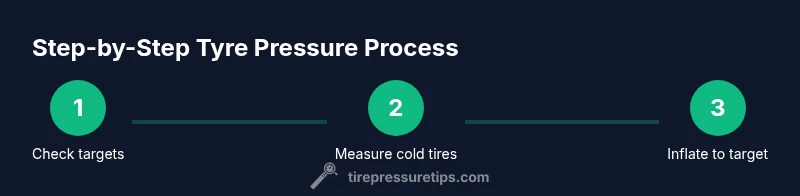
- Confirm the target cold pressures from the placard or manual.
- Ensure tires are cold before you measure.
- Attach a gauge and read all four tires.
- Inflate or deflate to target pressures.
- Recheck after adjustment and replace valve caps.
- Record the readings and schedule next check.
- Inspect tires for wear and slow leaks during checks.
Tools & Materials
- Tire pressure gauge (digital or analog)(Calibrated; check both front and rear tires)
- Inflation device (air compressor or manual pump)(Prefer a gauge-equipped pump; ensure compatibility with Vauxhall valve stems)
- Owner's manual or door placard with recommended pressures(Locate on door jamb or fuel filler cap)
- Pen and notebook or digital note(Record readings and changes)
- Valve cap removal tool (optional)(Useful for tight valve caps)
Steps
Estimated time: 15-25 minutes
- 1
Gather tools and verify targets
Collect a calibrated pressure gauge, a reliable inflator, and the vehicle’s recommended pressures from the placard or manual. Confirm the targets for the Corsa 1.2 so you know when you’ve reached the correct pressure. Having everything ready before you touch tires speeds up the process and reduces mistakes.
Tip: Double-check that you’re using cold-pressure targets; warm tires read higher. - 2
Check temperatures and prepare tires
Park on a level surface and let the car sit undriven for at least three hours to ensure cold readings. If you’ve just returned from a drive, wait until the tires are cold or plan to measure the next day. Remove valve caps to access the valve stems before measurement.
Tip: If tires have recently been driven, note the current reading but don’t adjust until they’re cold. - 3
Attach gauge and measure all four tires
Place the gauge on the valve stem perpendicularly and press firmly to seal. Record the reading for each tire, noting any variations between left/right and front/rear. Do not twist or rock the gauge, which can give erroneous numbers.
Tip: Use a consistent technique for each tire to improve comparability. - 4
Inflate or deflate to target pressure
If readings are below target, add air in small increments and recheck until within range. If readings are above target, release air in small increments and recheck. Do not exceed the placard’s maximum pressure for any tire.
Tip: Inflate in stages and confirm with a second reading. - 5
Recheck and replace valve caps
Once all tires are at target pressure, recheck one more time to ensure stability. Reinstall valve caps securely to protect against dirt and moisture. Confirm that TPMS units aren’t sending erroneous low-pressure alerts due to a faulty sensor.
Tip: Keep a short log of readings and dates for future reference. - 6
Document results and plan next check
Record the final pressures and the date of measurement. Set a reminder for the next check—monthly checks are a good baseline, with extra checks before long trips or seasonal transitions.
Tip: If you notice consistent drift in a tire, seek a professional inspection for leaks or damaged valves.
Frequently Asked Questions
Why is my TPMS warning light on even when tires look fine?
TPMS can illuminate due to a slow leak, a sensor fault, or a sudden temperature drop. Check all four tires when cold, test for leaks, and consider sensor diagnostics if readings stay within the normal range. If in doubt, seek professional help.
TPMS can come on for slow leaks, sensor faults, or cold-weather effects. Check tires when cold and consult a technician if readings stay off.
What is the recommended tyre pressure for a Vauxhall Corsa 1.2?
The exact pressure depends on trim and load. Look at the door placard or the owner’s manual for the cold-pressure targets specific to your car. As a general baseline, many small hatchbacks sit around the high 20s to low 30s psi, but always prioritize the official figure.
Check the door placard for the exact targets; use the official guidance rather than guesswork.
Should I check tyre pressure when tires are hot or cold?
Always check when tires are cold for accuracy. Checking hot tires will give falsely high readings due to heat expansion. If you must check after driving, wait until the tires cool down before adjusting.
Check when cold for accuracy; wait if you’ve recently driven.
Can I replace TPMS sensors myself?
Replacing TPMS sensors is possible, but it requires specialized tools and code reprogramming in many cases. For safety and accuracy, many drivers opt for a professional service to diagnose sensor faults and reinitialize the system.
Sensor work is best left to pros unless you have the right tools and experience.
How often should I check tyre pressure?
Aim to check tyre pressure at least once a month and before long trips. Also check after seasonal changes or noticeable temperature shifts, as pressure can drift with weather.
Check monthly and before long trips, plus after big temperature changes.
What if one tire is consistently low even after inflation?
A tire that remains low may have a slow leak, a faulty valve, or wheel damage. Inspect the tire for cuts or punctures, and consider having a tire technician perform a leak test and valve inspection.
If it stays low after inflation, inspect for leaks or valve issues and get a professional check.
Watch Video
What to Remember
- Check cold pressures before driving long distances.
- Always follow the vehicle placard for target pressures.
- TPMS is a helper, not a substitute for manual checks.
- Use a reliable gauge and record readings for future visits.
- Adjust for load and seasonal temperature changes within recommended ranges.