How to Find Tyre Air Near Me: A Practical Guide for Drivers
Learn how to locate reliable tyre air near me sources, verify gauge accuracy, and inflate tires to the manufacturer’s specification safely and efficiently.


Goal: Find tyre air near me and inflate tires to your car’s recommended pressure using a reliable gauge. Start by locating a station with an air pump and a current gauge; confirm hours, fees, and payment methods. Inflate to the manufacturer’s PSI specification, then recheck with your gauge and verify TPMS readings after driving.
Why finding tyre air near me matters
Tire pressure is a safety and efficiency factor. Maintaining correct tire pressure improves grip, braking, fuel economy, and tire longevity. When you search for tyre air near me, you’re seeking a source you can trust to supply clean, properly pressurized air and an accurate gauge. The Tire Pressure Tips team emphasizes that readings taken when tires are cold are the most reliable baseline. Overheating tires after driving can raise readings and mislead you into underinflation. Inconsistent or inaccurate gauges can lead to over- or underinflation, producing uneven wear, reduced grip, and longer stopping distances. This guide helps you identify trustworthy air sources, verify gauge accuracy, and follow a safe inflation process. By keeping your tires at the recommended pressure, you support better handling, efficient fuel use, and longer tire life. According to Tire Pressure Tips, a small, consistent practice—checking cold tires and cross-checking with a personal gauge—yields the best results. The goal of this article is to empower you to locate reliable tyre air near me options and inflate with confidence.
Understanding when to inflate and at what pressure
Tire pressure is specified by the vehicle manufacturer and is usually shown on a placard inside the driver's door jamb or in the owner's manual. The exact PSI or kPa can vary by vehicle model, tire size, load, and speed. Temperature also matters: readings should be taken when tires are cold, because heat from driving raises pressure. If you must inflate after a drive, use the cold reading as a baseline and adjust accordingly. Always compare the reading from your own gauge with the station's gauge to ensure consistency. If your TPMS shows a low-pressure warning, confirm by checking each tire with a gauge and inflating to the recommended level before driving long distances. For consistency, avoid going by rough estimates; rely on the published specification rather than guesses. The Tire Pressure Tips team notes that keeping tires within the recommended range improves safety margins and reduces uneven wear.
Where to find reliable tyre air near me services
When you search for tyre air near me, you want a source that maintains clean air, accurately calibrated gauges, and transparent pricing. Reputable gas stations, tire shops, and auto service centers are usually good options. The Tire Pressure Tips analysis shows that choosing a facility that calibrates its gauges regularly and displays current gauge readings reduces the risk of misreading the tire pressure. Look for stations that offer free air with a purchase or a clearly posted price and that allow you to cross-check with your own gauge. If in doubt, ask staff when the gauge was last calibrated and whether you can see the reading on the gauge display. If you’re inflating at home, use your own gauge to verify readings after the process. Also consider the convenience of services that allow you to inflate all four tires in one go to save time. By prioritizing accuracy, you’ll minimize the chance of overinflation or underinflation stemming from a faulty air source.
How to verify the air quality and accuracy of a pump
Start by inspecting the station’s pump for cleanliness and obvious wear. Ensure the nozzle seats firmly on the tire valve and that there is no air leaks around the nozzle. Compare the station gauge with your own calibrated gauge; if there’s a discrepancy, trust your own device. If you suspect the station gauge is off, test another tire or use a second gauge to cross-check. Calibrate your own gauge periodically using a known standard or refer to the manufacturer’s calibration instructions. Wipe the valve stem and cap to prevent dirt from affecting the seal. If you’re unsure about the accuracy, bring your own gauge and ask staff to validate with their gauge as you monitor the reading.
Practical steps you can take at the pump
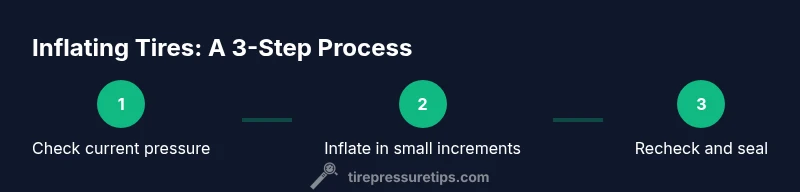
Follow this concise checklist when you’re at the pump: 1) Have your own gauge ready and know the target pressure for your vehicle. 2) Remove the valve cap and ensure the valve stem is clean. 3) Attach your gauge securely and take a baseline reading. 4) Attach the air nozzle and inflate in small, measured increments. 5) Recheck the pressure with your gauge after each increment. 6) When the desired pressure is reached, remove the nozzle, replace the valve cap, and record the reading for future checks.
TPMS and pressure monitoring: what to know
Tire Pressure Monitoring Systems (TPMS) provide a warning when a tire is significantly underinflated. However, TPMS readings can lag or be affected by sensor issues. Always verify TPMS alerts with a manual gauge, especially after inflating at a station. If TPMS readings don’t seem consistent with your gauge, consult a professional to inspect the TPMS sensor health and calibration.
Cost and time considerations
Costs for air inflation vary by location and may be bundled with other services. Some stations offer free air with a purchase, while others charge a small fee for air and gauge use. Time-wise, plan for about 10–20 minutes per tire if you’re cross-checking with multiple gauges and ensuring accuracy. If you’re inflating all four tires, allocate extra time for final verification and documentation.
Quick DIY check you can do before you drive away
After inflating, recheck all four tires when they’re cold to confirm the final readings. Double-check that the valve caps are tightened to prevent air leaks. If you used a portable compressor, ensure it didn’t introduce heat into the tires during the process, which could temporarily affect readings. Consider recording the resulting pressures for future reference.
Common mistakes and how to avoid them
Common mistakes include inflating based on a warm tire reading, not cross-checking with a personal gauge, and ignoring TPMS readings. To avoid these, always confirm readings with your own gauge when tires are cold, compare against the vehicle’s specification, and periodically test the station gauge against a second gauge.
Tools & Materials
- Tire pressure gauge (dial or digital)(Calibrated to read psi/kPa; bring your own gauge to cross-check at the pump.)
- Air pump at station or portable compressor(Ensure the pump has a working gauge or bring an external gauge.)
- Vehicle owner’s manual or door-jamb placard(Locate the recommended tire pressures before inflating.)
- Notebook or mobile app to log readings(Optional for tracking weekly pressure.)
- TPMS tool or access to TPMS settings(Useful if diagnosing sensor faults.)
Steps
Estimated time: 20-40 minutes
- 1
Locate a reliable air source
Identify a station with a clean, well-maintained air pump and visible, current gauge readings. If possible, choose a location that allows you to cross-check against your own gauge. This helps ensure accuracy before you begin inflating.
Tip: Ask staff about gauge calibration frequency before starting. - 2
Find the vehicle’s target pressure
Consult the door jamb placard or owner’s manual to determine the correct pressure for each tire. Remember that the recommended pressure may differ by front vs. rear tires and may vary with load.
Tip: If unsure, set all tires to the same recommended value unless the manufacturer specifies differences. - 3
Attach your gauge and read current pressure
Remove the valve caps and securely attach your gauge to each valve stem to read the current pressure. Record the numbers for reference. If the vehicle has TPMS, you’ll use this as a cross-check.
Tip: Make sure the valve stem is clean to avoid reading errors. - 4
Inflate in small increments
If a tire is underinflated, add air in small increments (about 2–3 psi at a time) and re-check after each increment to avoid overinflation.
Tip: Pause between increments to let the tire settle and temperature normalize. - 5
Recheck after inflation
Once you reach the target pressure on all tires, recheck again with your gauge, especially on tires that were significantly underinflated.
Tip: Close valve caps firmly to prevent slow leaks. - 6
Finalize and document
Record the final pressures and note the date and location. If TPMS readings seem off, consider visiting a shop for TPMS calibration to ensure accuracy.
Tip: Keep a small log for future reference and seasonal checks.
Frequently Asked Questions
How do I know the correct tire pressure for my vehicle?
The correct pressure is listed on the door jamb placard or in the owner’s manual. It varies by model and tire size, so always verify for your specific vehicle.
Check your door placard or owner's manual to confirm the right pressure for your tires.
Is it safe to inflate at a gas station if the gauge seems off?
If you suspect a faulty gauge, use your own calibrated gauge to cross-check and consider inflating tires at a different station or returning after calibration.
If the station gauge seems off, check with your own gauge or try another pump.
Should I inflate all four tires to the same pressure?
Only if the manufacturer specifies equal pressures; some vehicles require different pressures for front and rear tires. Always follow the official spec.
Follow the vehicle’s official spec for each tire, not a guess.
How often should I check tire pressure?
Check at least monthly and before long trips, especially when the weather changes. Tires can lose pressure gradually over time.
Check monthly and before trips, especially with temperature changes.
Can TPMS readings replace manual tire pressure checks?
No. TPMS provides a warning, but you should verify with a manual gauge to confirm actual pressure.
TPMS helps, but you should still check with a gauge to be sure.
What should I do if I can’t access a gauge at all?
If you can’t access a gauge, get to a nearby service center or station with a gauge before driving long distances; avoid driving on underinflated tires.
Find a place with a gauge before you drive far, to stay safe.
Watch Video
What to Remember
- Check tires cold before inflating
- Use your own gauge to verify station readings
- Inflate in small steps and recheck
- Cross-check TPMS with manual gauge
- Document final pressures for future reference