Tire Pressure Truck: Essential Guide for Safe Hauling
A practical, step-by-step guide to checking and maintaining tire pressure on trucks. Learn how to use TPMS, account for loads and temperature changes, and avoid common mistakes to extend tire life and improve safety.


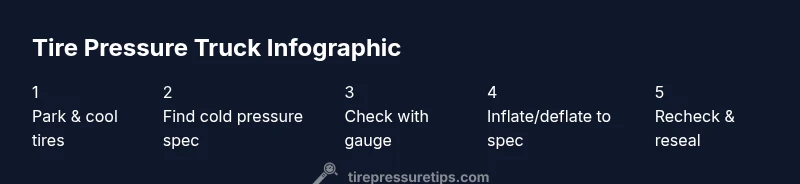
Goal: Verify and adjust tire pressure truck to maximize safety, handling, load capacity, and fuel efficiency. Begin with the manufacturer’s cold-pressure specification, check every tire (including the spare) using a reliable gauge, and adjust as needed. Regular checks reduce uneven wear and improve fuel economy, especially on long trips. This simple habit supports safer braking and traction.
Why Tire Pressure Matters for Trucks
According to Tire Pressure Tips, maintaining correct tire pressure on a heavy-duty truck isn't optional—it's a core safety and efficiency practice. Proper tire pressure affects load distribution, steering feel, braking performance, and tire wear. When pressure is too low, sidewalls flex more, increasing heat and the risk of heat-induced failure; when it's too high, contact patch shrinks, reducing grip and ride comfort. Trucks carry varying loads, weather, and road conditions, all of which shift the needed pressure. Therefore, knowing and applying the correct tire pressure truck setting helps you protect tires, maximize payload safety, and improve overall mileage. This practice pays off on long trips and in daily driving, promoting even wear patterns and predictable handling. TPMS alerts can be helpful, but manual checks remain essential for reliability across tires and spares.
Checking Tire Pressure: Cold vs Warm Readings
Tire pressure truck measurements are most accurate when tires are cold—before you drive or after they have cooled for several hours. Driving heats tires and raises internal pressure, which can mask the true cold pressure and lead to over-inflation if read immediately after a trip. Always verify against the manufacturer’s cold-pressure specification, typically found on the door jamb sticker or in the owner’s manual. Use a reliable gauge—digital or dial—and take multiple readings for each tire to confirm consistency. If a tire reads low, inflate gradually to the specified cold pressure; if it reads high, release air slowly and recheck. After inflation, replace valve caps and clean any debris around the stems. This approach minimizes guesswork and supports even tread wear, which is crucial for trucks carrying heavy loads.
TPMS: What It Does and When It Helps
Tire Pressure Monitoring Systems (TPMS) provide real-time alerts when a tire’s pressure deviates from the expected range, which can save time and prevent failures. For trucks, TPMS is particularly useful during temperature swings, after a heavy load, or when a wheel has a slow leak. However, TPMS cannot measure exact pressures on every tire and is not a substitute for manual checks with a gauge. Use TPMS as a first alert, then verify each tire with a gauge to confirm numbers and ensure the spare is at the correct cold pressure as well. If you notice repeated alerts, inspect valves, rims, and tire beads for damage or leaks, and consider a professional inspection if necessary.
Adjusting for Load and Temperature Changes
Heavy loads, flat roads, and seasonal temperature shifts all influence tire pressure requirements. When you expect a heavy load, the higher end of the recommended range is typically appropriate, while a lighter load may stay near the standard spec. Temperature changes can cause noticeable pressure fluctuations; colder weather reduces pressure and hotter days increase it. To manage this, check pressures more frequently in extreme temperatures and before long trips. Always bring tires back to the cold-pressure specification when tires are cold, and remember that over-inflation can reduce sidewall cushioning and impact ride quality, especially on rough roads. By combining tire pressure truck best practices with manufacturer guidance, you’ll achieve safer braking, better steering response, and longer tire life.
Common Pitfalls and How to Avoid Them
Common mistakes include relying solely on TPMS, reading gauges on hot tires, and inflating to a guess rather than a spec. Avoid mixing different tire sizes in the same axle set, and don’t inflate beyond the recommended maximum pressure listed by the manufacturer. Keep a dedicated gauge in the truck and log readings to detect slow leaks or degradation over time. Another pitfall is neglecting the spare tire; ensure it’s properly inflated and tested as part of routine maintenance. Finally, be mindful of wheel valve conditions—damaged or corroded valves can give false readings or leak air gradually.
Maintenance Routine for Long-Term Tire Pressure Health
A sustainable tire pressure plan combines regular checks with proactive maintenance. Set a monthly reminder to measure all tires, including the spare, and before any long trip or heavy haul. Use a consistent gauge and record pressures in a simple log for trend analysis. Inspect tires for uneven wear, bulges, or cracks that may indicate underlying issues. Schedule professional alignments or balance checks as part of routine service to maintain even contact patches and predictable handling. By integrating these steps into your driving routine, you’ll keep the tire pressure truck health stable and extend tire life while preserving fuel efficiency.
Tools & Materials
- Tire pressure gauge(Prefer digital for quick, precise readings)
- Air compressor or access to an air pump(Public station or home compressor for on-site inflation )
- Owner's manual and/or door jamb sticker(Locate the exact cold pressure specification for each axle)
- Spare tire (and jack)(Check its pressure regularly as part of maintenance)
- Soapy water (for leak testing)(Use if you suspect a leak at valves or beads)
Steps
Estimated time: 20-40 minutes
- 1
Park on a level surface and wait for tires to cool
Choose a flat, shaded area and turn off the engine. Allow three or more hours after driving for tires to return to ambient temperature so you can read the true cold pressure. This prevents misreading hot tires as low pressures.
Tip: Record the door jamb or manual pressure reference before you start. - 2
Find the recommended cold pressure
Consult the truck’s manual or door jamb sticker for the cold pressure specification for each axle. If your truck has multiple wheel arrangements, note any differences between front, rear, and spare tires.
Tip: If you anticipate heavy loads, use the higher recommended axle pressure. - 3
Remove valve caps and prepare your gauge
Take off the valve caps and keep them in a safe place. Attach the gauge firmly to the valve stem to form a good seal for an accurate reading.
Tip: Wipe the valve stem lightly to remove dust before measuring. - 4
Check the tire pressures one by one
Read each tire’s pressure with the gauge and record the results. Include the spare if your plan requires using it; compare to the cold-pressure specification.
Tip: Take two readings per tire to confirm consistency. - 5
Inflate or deflate to match spec
If a tire is under-inflated, add air in small increments and recheck. If over-inflated, release air slowly and recheck until you reach the exact cold pressure.
Tip: Avoid rapid air bursts—slow, controlled inflation prevents overshooting. - 6
Recheck and reseal valve caps
After inflating, recheck all tires to confirm the pressure holds. Reinstall valve caps to protect against dirt and moisture.
Tip: Ensure caps are snug but not over-tightened. - 7
Check the spare tire
Verify the spare matches the cold-pressure spec or your vehicle’s contingency guidance. A ready spare prevents delays during a breakdown.
Tip: If the spare is underinflated, address it now rather than later. - 8
Document and schedule follow-up checks
Keep a log of pressures and dates. Schedule monthly checks or pre-trip checks so maintenance becomes a habit.
Tip: Set calendar reminders or a maintenance app alert.
Frequently Asked Questions
How often should I check tire pressure on a truck?
Check the pressures at least monthly and before long trips, especially when loads change. Regular checks help catch slow leaks and prevent under-inflation.
Check pressure at least monthly and before big trips to catch slow leaks.
Can TPMS replace manual tire pressure checks?
No. TPMS alerts you to changes, but you should verify exact pressures with a gauge, including the spare tire.
TPMS helps, but you still need manual gauge checks.
Why might TPMS show normal pressure while tires are underinflated?
TPMS can lag behind real changes or be miscalibrated. Always confirm with a gauge and compare across all tires.
TPMS can lag; always check with a gauge.
Does temperature affect tire pressure?
Yes. Colder temperatures reduce pressure, while heat from driving increases it. Check pressures when tires are cold and consider outdoor temperatures.
Temperature changes air pressure; check when tires are cold.
Should I adjust pressure when carrying a heavy load?
Yes. Heavier loads usually require higher pressures per the manual; adjust to the higher axle spec for heavy hauls.
Heavy loads often need higher pressures per the manual.
How do I check the spare tire pressure?
Check the spare as part of routine maintenance if your contingency plan uses it. Ensure it matches the cold-pressure spec.
Make sure your spare is inflated to the correct spec.
Watch Video
What to Remember
- Check tires when cold for accuracy
- Follow manufacturer cold-pressure specs
- TPMS complements manual checks
- Regular maintenance prevents uneven wear