Tire Pressure Qashqai: A Practical How-To
A practical guide to checking and maintaining tire pressure on the Nissan Qashqai, with TPMS tips, correct cold pressures, and safe inflation practices for better safety and efficiency.


You will learn how to accurately check and adjust tire pressure for a Nissan Qashqai, using manufacturer specs and TPMS cues. You'll need a tire gauge, access to the placard on the door jamb, and a reliable source for pressures when the tires are cold. Follow these steps to maintain proper tire pressure for safety and fuel efficiency.
Understanding tire pressure qashqai and why it matters
Maintaining the correct tire pressure on a Nissan Qashqai is essential for safety, handling, fuel efficiency, and tire longevity. Underinflated tires can reduce fuel economy, increase tire wear on the edges, and raise the risk of a blowout under load or cornering. Overinflation can reduce traction and make the ride feel harsh. The Tire Pressure Tips team emphasizes that the right pressure is not a guess—you should use the value specified by the vehicle manufacturer, typically found on the door jamb placard or in the owner's manual. In many modern cars, including the Qashqai, the recommended pressures are given separately for front and rear tires and may vary with load and speed. Remember: the best numbers are the cold readings taken when the car has not been driven for several hours. According to Tire Pressure Tips, consistency in how you measure and calibrate is the key to staying safe and maximizing mileage.
This guide uses plain language so any driver can quickly understand how to verify and adjust tire pressure, why TPMS alerts matter, and how to schedule regular checks that fit into a simple maintenance routine.
How to locate the correct tire pressure for your Qashqai
The first step is always to locate the official tire pressure values for your specific Qashqai model year and trim. Look for the placard on the driver’s door jamb, sometimes under the fuel door or inside the glovebox. The placard lists separate targets for the front and rear tires, and it may specify different values when the vehicle is carrying a heavy load or when using a full-size spare. If you cannot locate the placard, consult the owner’s manual or contact a Nissan dealer. Always use the values that correspond to your exact tire size and load rating, not generic “all-season” numbers.
Tools you need to check tire pressure accurately
A dedicated tire pressure gauge is the single most important tool. Digital gauges tend to be easier to read and less error-prone than older analog gauges. You should also have a way to view the placard values and a way to inflate the tires safely—either a built-in air compressor at a station or a personal portable inflator. A clean rag helps wipe off the valve stem before measuring. Optional but helpful: a small notebook or app to log readings over time to detect gradual pressure loss. Ensure you have a stable, flat surface and that tires are cold for the most accurate readings.
Interpreting TPMS readings and how to respond
TPMS can illuminate for several reasons: a sudden drop from a slow leak, a puncture, or temperature-driven changes. If the TPMS light comes on, do not assume immediate danger; use a gauge to confirm actual pressure against the manufacturer’s target. If readings are within spec, the light may be a false alarm or a temporary TPMS fault; in that case, consider resetting the sensor after inflating to the correct level. If readings are below spec, inflate carefully in small increments, recheck, and drive briefly to let the system re-evaluate. Regular TPMS maintenance includes checking sensors and batteries as part of routine service intervals.
Temperature, season, and load effects on tire pressure
Tire pressure changes with temperature: a tire cooled to ambient temperature will show a lower reading than after it has heated during driving. Cold-weather conditions can drop pressures by a few PSI, especially in winter climates. Heavy loads, high-speed driving, and aggressive cornering can also alter effective pressure. For Qashqai owners, seasonal checks are a good habit—plan a quick gauge check at the start of each season and after any long road trip with a full load. The goal is to keep readings within the carmaker’s recommended range, accounting for minor fluctuations while avoiding large deviations that affect safety and wear.
Common mistakes and how to avoid them
Common errors include measuring after a drive, inflating to a pre-determined number without checking the placard, and using a gauge with poor accuracy. Always verify your gauge’s calibration periodically and never exceed the tire’s maximum pressure printed on the sidewall as an absolute limit. Another frequent pitfall is neglecting the spare tire; if you carry a full-size spare, it deserves the same attention as the others. Finally, remember that TPMS is a safety aid, not a substitute for regular manual readings.
Maintenance routine: monthly checks and long-term trends
Make tire pressure checks part of a simple monthly routine, ideally on a day when you would normally plan a drive but haven’t yet. Document the readings in a notebook or digital log for each wheel, note any adjustments, and track changes over time. If you observe a steady loss of pressure beyond seasonal expectations, there may be a slow leak or damaged valve core requiring inspection. Routine checks support safer driving, better fuel economy, and longer tire life. The Tire Pressure Tips team recommends building a habit of cold-weather checks and keeping a small gauge in the glovebox for convenience.
Authoritative sources and practical references
For trusted guidance, consult the following sources on tire pressure standards and TPMS maintenance: U.S. Department of Transportation’s National Highway Traffic Safety Administration (NHTSA) tire safety resources, the National Institute for Automotive Service Excellence (ASE) tire service guidelines, and a major consumer automotive safety publication like Consumer Reports. These sources provide general principles that reinforce the practical steps described here. For vehicle-specific data, always rely on the placard and owner’s manual.
Real-world tips for Qashqai owners
Each Nissan Qashqai model may have slightly different tolerances, so the most reliable numbers come from the door placard and the owner’s manual. A practical approach is to set a baseline when tires are cold and then adjust only by a small amount if you notice changes after a drive. Regular checks help you catch leaks early and optimize fuel efficiency. The Tire Pressure Tips team notes that consistent measurement technique matters as much as the numbers themselves, so standardize your gauge and method across all wheels.
Tools & Materials
- Digital tire pressure gauge(Prefer models accurate to ±1 psi; use on cold tires for best results)
- Door jamb placard or owner’s manual(Use the exact tire size and load-related values for your Qashqai)
- Air compressor or inflation station(Optional for on-site adjustments; ensure gauge works with compressor)
- Clean cloth or rag(Wipe valve stems before reading to avoid dirt-based inaccuracies)
- Spare valve caps(Keep caps on to prevent dirt and moisture from entering valves)
Steps
Estimated time: 20-40 minutes
- 1
Gather tools and locate the correct pressures
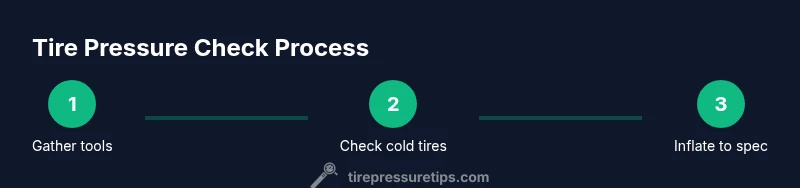
Collect your digital tire gauge and locate the exact recommended pressures for your Qashqai from the placard or owner's manual. Confirm separate values if front and rear tires differ and note any load-based adjustments. Having the numbers ready prevents guesswork during the procedure.
Tip: Double-check you’re using the tire-appropriate numbers for your model year and tire size. - 2
Ensure tires are cold before measuring
Park on a level surface and wait at least three hours since driving, or perform measurements before you drive for the day. Heat from recent driving raises tire pressure readings and leads to overinflation when you inflate to match them.
Tip: If you must measure after a drive, wait 2-3 hours for tires to cool down before inflating. - 3
Remove valve caps and attach the gauge
Carefully remove the valve cap from one tire and press the gauge onto the valve stem firmly. Read the gauge without twisting, then repeat for all tires. Record each value for comparison.
Tip: Wipe the valve stem clean before attaching the gauge to prevent false readings. - 4
Read the gauge and compare to spec
Compare the measured value to the placard figure for the corresponding tire and axle. Note any deviations and decide whether inflation is needed before continuing.
Tip: If the number is within a small range, you may skip adjustments to avoid overinflation. - 5
Inflate or deflate to match the recommended pressure
If underinflated, add air in small increments and recheck after each addition. If overinflated, release air gradually and recheck. Do not rush—small adjustments reduce the risk of under- or over-inflation.
Tip: Use a slow-release technique to avoid overshooting the target pressure. - 6
Check all tires including the spare
Repeat the process for the remaining tires and, if applicable, the spare tire. Spares may have different pressure requirements so verify separately.
Tip: Consistency across all tires helps balanced handling and wear. - 7
Reinstall valve caps and document readings
Replace all valve caps firmly to seal points of entry. Log the dates and numbers for future reference and trend monitoring, so you know when to recheck.
Tip: Keep a small log in your glovebox for quick reference at refill stations. - 8
Reset TPMS if applicable and monitor
If your TPMS had triggered an alert due to prior underinflation, ensure the system resets after inflation to the correct value. If alerts persist, schedule a diagnostic check.
Tip: TPMS batteries wear out over time; factor service intervals into maintenance planning.
Frequently Asked Questions
Why is my TPMS light on even after inflating tires to spec?
TPMS can glow due to a slow leak, temperature changes, or a sensor issue. After inflating to the correct pressure, drive a short distance to allow the system to re-calibrate; if the light remains, have the sensors checked for faults or battery wear.
TPMS can light up for a slow leak or sensor fault. Drive briefly to re-calibrate, and if it stays on, have the sensors checked.
Is it safe to drive with slightly low tire pressure?
Light underinflation can be safe for a short distance, but ongoing underinflation increases heat, wear, and risk of blowouts. Inflate to the recommended range as soon as possible and avoid aggressive driving.
It's risky to drive with low pressure; inflate to spec soon and drive more cautiously in the meantime.
How often should I check tire pressure in a Qashqai?
Check at least once a month and before long trips. Temperature changes and loading can shift pressures, so a monthly check helps catch leaks and maintain fuel efficiency.
Check monthly and before long trips; this helps you catch leaks early.
Can I rely on a home gauge to replace professional checks?
A good home gauge is sufficient for regular at-home checks, but have the TPMS system inspected periodically by a pro, especially if readings vary widely or the light stays on after inflation.
A home gauge is fine for regular checks, but get professional TPMS inspections if readings vary or the warning light stays on.
Should the spare tire have the same pressure as the others?
Spare tire pressures can differ from the road tires, especially for space-saver spares. Check the spare's placard and maintain appropriate pressure per the manufacturer’s guidance.
Spare tires may have different pressure requirements; check the spare's placard.
Watch Video
What to Remember
- Check cold tire pressures first
- Use the placard for model-specific values
- TPMS guides safety, not a substitute for manual checks
- Log readings to detect gradual leaks
- Maintain consistent technique for accuracy