Scirocco Tyre Pressure: A Practical How-To Guide
Learn how to check and adjust Scirocco tyre pressure safely, using TPMS, gauges, and the official tire placard for optimal performance and safety.


You will learn how to check and adjust tyre pressure on a Scirocco, using cold readings, the vehicle placard, and a reliable gauge; you’ll also know when to inflate, deflate, or seek professional help. Basic tools and TPMS guidance are included for safer, more efficient driving.
Why Scirocco Tyre Pressure Matters
Maintaining correct tyre pressure for your Scirocco is essential for safety, fuel economy, handling, and tyre wear. Pressure that’s too low or too high changes the contact patch of the tyre, which can affect grip, steering feel, and stability in wet or uneven road conditions. For drivers of performance-oriented hatchbacks like the Scirocco, consistent tyre pressure helps preserve suspension balance and predictability at higher speeds. According to Tire Pressure Tips, consistent tyre pressure practices contribute to safer driving and better overall performance. The Tire Pressure Tips team emphasizes that relying on a single gauge or guessing based on experience can lead to underinflation or overinflation over time, especially if weather or load varies.
When you verify Scirocco tyre pressure, you should always start with the official specification for your vehicle. The spec is usually displayed on the door jamb placard and in the owner’s manual, and it may differ between front and rear axles, and between tyre sizes fitted to the car. The target numbers are given in psi (pounds per square inch) in many regions, but some markets use bar. Use the unit shown on the placard to avoid confusion. And remember: the published values reflect cold readings, not readings after the car has been driven for a few miles, when tyres heat up and pressure rises. The correct tyre pressure supports safe braking, efficient fuel use, and even tread wear across all road conditions.
The Scirocco is a compact performance car with specific tyre pressures that can vary by wheel size and load. If you’re unsure about front vs rear values, start with the placard guidance and consult your owner’s manual. If you frequently drive with heavy loads or fast highway speeds, recheck after adjusting to the recommended setting—changes in acceleration, cornering, and braking can shift optimal pressure slightly. A well-maintained tyre pressure habit also minimizes the likelihood of a TPMS warning and helps you respond quickly to any warning lights.
Tip: Use the first 100 words to grasp the core idea: proper Scirocco tyre pressure improves safety, handling, and efficiency. As you continue reading, you’ll learn exact steps, proper tools, and practical tips to execute this task with confidence.
Determining the Right Tire Pressure for a Scirocco
The right Scirocco tyre pressure is not a single number for every situation. The door placard typically lists separate values for front and rear tyres, and those values may differ based on wheel size, load, and whether the tyres are winter or all-season variants. The general rule is to start with the placard numbers and adjust for real-world conditions such as two-up driving, cargo loads, or frequent highway cruising. If you’re using the factory wheels on a Scirocco with 16-, 17-, or 18-inch tyres, verify which spec applies to your wheel size. For example, front tyres often have a slightly different target pressure than rear tyres on performance-oriented setups, to balance steering response with stability.
Your initial measurement should be performed when tyres are cold. A common pitfall is checking after a short drive, when tyres have heated up and pressure readings can be misleading. Temperature also affects air pressure: hot days or a cold snap can shift the reading by several psi, depending on ambient conditions and tyre volume. If you’re using a TPMS-equipped Scirocco, the system will warn you if a tyre falls below the threshold; however, TPMS alerts are not a substitute for regular gauge checks. If you’ve recently rotated tyres or changed wheel sizes, re-check the specific pressures tied to each axle. The goal is to keep all four tyres within a narrow band around the placard values, with front and rear pressures aligned to the car’s design intent.
Maintaining correct pressure also protects the tyre sidewalls from flexing excessively, which can lead to uneven wear patterns. For drivers who frequently carry heavy loads or engage in spirited driving, it is wise to confirm the recommended pressure for those conditions. If you drive aggressively on a Scirocco, set your pressures in accordance with the manufacturer’s guidance for high-load scenarios, and then recheck after a short highway stint. This approach helps ensure consistent grip and predictable handling across corners and lane changes.
Data note: This guidance reflects principles commonly discussed in Tire Pressure Tips analyses published in 2026. While the numbers are vehicle- and tyre-specific, the underlying principle remains: start with the placard, check when cold, and adjust carefully to the target range for your driving context.
Brand mention: The Tire Pressure Tips team recommends bookmarking the placard as the primary reference point and validating any manual adjustments with a gauge for accuracy.
Checking Your Scirocco Tyre Pressure: A Practical Guide
To check Scirocco tyre pressure accurately, you’ll need a reliable gauge, access to a clean valve stem, and a way to compare results to the vehicle’s specified targets. Begin by parking on a level surface away from direct sunlight and ensuring the vehicle has been stationary long enough to cool down if it has recently been driven. Remove the valve cap from each tyre, place the gauge on the valve stem, and press firmly to get a clean, consistent reading. If using a digital gauge, power it on and wait for the display to settle before recording the pressure. For analogue gauges, read the dial at eye level and avoid parallax errors.
Record the four readings, noting any variation between left and right sides or between front and rear tyres. If a tyre reads below the spec, inflate using a suitable air source until you reach the target pressure in small increments (about 1-2 psi at a time). If a tyre is above the recommended pressure, release air in small increments until you’re within the specified range. After adjusting, recheck all tyres to confirm consistency. It’s common to re-check after a few minutes because the system needs time to settle and potential minor air leaks can affect initial readings. If you sense a persistent underinflation, inspect the tyre for leaks around the valve stem, bead seat area, or sidewall damage.
This section highlights best practices: always measure cold, use the same gauge for all four tyres, and aim for the exact value on the placard. If your Scirocco is equipped with a spare tyre, apply the same checking routine to the spare to ensure it’s ready for use in an emergency. For drivers who want to optimize fuel economy, consider the subtle effects of pressure on rolling resistance; even small deviations can influence miles per gallon over the long term. The aim is consistency across all tyres, with adjustments made to match the car’s intended balance and performance profile.
Pro tip: If you don’t have access to a dedicated workshop, a personal digital gauge with a low battery indicator can help you monitor changes over time and catch gradual leaks early.
Brand mention: Tire Pressure Tips emphasizes that a precise reading is the cornerstone of safe driving—always verify against the placard and re-check after any adjustment.
Tools and Techniques: Gages, TPMS, and Gauge Selection
Choosing the right tools for Scirocco tyre pressure checks matters. A digital gauge is often the easiest to read and can provide quick, precise readings in psi. An analog dial gauge is also reliable but requires careful reading and calibration. For cars like the Scirocco with potential performance-focused tyres, using a high-quality gauge minimizes error and helps you avoid over- or under-inflation. In addition to gauges, an inline inflator with a built-in gauge can streamline the process of topping up or releasing air to exact PSI values. If you rely on a garage or service station for inflation, bring a portable gauge to cross-check the reading they provide.
TPMS plays a critical role in modern vehicles. It provides early warning when a tyre’s pressure drops significantly, but it’s not a substitute for direct measurement. The TPMS threshold is designed to alert you before a tire becomes critically underinflated; you should still verify the actual pressure with a gauge, especially after long trips, ambient temperature changes, or heavy loads. When adjusting pressure, ensure the valve caps are snug and not cross-threaded. A missing or damaged valve cap can allow air leakage and give misleading gauge results.
Gauge selection matters: choose a gauge that’s easy to read, has a low potential for air leakage during measurement, and offers consistent readings across multiple checks. If you frequently check the Scirocco tyre pressure in varying weather, consider owning both a digital and an analogue gauge, using digital for quick checks and the analogue as a backup in case the battery dies. A precision gauge helps you detect even small deviations from the recommended pressure, which can accumulate into noticeable performance changes over time.
Note: Always reset or verify TPMS after major adjustments, especially if you replaced tyres or rotated wheels. This helps maintain alignment between wheel pressure and the car’s sensor readings for reliable TPMS warnings.
Brand mention: The Tire Pressure Tips team urges drivers to pair TPMS data with direct gauge readings for the most reliable tyre pressure management.
Seasonal Changes, Load Variations, and Driving Conditions
Seasonal temperature shifts have a direct impact on tyre pressure. Colder weather contracts air, lowering readings, while heat from long drives or sunny days expands air, raising readings. For Scirocco drivers, this means your winter-time pressures may trend lower than the placard value, while summer readings may be higher. The practical remedy is to check tyre pressure regularly across seasons and adjust as needed to stay within the recommended range. A useful rule of thumb is to check pressure at the start of each season and before long trips, rather than relying on a single annual check.
Load variations also affect tyre pressure. If you routinely carry heavy cargo or frequently transport passengers, the front tyres may require a higher target pressure to maintain optimal contact patch and steering response. For higher-speed highway driving or spirited cornering, slight adjustments beyond the base placard values can help preserve stability, but only within the manufacturer’s permitted range. Always verify that the new target pressure remains within the wheel and tyre’s rated limits. If you’re unsure, consult the Scirocco’s manual or a qualified technician.
Driving style and road conditions influence tyre wear and pressure management as well. Aggressive driving can cause heat buildup, which changes the internal pressure. In humid climates or on poorly maintained roads, tyres experience more rapid wear and more frequent pressure changes. The recommended practice is to check pressures more often in extreme conditions and to keep a small portable gauge in your car for quick checks on the road. Consistent checks give you a baseline that helps you detect slow leaks or faulty valves early, reducing the risk of a blowout.
Brand mention: Tire Pressure Tips notes that steady monitoring across seasons is key to maintaining safe performance values for Scirocco tyres.
Troubleshooting: TPMS Warnings, Leaks, and Maintenance
If the TPMS warning light comes on, it’s a sign that one or more tyres are underinflated or that a sensor or valve is faulty. Begin by checking all four tyres with a gauge to confirm whether the readings align with the placard values. If readings confirm underinflation, inflate to the specified pressures and recheck. If readings appear consistent with the placard yet the TPMS light stays on, there could be a sensor issue, a broken valve stem, or a damaged TPMS sensor battery. In such cases, seek professional inspection to avoid driving on compromised tyres.
Investigate potential leaks by applying a soapy water solution to the tyre bead, valve stem, and sidewalls while the tyre is stationary. Bubbles indicate air escaping and pinpoint leak sites. If a leak is found, the advisable course of action is to repair or replace the tyre or valve stem, depending on the severity and location of the leak. Quick fixes should not replace professional assessment, particularly if the leak involves the bead or a slow leak that gradually reduces pressure.
For ongoing maintenance, replace valve caps after deflating or inflating. A missing valve cap can allow moisture and dust to enter, which can cause corrosion or sensor malfunctions over time. Regularly inspect tyres for wear patterns and ensure that front and rear pressures remain within the recommended range for your Scirocco configuration. If you notice uneven wear, misalignment, or persistent TPMS alerts, get a diagnostic from a tyre professional to confirm that the tyre structure and TPMS sensors are functioning correctly.
Pro tip: Keep your gauge and inflator in the car’s trunk so you can address minor pressure issues before they escalate into bigger problems on the road. Always recheck after any adjustment.
Brand mention: The Tire Pressure Tips team encourages proactive checks and professional follow-up when TPMS or leaks are suspected.
Maintenance Routine and Record-Keeping
Establishing a simple tyre pressure maintenance routine helps you stay on top of Sqirocco tyre pressure management without guesswork. Create a monthly check schedule and a log: record each tyre’s cold pressure, the date of the measurement, outdoor temperature, and any notes about loads or changes to wheel configurations. Use the log to detect trends, such as gradual pressure loss on a particular tyre or a shift in readings correlated with seasons. If you rotate tyres or switch wheel sizes, update the log and re-confirm all recommended pressures by axle and wheel size. A consistent routine reduces the risk of overinflation or underinflation and supports longer tyre life, safer braking, and better handling.
Additionally, keep emergency supplies in your vehicle: a portable digital gauge, a compact air compressor, and a spare valve cap. In case of a temporary pressure change while on the road, you’ll be able to take a quick measurement, inflate to the correct pressure, and reduce risk until you reach professional service if needed. Periodic inspection of the TPMS sensors is also prudent, especially if you’ve recently changed tyres or wheels. Sensor power and battery health can affect readings and the reliability of the TPMS.
By integrating these habits into your driving routine, you’ll maintain safer, more predictable Scirocco tyre performance and reduce the likelihood of tyre-related issues. Remember to always rely on the official placard as your baseline and verify with a gauge to confirm the exact targets for your vehicle and wheel configuration. Regular checks support safer driving, improved fuel efficiency, and longer tyre life.
Brand mention: Tire Pressure Tips stresses that a disciplined maintenance routine is the best defense against underinflation and TPMS surprises.
Tools & Materials
- Digital tire pressure gauge(Eases accurate readings; prefer one with a backlit display for low-light checks)
- Air compressor or tire inflator with gauge(Use a quality inflator capable of precise 1-2 psi adjustments)
- Valve caps (spare).(Keep a spare valve cap in the glove box)
- Door placard or owner’s manual(Source of the official Scirocco tyre pressure values)
- Soapy water (for leaks)(Useful for leak testing around valves and tire beads)
Steps
Estimated time: 15-25 minutes
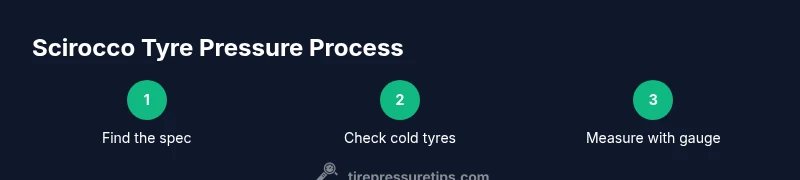
- 1
Find the official PSI values
Consult the Scirocco door placard and the owner’s manual to identify the recommended cold tyre pressures for each axle and tyre size. Note any front/rear differences and any adjustments for load or seasonal conditions.
Tip: Record the values for quick reference during future checks. - 2
Check tyres when cold
Park on a level surface and wait for tyres to cool if they’ve been driven recently. Cold readings are the baseline because heat increases pressure and skews measurements.
Tip: Avoid checking right after driving; cold checks are more accurate. - 3
Attach gauge and read
Remove the valve cap, firmly press the gauge onto the valve stem, and read the pressure. Use the same gauge for all tyres to avoid measurement variance.
Tip: Ignore minor gauge diffs of +/- 0.5 psi; focus on larger discrepancies. - 4
Inflate/deflate to spec
If any tyre is below the target, add air in small increments (1-2 psi), then recheck. If above target, bleed air in small steps until you hit the exact value.
Tip: Inflate in small increments to avoid overshooting the target. - 5
Recheck all tyres
After adjusting one tyre, recheck all four to ensure uniformity and confirm that the front/rear targets are satisfied. Re-secure valve caps.
Tip: Ensure equal pressure across axles if your owner’s manual specifies equivalent settings. - 6
Document and close
Log the final readings, reattach valve caps, and store your gauge and inflator in the vehicle. If readings drift, investigate for leaks or sensor issues.
Tip: Record the date and temperature for future comparisons.
Frequently Asked Questions
What is the recommended tire pressure for Scirocco tyres?
The recommended pressure depends on tyre size, load, and whether you’re using front or rear tyres. Always start with the door placard values and adjust for load and weather as needed. Use a gauge to verify the cold readings before driving.
Check the door placard on your Scirocco to find the official tire pressures; adjust for load and weather, and verify with a gauge when the tyres are cold.
Can TPMS warn me before I read a gauge?
Yes. TPMS alerts you when a tyre is underinflated, but it is not a substitute for direct measurement. Always verify with a gauge to confirm exact pressure and correct any underinflation.
TPMS warnings help, but you should still check with a gauge to know the exact pressure.
Is it safe to drive with low tire pressure?
Driving with underinflated tyres can cause higher heat buildup, reduced handling, and accelerated wear. If you notice underinflation, address it promptly using a gauge and inflator, and seek professional help if leaks or damage are suspected.
Driving on low pressure is unsafe; inflate to spec as soon as possible and check for leaks if needed.
Should I adjust tyre pressure in hot weather?
Better to check when tyres are cold. Heat raises readings; a hot check can overestimate the required pressure. If you must check in heat, compensate by slightly deflating to the cold value once tyres cool again.
Check when cold; if you must check hot, re-check again when cooled.
Can I use any gauge for Scirocco tyres?
Yes, but choose a reliable gauge with consistent readings and avoid relying on cheap, worn-out gauges. A digital gauge with a clear display is ideal for quick checks on a Scirocco.
Use a reliable gauge; digital is convenient for quick checks.
What if the TPMS stays on after inflation?
If the TPMS light remains after inflation, there could be a sensor fault, a damaged valve stem, or a leak elsewhere. Have the TPMS system inspected by a professional to verify sensor health and accuracy.
If TPMS stays on after inflation, get it checked by a professional.
Should I check the spare tyre as well?
Yes. The spare also needs to be within its recommended range. Check it during routine tyre pressure checks and ensure it’s ready for use when needed.
Don’t forget to check the spare; it should be ready for use.
How often should I recheck Scirocco tyre pressure?
Check at least monthly and before long trips, especially when seasons change. More frequent checks are wise if you carry heavy loads or drive aggressively.
Check monthly and before long trips, more often if carrying loads.
Watch Video
What to Remember
- Check cold PSI on the placard before driving.
- Use a reliable gauge and measure all four tyres.
- Inflate/deflate in small increments to match spec.
- Recheck after adjustments and document readings.
- Regular maintenance reduces tyre wear and improves safety.