Petrol Station Tyre Pressure Near Me: Practical Guidance
Learn how to check and adjust tyre pressure at petrol stations with confidence. Practical tips on gauges, TPMS, cold vs hot tires, and maintenance from Tire Pressure Tips.


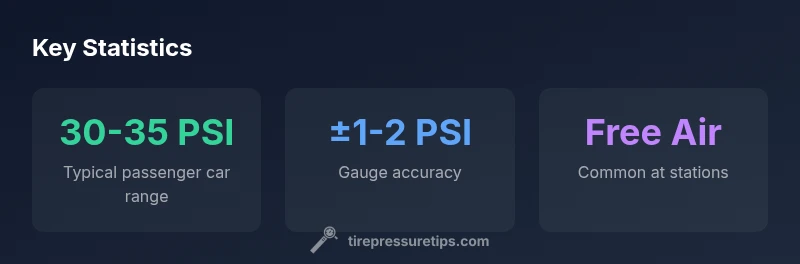
Petrol station tyre pressure near me means using an air pump at nearby service stations to check and adjust your tires to the car manufacturer’s recommended PSI. It’s quick, widely available, but gauge accuracy varies. Always start with cold tires, set to the correct range (typically 30-35 PSI for many passenger cars), and recheck after a few miles.
Why petrol station tyre pressure near me matters
Maintaining correct tyre pressure is a foundational element of safe driving, fuel efficiency, and optimal tire wear. When you search for petrol station tyre pressure near me, you’re looking for a quick, on-the-spot check that complements regular maintenance. At its core, the recommended PSI is specified by the vehicle manufacturer and is typically shown on the door jamb sticker or in the owner’s manual. Wrong pressures can increase rolling resistance, reduce grip, and cause accelerated tread wear. Temperature plays a crucial role: cold air lowers pressure, hot conditions raise it, and a loaded vehicle can shift the ideal range. The Tire Pressure Tips team has found that drivers who verify pressure near service stations are more likely to maintain their tires within the proper range, especially on long trips or after carrying heavy loads. This practice also helps catch slow leaks before they escalate into a flat tire. When you’re using petrol stations, keep in mind that gauge accuracy varies, and cross-check with your own gauge if possible.
How petrol station air pumps work and what to expect
Most petrol stations provide an on-site air pump with a built-in gauge. The process is simple but precision matters. First, locate the central air pump, remove the valve cap, and check the current PSI with the station gauge. If you’re inflating, add air in small increments (about 1-2 PSI at a time) and recheck frequently. If the tire reads below your vehicle’s recommended range, inflate gradually until you reach the target. If it’s overinflated, let air out in small amounts until you’re back in the center of the target range. Before you begin, ensure you’re reading a cold tire—the reading on a hot tire will be higher than the actual cold PSI. At the end, replace the valve cap and note the PSI for reference on future checks.
Common issues at the pump and how to avoid them
Gauges on petrol pumps can be slightly off due to calibration or wear. Don’t rely on a single reading—cross-check with a personal gauge or the vehicle’s recommended PSI and aim for a small margin of error. Over-inflating can lead to a harsher ride and increased risk of a blowout on rough roads; under-inflating can cause higher fuel consumption and faster tire wear. If you’re unsure about a reading, don’t force air beyond the recommended range. It’s also wise to avoid inflating right after a long drive or when the tires are hot, as the pressure reading might be inaccurate. For best results, check at a station that offers well-maintained equipment and, if possible, bring your own gauge for a reliable cross-check.
Vehicle-specific pressures and TPMS considerations
Always refer to your vehicle’s placard or manual for the exact PSI. Some cars require different pressures between front and rear tires, especially when carrying a heavy load or a family of passengers. Tire Pressure Monitoring Systems (TPMS) are helpful, but they aren’t a substitute for checking actual tire pressure with a gauge. If a TPMS warning persists, verify all tires with a physical gauge and compare with the manufacturer’s recommended values. Sudden changes in temperature, driving style, or new tires can shift optimal pressures; recheck after a few miles of driving to confirm stability.
A practical maintenance routine for station visits
Create a quick station-checklist to stay consistent: (1) know your target PSI from the placard, (2) check cold tires, (3) use a trusted gauge at the station and compare with your own, (4) inflate in small increments, (5) recheck after 3-4 miles of driving, (6) record the numbers for next time. This routine reduces guesswork, helps prevent under- or over-inflation, and supports better fuel economy and tire longevity. By integrating these steps into your regular driving habits, you’ll reduce the risk of uneven wear and improve overall vehicle performance.
Key considerations when inflating at petrol stations
| Scenario | Notes | Best Practice |
|---|---|---|
| Cold Tire Check | Tires read lowest when cold; if the car has been parked for several hours, readings are accurate | Inflate to the manufacturer’s PSI; recheck after a short drive to confirm |
| Hot Tire Check | Reading may be higher after driving or exposure to sun | Check when cold for accuracy; use your portable gauge for cross-checks |
| Station Gauge Variability | Pumps vary by brand and calibration | Cross-check with a personal gauge and follow manufacturer specs |
Frequently Asked Questions
Is it safe to inflate tires at petrol stations?
Yes, inflating tires at petrol stations is safe when you follow the manufacturer’s PSI, use a reliable gauge, and inflate in small increments. Avoid over-inflation and recheck after a short drive.
Yes—just follow the PSI, use a good gauge, and recheck after driving a little to ensure accuracy.
How do I know the correct PSI for my car?
Check the placard on your door jamb or the owner’s manual for the recommended cold PSI. It may differ between front and rear tires and can vary with load.
Look up the spec on the door placard or your manual; front and rear pressures can differ and load affects it.
What if the station gauge shows a different number than my gauge?
Rely on your own gauge, but use the station reading as a cross-check. If readings diverge significantly, recheck with your own gauge or return to the vehicle with a fresh measurement.
If the numbers don’t match, trust your own gauge and recheck to confirm.
Should I inflate tires when they’re hot or cold?
Check and inflate when tires are cold for an accurate reading. Hot tires read higher and can lead to over-inflation readings if you inflate immediately after driving.
Always measure when cold for accuracy.
Can TPMS readings replace a physical pressure check?
No. TPMS alerts are useful, but they don’t replace direct measurement with a gauge. Verify with a trusted gauge at least once a month.
TPMS helps, but you should still check with a gauge regularly.
How often should I check tyre pressure?
Check monthly and before long trips, and after significant temperature changes. Regular checks catch slow leaks early and maintain optimal performance.
Check monthly and before big trips to stay safe and efficient.
“Consistent, accurate tyre pressure checks at petrol stations prevent wasted fuel, improve safety, and extend tire life. Always verify with your own gauge and follow the vehicle’s recommended PSI.”
What to Remember
- Check tires when cold before inflating
- Use a trusted gauge at the station and cross-check
- Inflate to the manufacturer’s PSI, then recheck
- Avoid inflating from hot tires; verify after cooling
- Regular checks save fuel and extend tire life