Outback Tire Pressure: Check, Adjust, and Maintain Safe PSI
Learn to check and maintain the right tire pressure for your Subaru Outback, reducing wear, improving fuel economy, and staying safe on road and backcountry trips. Tire Pressure Tips.


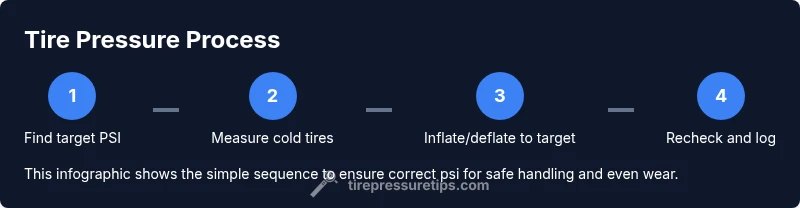
According to Tire Pressure Tips, you can safely check and maintain the correct tire pressure for your Outback by following a few simple steps. This quick answer highlights the goal: identify the right PSI for front and rear tires, measure cold, and adjust for load or terrain. You’ll need a gauge, the vehicle placard, and access to an inflation source.
Why Outback Tire Pressure Matters
Maintaining the correct tire pressure for your Subaru Outback is more than just avoiding a flat tire. Proper psi affects handling, braking performance, tire wear, and fuel efficiency. When tires are underinflated, you create more rolling resistance, which can reduce fuel economy and increase heat buildup, accelerating wear on the sidewalls. Overinflation can make ride quality harsher and reduce the contact patch, diminishing traction in wet or uneven conditions. For drivers who frequent mixed road and light off-road use, consistent, correct tire pressure helps maintain predictable steering and even wear across all four tires. According to Tire Pressure Tips, keeping accurate pressure aligned with the placard values is a simple, effective maintenance habit that pays dividends in safety and performance over the life of the tires.
Factors That Affect Tire Pressure on the Outback
Tire pressure on a Subaru Outback isn’t static. Temperature is a major factor: colder mornings yield lower readings, while hot days raise readings as air expands inside the tire. Load matters too: carrying passengers, gear, or towing increases the load on the front and rear axles, often requiring a higher target psi. Tire type and tread pattern influence how air pressure distributes across the contact patch, especially on dirt roads or gravel. Wheel size and rim condition can also affect perceived pressure, because larger or aftermarket wheels alter the tire’s load path. Driving style, such as aggressive acceleration or sustained high speeds, subtly heats tires and shifts readings. For accurate maintenance, consistently refer to the placard and vehicle owner’s manual and adjust only within the recommended range.
How to Find the Right PSI for Your Outback
The precise PSI target is not universal; it varies by model year, trim, and load. Start with the door jamb placard on the driver’s side or consult the owner’s manual for the correct front and rear values. If you tow a trailer or regularly carry heavy cargo, you may need to use a higher psi in the rear tires to balance load and handling. The tire sidewall maximum PSI is not a target you should aim for; it’s the safety limit. Always align your target with the placard values for your vehicle configuration, and consider the tire size and inflation equipment you have access to when planning long trips. A consistent check against these values helps prevent uneven wear and improves steering responsiveness.
Measuring Pressure Correctly: Cold vs Hot Readings
To obtain an accurate reading, measure tire pressure when the tires are cold, meaning the vehicle hasn’t been driven for several hours. Driving heats the air inside the tire, artificially raising the PSI. If you must check after a drive, wait at least 3 hours for the tires to cool before taking a reading. Use a reliable gauge, and take multiple readings to confirm accuracy. After inflating or deflating, recheck each tire to verify you’ve achieved the target PSI. Temperature swings between seasons can cause noticeable fluctuations, so plan to measure during stable conditions when possible.
TPMS and Manual Checks: What to Trust
Tire Pressure Monitoring System (TPMS) provides a quick alert when pressure drops, but it isn’t a precise measurement. A separate gauge reading should always be used to confirm actual psi values before making adjustments. When TPMS and gauge readings disagree, rely on the manual measurement, as it gives an exact pressure. If TPMS warns frequently, it may indicate a slow leak, a sensor issue, or a puncture. In that case, inspect the tire and consider professional inspection if the issue persists. Regular manual checks complement TPMS, ensuring you catch slow leaks or sensor malfunctions early.
Off-Road and Weather Scenarios: Adjusting for the Backcountry
Outback drivers often encounter mixed terrain and varied weather. In sandy or loose surfaces, slightly higher psi can improve stability by increasing the footprint of the tire. On rough dirt roads, a modest decrease from highway psi can improve ride comfort and traction. In cold weather, expect PSI to drop; plan ahead by checking pressure after the vehicle is in a warm, shaded spot or in the morning when temperatures are lower. Always stay within the tire and vehicle manufacturer’s limits, especially when adjusting for loads or terrain, and be prepared to revert to standard on-road pressures after returning to paved surfaces.
Common Mistakes and How to Avoid Them
Common mistakes include inflating to guessed numbers, neglecting the spare tire, and skipping warm-up checks after driving. Another pitfall is ignoring differences between front and rear tire pressures when the placard specifies separate targets. Finally, relying solely on TPMS without a gauge check can miss slow leaks or sensor inaccuracies. To avoid these, use the placard as your baseline, measure cold, and recheck after any adjustment. Establish a routine—monthly checks before trips are a smart habit that minimizes surprises and extends tire life.
Tools & Materials
- Tire pressure gauge (digital or dial)(Ensure it's calibrated; test against a known gauge if uncertain)
- Owner's manual or door placard(Locate the exact PSI values for front and rear tires)
- Air compressor or access to inflation source(Prefer a unit with an integrated gauge for accuracy)
- TPMS scanner (optional)(Useful for quick sensor checks or calibration)
- Notebook or app to log readings(Helpful for tracking changes over time)
Steps
Estimated time: Estimated total time: 15-25 minutes
- 1
Find the Correct PSI
Locate the front and rear tire pressure targets on the door placard or in the owner's manual. Note any differences between axle positions or tire sizes. This is your baseline before any adjustment.
Tip: If your load changes often (cargo or towing), record both standard and load-adjusted values. - 2
Prepare to Measure When Cold
Ensure tires are cold before measurement. If you’ve driven recently, wait several hours or measure only after a long cool-down. Hot tires give inflated readings that mask the true pressure.
Tip: Avoid checking after a highway drive when temps are high. - 3
Remove Valve Cap and Attach Gauge
Unscrew the valve cap and firmly press the gauge onto the valve stem. Read the pressure on the gauge display. Remove the gauge slowly to prevent air loss.
Tip: Clean the valve stem and gauge fittings to prevent dirt from skewing readings. - 4
Inflate or Deflate to Target PSI
If the pressure is below target, add air in small increments and recheck after each addition. If it's above target, release air gradually and recheck.
Tip: Never exceed the tire’s maximum PSI printed on the sidewall. - 5
Recheck and Reset TPMS
After adjusting all tires, recheck each one to confirm accuracy. If a TPMS warning remains, verify with manual readings and inspect for leaks or sensor issues.
Tip: Drive a short distance to allow the TPMS to recalibrate if readings change. - 6
Document and Monitor
Log the date, tire size, ambient temperature, and readings. Monitor trends over time and adjust for seasonal changes as needed.
Tip: Keep a dedicated notebook or digital log for quick reference on trips.
Frequently Asked Questions
What is the recommended tire pressure for a Subaru Outback?
The exact value depends on model year, trim, and load. Always consult the door placard or owner’s manual for the correct PSI. There is no single universal number.
Check your door placard for the exact PSI; otherwise consult the manual.
Should I adjust tire pressure for off-road driving?
Yes. Rough terrain and heavy loads can require a different PSI. Use higher PSI for stability on demanding surfaces and lower PSI for improved grip on soft terrain, staying within manufacturer limits.
Yes, adjust for off-road conditions within the tire's limits.
How does TPMS relate to manual tire pressure checks?
TPMS provides alerts but does not give a precise pressure reading. Use a gauge to verify actual PSI and adjust accordingly.
TPMS warns, but you should verify with a gauge.
Can temperature affect tire pressure?
Yes. Cold shows a lower PSI than hot; measure when tires are cold for accuracy and avoid readings after driving or exposure to heat.
Temperature affects PSI; measure cold for accuracy.
How often should I check tire pressure?
Check at least once a month and before long trips. Do it after changes in load, season, or driving conditions.
Check monthly and before trips.
What should I do if TPMS stays on after adjustments?
Recheck all tires with a gauge, inspect for slow leaks, and consult a tire shop if the warning remains after correct readings.
If TPMS stays on after adjustments, recheck and seek help if needed.
Watch Video
What to Remember
- Check cold, match the placard PSI
- Use TPMS as a guide, not a replacement
- Adjust for load and terrain
- Measure before long trips to avoid surprises
- Log readings to track trends