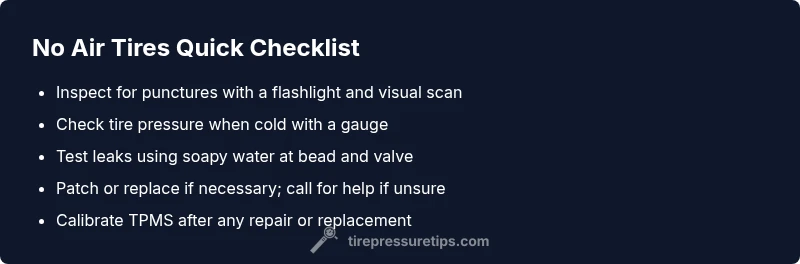
No Air Tires Troubleshooting: Quick Fixes & Prevention
Urgent guide to diagnosing no air tires, with practical checks, safe steps, and prevention tips to keep you moving and safe on the road.


Most likely, a tire with no air is losing it through a slow puncture or a faulty valve stem. Start with a visual inspection for nails or screws, then apply soapy water to the bead and valve area to locate leaks. Patch or replace the damaged tire, and consider road-side assistance if you cannot locate or safely fix the leak.
Understanding No Air Tires and Why It Matters
When a tire has no air, the vehicle’s handling and braking become unpredictable, increasing the risk of a sudden loss of control. According to Tire Pressure Tips, rapid air loss can occur from several common issues, including slow punctures, a faulty valve stem, a compromised bead seal, or a malfunctioning TPMS sensor. No air tires aren’t just inconvenient—they’re dangerous, especially at highway speeds or in extreme weather. Modern drivers rely on accurate tire pressure readings to optimize grip, fuel efficiency, and tire life. Regular checks, ideally when the tires are cold, help you notice gradual leaks before they become emergencies. By understanding how and why air escapes, you can act decisively and minimize risk on the road.
A well-maintained tire system supports stable steering, balanced braking, and controlled cornering. The presence of air cushions the tire, allowing it to absorb road irregularities without transferring excessive impact to the wheel or suspension. Low pressure also increases rolling resistance, which can hurt fuel economy. For families, commuters, and commercial drivers alike, a disciplined approach to tire pressure is a core safety habit that protects passengers and vehicle components. This guide focuses on practical, proven steps you can take when you notice no air tires or any sudden drop in pressure.
Common Causes of Tire Loss: Punctures, Bead Leaks, and Valve Failures
The most frequent culprits behind no air tires are punctures caused by nails, screws, or sharp objects left in the tread or sidewall. Bead leaks—where the tire bead loses its seal against the rim—can also occur from corroded rims, improper mounting, or damaged tires. A faulty valve stem is another common source of air loss; even a tiny crack can let air escape slowly and go unnoticed for days. In some cases, a TPMS sensor fault or a damaged wheel rim may display a normal reading while air continues to escape. Recognizing these causes helps you target the right solution quickly and safely. Inspect the tread for embedded objects, listen for a hissing sound at the valve stem, and check the rim edge for corrosion or damage that could compromise the seal.
Carrying out a careful, systematic check lets you distinguish between a simple slow leak and a more serious tire failure. When you discover air loss, don’t assume the tire can be safely driven to a shop. Slow leaks can worsen, heat can build, and the tire can fail at inopportune moments. Keep a log of pressure readings to see whether loss is steady or sudden, which helps you decide whether to patch, replace, or seek professional help.
Safety First: What to Do Immediately If You Discover a Tire Is Losing Air
If you notice a hose of pressure dropping or a tire visibly flattening, safety is your first concern. Reduce speed gradually, avoid hard braking, and pull over to a safe, flat area away from traffic. Turn on hazard lights, and inspect the tire only if you can do so safely. If you cannot locate an obvious puncture, consider using a portable air compressor to re-inflate to the minimum safe pressure for your vehicle model, but do not exceed the tire’s maximum rating. For many drivers, a temporary fix using tire sealant can seal minor leaks, but this is not a substitute for a professional repair. Remember: driving on a tire with no air is unsafe and may damage the wheel, the rim, and the TPMS sensor. If you feel any handling instability after pulling over, call for roadside assistance rather than proceeding.
Steps
Estimated time: 30-60 minutes
- 1
Prepare safety and tools
Park on a flat surface, engage parking brake, and gather tools: tire gauge, soapy water, tire sealant (optional), and a basic hand pump or compressor. Wear gloves to protect your hands.
Tip: Check your spare and ensure you have light in case of evening repairs. - 2
Check pressure and visually inspect
Measure cold tire pressure and compare to vehicle specification. Look for embedded objects, bulges, cracks, or sidewall damage. Listen for hissing around the valve stem.
Tip: If you hear air escaping, relocate to a safe area before continuing. - 3
Locate the leak with soapy water
Spray or brush soapy water on the tread, bead, and valve stem. Bubbles indicate the leak source. Mark the area with chalk if you need to return to it later.
Tip: Only use soap and water on a cool tire to avoid burns from pressurized air. - 4
Decide on patch, plug, or replacement
If the puncture is in a repairable area and within manufacturer guidelines, patch or plug follow safety standards. If the damage is extensive, replace the tire or call for roadside assistance.
Tip: Patching is usually preferred for punctures; plugging is a temporary fix in some cases. - 5
Reinflate and test
Inflate to the recommended pressure slowly and recheck with the gauge. If the leak returns or you’re unsure, stop and seek professional help.
Tip: Do not exceed the tire’s max inflation specification.
Diagnosis: Tire is losing air or appears flat without a clear, immediate cause
Possible Causes
- highSlow puncture from a nail, screw, or sharp object
- mediumValve stem leak or corroded valve core
- mediumBead seal leak from rim or mounting issue
- lowTPMS fault or sensor misreading
Fixes
- easyInspect tire with soapy water to locate leak source (valve, tread, bead)
- mediumPatch from inside or plug as needed for punctures in the tread (or replace tire if patching is not feasible)
- mediumSeal bead with professional bead seating and rim inspection if bead leak is suspected
- hardReplace TPMS sensor or calibrate system if readings are inconsistent
Frequently Asked Questions
What should I do if my tire goes flat while driving?
Slow down gradually, move to a safe area, and inspect the tire. If you can’t locate the leak or the tire is severely damaged, call for roadside assistance. Do not attempt risky repairs while the vehicle is in motion.
If your tire goes flat while driving, slow down safely and pull over; inspect the tire and call for help if you can’t fix it safely.
How can I tell if a tire is punctured or if the valve is leaking?
A puncture usually leaves a visible object or a telltale bulge, and soapy water will show bubbling at the puncture site. A valve leak shows bubbles around the valve stem. In both cases, avoid driving on the compromised tire.
Look for bubbles around the valve stem or a puncture area using soapy water to confirm the leak source.
Is it safe to drive on a tire that’s losing air slowly?
No, even a slow leak can worsen quickly and lead to a blowout. If you notice any loss, get to a safe place and either patch, replace, or seek professional help before continuing.
No, don’t drive on a tire that’s losing air; get it checked as soon as you can.
Can TPMS cause a tire to show low pressure when it's not?
TPMS can be inaccurate if the sensor is faulty or the tire has been inflated recently. Use a gauge to confirm actual pressure and calibrate the system if needed.
Sometimes TPMS reads wrong due to a faulty sensor; check actual pressure with a gauge.
When should I replace a tire instead of patching it?
If the puncture is in the sidewall, the tire is severely damaged, or the tread is worn beyond safe limits, replacement is safer than patching.
If the tire is damaged beyond repair or the tread is worn out, replace it.
Watch Video
What to Remember
- Check tires when cold for accurate readings
- Use soapy water to locate leaks quickly
- Patch or replace punctured tires promptly
- If unsure, seek professional help immediately