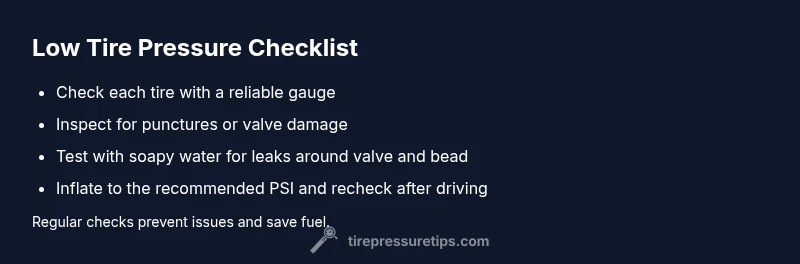
Issue with Low Tire Pressure: Troubleshooting Guide
Diagnose and fix issues with low tire pressure quickly. This guide covers quick checks, a diagnostic flow, step-by-step fixes, TPMS tips, safety notes, and prevention to keep your tires properly inflated.


Most likely cause of an issue with low tire pressure is a slow leak from the valve stem, bead, or a small puncture, often worsened by temperature shifts. Quick fix: (1) inspect for nails or damage, (2) use a reliable gauge to confirm current PSI, (3) inflate to the recommended level and recheck. If the leak persists, seek professional service.
Why this issue matters
When you notice an issue with low tire pressure, it isn’t just about a slightly softer ride. Underinflated tires heat up faster, wear unevenly, and can reduce fuel economy and handling. The Tire Pressure Tips team emphasizes that maintaining the correct PSI protects tread life, improves grip, and lowers the risk of a blowout. According to Tire Pressure Tips, addressing low pressure promptly can prevent costly repairs and unsafe driving conditions. Inconsistent pressure across tires can also trigger uneven braking and steering responses, making it harder to control the vehicle in rain or snow. By understanding the causes and acting quickly, drivers can keep tires in a safe, efficient operating window and extend tire life.
Quick checks you can perform at home
Before rushing to a shop, perform a few simple checks:
- Use a dedicated tire pressure gauge (not a gas station gauge) to verify each tire’s PSI against the vehicle’s recommended range.
- Inspect for obvious damage: nails, cuts, or bulges in the sidewall.
- Check the valve stem for cracks or missing caps; a loose or damaged valve stem is a common leak source.
- Make sure the tire isn’t visually underinflated by looking at the tread and sidewall height.
- If available, use a soapy water test around the valve core, stem, and bead to reveal slow leaks as bubbles appear where air escapes.
If you find a nail or puncture, don’t remove it unless you’re equipped to patch safely; instead, seek professional help or follow a proper repair procedure. The key is to confirm whether the problem is a simple pressure loss or a leak that requires repair or replacement.
Common causes of low tire pressure
Low tire pressure can result from several sources, often in combination:
- Puncture or nail in tread causing a slow leak, especially after driving on rough roads or encountering sharp objects.
- Leakage at the valve stem due to a degraded valve core, missing cap, or damaged seal.
- Bead seat leak where the tire bead loses a seal against the rim, often due to corrosion, mounting errors, or bent rims.
- Temperature-related pressure drop, where ambient cold air reduces PSI inside the tire.
- Wheel damage or corrosion that disrupts the seal around the rim area.
Understanding the likely causes helps you prioritize checks and decides whether a DIY patch or professional service is needed. The key is to validate whether the pressure loss is quick or gradual and whether it’s isolated to one tire or affecting multiple tires.
Diagnostic flow at a glance
A structured diagnostic flow keeps you from guessing:
- Symptom: One or more tires reading low on the gauge or a TPMS warning.
- Check: Confirm current PSI on all tires and compare to the manufacturer’s recommended PSI (found on the door jamb sticker or owner’s manual).
- Investigate: Look for visible damage, test valves for leaks, and inspect rims/bead areas.
- Decide: If a puncture is found and repairable, patch/plug as appropriate; if not, replace the tire.
- Verify: Reinflate to the correct PSI and recheck after a short drive.
This flow aligns with Tire Pressure Tips’ guidance on methodical troubleshooting versus guesswork.
Step-by-step fix for the most common cause
If a slow leak from the tread is the most likely cause, follow these steps:
- Park on a flat, safe surface and engage the parking brake.
- Remove the valve cap and test the tire with a soap-water solution to locate bubbles identifying the leak.
- If the puncture is in the tread and within repairable limits, use a proper tire plug/patch kit or patch at a reputable shop.
- If repair is performed, allow the patch to cure as recommended and recheck the tire pressure.
- Reinflate to the vehicle’s recommended PSI, then drive 3-5 miles and recheck to ensure it remains stable.
- Inspect the other tires and TPMS sensor to ensure no additional leaks exist.
Tip: If the leak is at the bead or sidewall, or if you see cracks around the tire, replace the tire rather than patching. Always prioritize safety and professional service when in doubt.
Safety considerations and common mistakes
Safety should come first:
- Never drive far on a visibly flat tire or with suspect sidewall damage. Slow deflation or a blowout can cause loss of control.
- Do not overinflate beyond the recommended PSI to compensate for a small leak; this can create a harsher ride and increase risk of a tire blowout.
- Avoid relying on a single low-pressure reading; tires warm up over driving and PSI rises, so recheck after cooling down.
- Ensure you have proper lighting and reflective gear if you must inspect tires on the roadside.
Common mistakes include ignoring TPMS warnings, using damaged gauges, and delaying professional repair when a rim bead leak or deep puncture is suspected.
Prevention and long-term maintenance
Preventing low tire pressure starts with routine checks:
- Schedule monthly tire pressure checks and before long trips. Keep a portable air compressor or a tire pressure gauge in the car.
- Rotate tires on a regular schedule and align wheels as needed to prevent irregular wear that can mask leaks.
- Inspect valve stems and caps during every tire rotation. Replace any worn caps to stop dirt or moisture ingress.
- Monitor changes in pressure with seasonal temperature shifts and adjust accordingly.
- Consider tire condition rotation and immediate inspection if TPMS alerts trigger during cold weather or after pothole impacts.
Staying proactive helps extend tire life and reduces the risk of unsafe driving conditions.
When to seek professional help
If you cannot locate a leak, if the leak is at the bead, sidewall, or rim, or if the tire has sustained significant damage, seek professional tire service immediately. A certified technician can perform a safe repair, assess TPMS sensor health, calibrate or replace sensors, and recommend whether a full tire replacement is necessary. Even small leaks can become critical with highway speeds, so err on the side of caution and arrange service promptly.
Steps
Estimated time: 30-60 minutes
- 1
Park safely and prep tools
Find a flat, safe area and apply the parking brake. Gather a reliable gauge, soapy water, valve core tool, and any patch/plug kit if you plan a DIY repair.
Tip: Turn on hazards to alert others if you’re roadside. - 2
Check current PSI
Remove the valve cap and press the gauge onto the valve stem to get a reading. Note the reading for each tire and compare with the manufacturer’s recommended PSI.
Tip: If readings differ significantly between tires, inspect for other leaks or damage. - 3
Inspect for damage
Look for nails, cuts, bulges, or sidewall damage. If you see obvious damage, do not drive long distances; seek professional help.
Tip: Use soapy water around the valve core and bead to locate leaks. - 4
Repair or replace as needed
If a puncture is in the tread and repairable, patch/plug or patch from a shop. If sidewall or bead is damaged, replace the tire.
Tip: Never patch a tire with a damaged sidewall. - 5
Reinflate and verify
Inflate to the recommended PSI, drive a short distance, and recheck the pressure after the tire cools down. Ensure the TPMS readings track with the gauge.
Tip: Keep the cap on to protect the valve stem after finishing. - 6
Follow up and monitor
Monitor pressure over the next few days. If pressure drops again, have the tire inspected by a professional to check for hidden leaks or TPMS issues.
Tip: Record readings in a maintenance log for future reference.
Diagnosis: Tire pressure warning light is on or a manual gauge reads low on one or more tires after inflation.
Possible Causes
- highPuncture or nail in tread causing a slow leak
- highSlow leak at the valve stem due to cap missing or valve damage
- mediumBead seat leak at rim from corrosion or damage
- lowTemperature-related pressure drop due to ambient weather
Fixes
- mediumVisually inspect tire and repair puncture with patch/plug if in tread and repairable, or replace tire if unable to repair.
- easyApply soap-water leak test to locate leaks; retighten or replace valve core; replace missing valve cap.
- easyInflate to the recommended PSI and drive 3-5 miles to settle; recheck TPMS.
- mediumIf leak persists or is at the bead/sidewall, seek professional tire service.
Frequently Asked Questions
What is considered a safe tire pressure for my vehicle?
Safe PSI is the range recommended by the vehicle manufacturer, typically found on the driver’s door jamb sticker or in the owner's manual. It can vary by tire size and load.
Safe tire pressure is the range listed by the manufacturer on the door sticker or manual. Check that range and stay within it.
Why does TPMS show low pressure after I’ve inflated the tires?
TPMS can lag behind pressure changes or suffer from sensor calibration issues. If the warning persists after inflation, have the sensors checked for fault or battery issues.
Sometimes TPMS lags after inflation; if the warning stays, a sensor or calibration issue could be the cause.
Can temperature alone cause low tire pressure?
Yes. Cold ambient temperatures can reduce tire pressure, while warming temperatures can increase it. Check pressure after the tire has cooled down and adjust as needed.
Cold weather can lower tire pressure; recheck when tires are cool and adjust to the recommended level.
Should I repair a puncture or replace the tire?
If the puncture is in the tread and within repairable limits, patch or plug is acceptable. Sidewall damage or large punctures usually require tire replacement.
Patch if the puncture is in the tread and repairable; otherwise replace.
Is driving on underinflated tires dangerous?
Underinflated tires heat up more, wear faster, and are at greater risk of blowouts. Drive cautiously and get them fixed promptly.
Yes—underinflated tires are riskier and can blow out; fix them quickly.
What should I do if TPMS keeps flashing after inflation?
Drive a short distance to allow sensors to recalibrate, then recheck. If it continues, TPMS sensor or battery issues may exist and require professional service.
If TPMS keeps flashing after inflation, sensors may need service or replacement.
What to Remember
- Check PSI with a reliable gauge before driving.
- Patch or replace punctured tires in tread areas, avoid sidewall repairs.
- TPMS is a guide—verify with a physical gauge and recheck after driving.
- Regular maintenance prevents sudden failures and extends tire life.