Honda Civic Air Pressure Guide: Check & Maintain Tires
Learn how to check, interpret, and adjust tire pressure for Honda Civics. This practical guide covers TPMS basics, model-year nuances, temperature effects, and safe inflation steps.


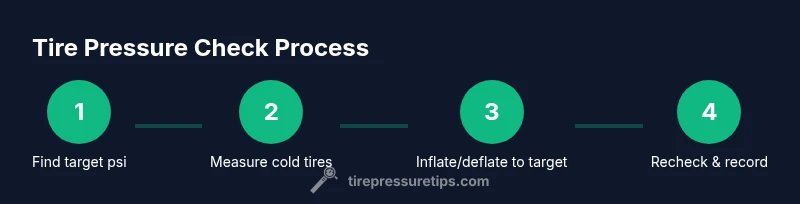
According to Tire Pressure Tips, maintaining correct Honda Civic air pressure boosts safety, fuel efficiency, and tire life. This quick answer previews the steps you’ll find in detail below: identify the right PSI for your Civic, check tires when cold, use a gauge, and adjust to spec. Expect model-year nuances and TPMS considerations.
Honda Civic air pressure 101: what you need to know
Tire pressure is the amount of air inside each tire, measured in psi. For Honda Civics, the official recommended psi is not the same as the maximum sidewall pressure; it’s the value listed on the door jamb placard and in the owner's manual. This value assumes cold tires and typical loads. In practice, you’ll read a different number if the tires are warm after a drive. In short, always aim for the spec on the placard when tires are cold, and recheck after you’ve driven a few miles. The Tire Pressure Tips team emphasizes that keeping near the OEM target helps protect tread, improve fuel economy, and maintain predictable handling in wet or dry conditions. By understanding where to find the spec and how temperature affects readings, you’ll make tire pressure a quick, confident part of routine maintenance.
Why correct tire pressure matters on a Civic
Tire pressure influences many aspects of driving: grip, braking distance, steering response, and ride comfort. When Civics run at the recommended psi, the tire contact patch is optimized, reducing uneven wear and heat buildup. Underinflation causes the sidewalls to flex more, generating heat and accelerating tread wear; this can also worsen fuel economy and increase rolling resistance. Overinflation makes the tire contact patch smaller, which can reduce grip on slick surfaces and produce a harsher ride. Regularly checking tire pressure and staying close to the recommended level helps ensure safer handling, especially in rain or snow, and can extend the life of the tires on your Civic. According to Tire Pressure Tips, consistent adherence to the manufacturer’s specification supports consistent performance across daily commuting and longer trips.
Reading your Honda Civic's tire pressure: PSI basics
A typical tire pressure reading is expressed in psi (pounds per square inch). The number you’re looking for is the cold psi, which means the tires haven’t warmed up from driving. After a drive, the air in tires heats and expands, briefly showing a higher reading; that’s normal. To measure accurately, check before you drive and before you park, ideally first thing in the morning or after the car has sat for several hours. Many Civic owners find the placard on the door jamb or inside the glove box to be the easiest source of truth. Use a reliable gauge and compare results across all four tires. If you notice consistent deviations, plan a maintenance check or alignment evaluation as needed.
Finding the official psi for your Civic by year and trim
Honda publishes the target tire pressure for most Civics on the door jamb placard. The label also appears in the owner’s manual and sometimes on the fuel-filler door. The exact psi can vary by model year, trim level, wheel size, and load. If your Civic has optional larger wheels or a different tire type, the recommended psi can shift slightly. When in doubt, rely on the placard for your specific vehicle and cross-check with the manual. If you lack access to the placard, many dealerships can pull the correct spec by VIN. Always verify the target while the tires are cold.
TPMS: how it works in Honda Civics
Most Honda Civics use a Tire Pressure Monitoring System (TPMS) to alert when a tire drops below the recommended pressure. Some Civics have direct TPMS with sensors in each wheel; others use indirect TPMS by measuring rotational differences. A TPMS warning light can come on with sudden pressure loss or gradual leakage. When the light appears, you should check all tires with a gauge and adjust to the recommended psi. If the warning stays on after inflation, there may be a sensor fault or valve stem issue requiring service. After correction, the TPMS may need a reset or relearn procedure, which is often accomplished with a scan tool or the driver’s information center in modern Civics.
Temperature effects on tire pressure and what to do about it
Air pressure changes with temperature. In general, a colder morning will reduce the psi reading, while heat from driving or ambient heat can increase it. The effect is more pronounced on longer trips and in fluctuating weather. To minimize impact, check tire pressure when the tires are cold and after the car has sat overnight. For seasonal changes, expect some drift as outdoor temperatures vary; adjust to the OEM spec rather than chasing a fixed number across every season. Regular checks are the best defense against seasonal drift.
Tools and gauges: choosing the right tool
A good tire gauge is essential. A digital gauge provides quick, precise readings; a dial gauge offers reliability; a pen-type gauge is portable and affordable. For Civics, a gauge with at least 0.5 psi precision is sufficient for routine checks. You’ll also need an air source, such as an air compressor at home or a service station, and a way to record readings. Keep valve caps clean and replace them after each check. If you’re unsure which gauge suits your Civic, choose a model that reads to at least 1 psi and works with both metric and imperial units.
Common mistakes and how to avoid them
Common mistakes include inflating to the tire’s maximum pressure instead of the recommended psi, not checking all four tires, and assuming the spare must be checked at the same time. Don’t rely on random online numbers; always verify the exact spec for your Civic’s model year and trim. Another pitfall is checking after driving and using the hot reading; always work with cold tires for accuracy. Finally, avoid adjusting pressure with a damaged valve stem or a slow-leak tire; these require professional attention.
Inflation and maintenance routines you can follow
Create a simple monthly check, especially before long trips or seasonal transitions. Keep a written log or digital note of your readings and the date. Pair tire pressure checks with tread depth and overall tire condition checks for a holistic approach. Align the car’s load when carrying passengers or cargo to avoid under- or over-inflating with uneven wear. Maintaining the right pressure also helps preserve ride quality and consistent fuel economy. A quick pre-trip check is a good habit for every Civic owner.
Quick-check checklist for Honda Civic owners
- Check cold PSI on all four tires using a reliable gauge
- Confirm that you are using the door jamb placard PSI
- Inflate/deflate to target; avoid under/over inflate
- Re-check after driving 3-4 miles
- Inspect valve stems; check for leaks
- Log readings
Tools & Materials
- Digital tire pressure gauge(Prefer a gauge with 0.5 psi precision or better)
- Air compressor or access to an inflator(At home or at a gas station)
- Owner's manual and door jamb placard(Use as the official spec source)
- Pen and notebook(To log readings)
- Spare valve caps(Keep on hand)
Steps
Estimated time: Total time: 15-25 minutes
- 1
Identify the target tire pressure
Locate the official psi specification from the door jamb placard or owner’s manual. Note the value for cold tires and for the Civic’s standard tire size. Record the number and unit so you can reference it during inflation.
Tip: Always start with the exact spec for your Civic model year and tire size. - 2
Check tires when cold
Ensure the vehicle hasn’t been driven for at least 3 hours. Park on a level surface and remove the valve caps. This ensures you read the true cold pressure rather than inflated or heated readings.
Tip: If you’ve just driven, wait until tires cool down before re-reading. - 3
Remove valve caps and attach gauge
Remove the valve stem caps and press the gauge onto the valve to read the pressure. Make sure there’s no debris; a clean seal improves accuracy.
Tip: Hold gauge steady while taking the measurement. - 4
Read the pressure on all four tires
Take a measurement from each tire and write down the numbers. Compare readings to the target psi and note any tire that is noticeably low or high.
Tip: Tires on the same axle often wear similarly; prioritize the outer tires if you notice drift. - 5
Inflate or deflate to the target psi
If a tire is underinflated, use the air compressor to add air in small increments and recheck after each addition. If overinflated, carefully release air until you reach the target.
Tip: Make small adjustments and recheck; avoid overshooting the mark. - 6
Recheck all tires and replace caps
After inflation, recheck each tire to confirm accuracy. Replace the valve caps securely to prevent leaks. Ensure the tires are evenly inflated.
Tip: Leave the gauge attached briefly after inflation to verify it remains steady. - 7
Address TPMS if needed
If your Civic has TPMS and a warning remains after inflating, perform a basic reset relearn procedure if your system requires it. If you suspect a faulty sensor, schedule service.
Tip: Many Civics allow a simple relearn via the instrument cluster; consult the owner's manual. - 8
Record readings and schedule the next check
Log the readings and the date, then set a reminder for your next monthly check or before long trips. Regular documentation makes maintenance routine and avoids sudden pressure loss.
Tip: Keep a mobile note or app entry for quick reference on the road.
Frequently Asked Questions
What is the correct tire pressure for my Honda Civic?
The right psi is the value shown on the door jamb placard or in the owner’s manual for your specific Civic model year and tire size. Verify the reading with a cold tire check before inflating.
Check the placard on the door jamb for your exact psi and verify with a cold tire check.
Does TPMS show the exact tire pressure?
TPMS alerts you when any tire is under the recommended pressure, but it does not display exact numbers. Use a gauge to measure and adjust to the target psi.
TPMS warns you of low pressure; use a gauge to read and adjust to spec.
Can I drive with low tire pressure before I get it fixed?
If the pressure is only mildly low, you can drive to a service location, but avoid aggressive driving and long distances. Low pressure increases wear and heat, so address it promptly.
You should not drive far with significantly low pressure; get it checked soon.
Should I inflate to the tire’s maximum pressure?
No. The recommended psi is not the tire’s maximum; inflate to the OEM spec from the placard and manual for optimal performance and safety.
Never inflate to the max; follow the manufacturer’s recommended psi.
How often should I check tire pressure?
Check at least monthly and before long trips. Temperature changes and seasonal shifts can cause gradual pressure drift, so regular checks keep tires balanced.
Check monthly and before long trips for best results.
What if my tire never reaches the target psi after inflation?
If you can’t reach the target psi after multiple attempts, there may be a slow leak or valve issue. Have a professional inspect the tire and TPMS components.
Persistent failure to reach target psi suggests a leak or valve problem; seek service.
Watch Video
What to Remember
- Check cold psi before driving
- Always use OEM spec from placard
- Use a reliable, calibrated gauge
- Log readings monthly and before trips
- Address TPMS warnings promptly