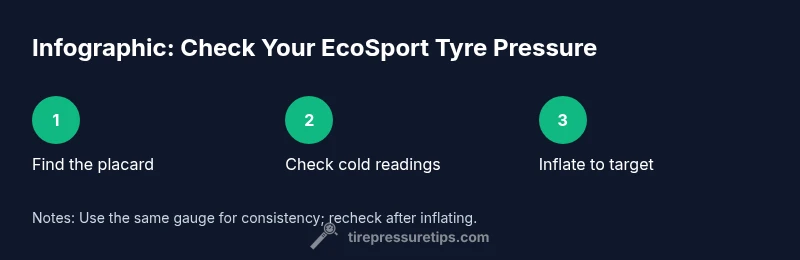
EcoSport Tyre Pressure: Check, Inflate, and Maintain in 2026
Learn how to check and adjust EcoSport tyre pressure for safety, fuel efficiency, and reliable TPMS. Step-by-step guidance, tools, and practical tips for all seasons.


Goal: Learn how to check, adjust, and maintain EcoSport tyre pressure for safety, fuel economy, and TPMS reliability. This guide provides a clear, step-by-step approach from locating the correct pressure placard to rechecking after inflation. You'll gain practical tips to avoid common errors and keep tires in optimal condition, regardless of load or weather.
Why EcoSport tyre pressure matters
Maintaining proper tyre pressure for your EcoSport isn't just about avoiding flat tires. Correct inflation affects safety, handling, braking distances, fuel economy, tire wear, and even the accuracy of your TPMS readings. The Tire Pressure Tips team emphasizes that small changes in pressure can change available grip and load-bearing capacity, especially when you regularly drive with a full family or luggage. According to Tire Pressure Tips, consistently underinflated tires increase heat buildup and wear on the outer edges; overinflation reduces tread contact with the road and can cause a harsher ride. For EcoSport owners, understanding the baseline pressure is the first step toward consistent maintenance and safer driving in all seasons. This guide will walk you through finding the right target, checking cold readings, and adjusting before long trips or highway cruises.
How to find the correct pressure for your EcoSport
The correct tyre pressure isn't a guess; it comes from a placard on the vehicle and your owner's manual. For the EcoSport, the recommended values can differ between front and rear axles and may vary with load. Start by locating the tyre pressure placard on the driver’s door jamb or fuel-filler door; if you can't find it there, check the owner's manual or Ford's official support site. Once you know the official numbers, compare them to the current readings and note any differences between cold and recently driven tires. In practice, many drivers begin with the placard values as a baseline, then adjust upward slightly for high-speed driving or heavy cargo, and downward for mostly city commuting with light loads. Always aim to reproduce the target pressure when the tires are cold for the most accurate measurement.
Cold vs hot pressure: when to check
Pressure changes with temperature. Cold tires reflect the baseline setting; hot tires will read higher after driving. To maintain accuracy, check tyre pressure before you drive or after at least three hours of inactivity. If you notice a reading that's unusually high after a highway run, allow the tires to cool for at least 30 minutes and recheck. When the EcoSport sits in the sun all day, the interior air pressure can rise, particularly in the front tires due to weight distribution. This is why Tire Pressure Tips recommends a consistent schedule: check cold, adjust to spec, recheck after a short drive, and record the readings. Adapting to seasonal temperature shifts helps you maintain safe pavement contact and predictable handling.
Tools and measurement considerations
Before you start, gather a calibrate gauge, a portable inflator or air compressor, the owner's manual, and the tire placard. A digital gauge provides easy-to-read numbers; a pencil gauge is reliable but slower to read. Best practice is to use the same gauge for all measurements to avoid cycle-to-cycle variability. For EcoSport tires, inspect the valve stems and rims for signs of damage when you remove the valve caps. If you use a public air pump, bring a back-up gauge to verify the reading. Keep a log of your readings with dates and temperatures to track changes over time. The goal is consistent readings within the manufacturer’s target range, not a single perfect number.
How to interpret readings and adjust
When readings are below the target, add air in small increments (2-3 psi at a time). After each increment, pause to allow the tire to settle and recheck. If readings are above target, release air gradually until you reach the specified figure. For EcoSport, pay attention to differences between front and rear tires, since weight distribution can change target pressures. After adjusting, reinstall the valve caps and recheck all four tires within a few minutes of driving, as tires heat up. If you notice persistent under- or over-inflation on one tire, inspect for leaks, punctures, or faulty TPMS sensors. The goal is stable, repeatable readings at the cold baseline.
Temperature and seasonal effects
Seasonal shifts affect tyre pressure. In cold weather, air contracts and pressure drops; in hot weather, pressure rises. For EcoSport owners, this means you may need to adjust inflation more often in winter and summer. If you drive short distances daily, your tires may never fully warm up, so rely on cold readings and the placard rather than the feel of the ride. Also consider changes in tire size, tread depth, and wheel orientation that can influence the ideal pressures. By planning inflation around ambient temperature, you protect Tread life and fuel economy.
TPMS basics for EcoSport
TPMS alerts you when a tire’s pressure falls below a threshold. Some EcoSport models use direct sensor readings inside each tire; others rely on indirect measurements from ABS wheel speed data. Either way, TPMS is a helpful safety net, but it isn’t a substitute for regular manual checks. After inflating or changing tires, some systems require calibration. If you replace wheels or sensors, or if a tire is replaced, have the TPMS reset performed by a trained technician. Remember, TPMS targets are meant to keep you out of the danger zone; never ignore a TPMS warning.
Common mistakes to avoid
Avoid inflating to feel-good numbers that seem right but are actually too low or high for load. Don’t mix up front and rear targets—these can differ. Don’t rely on “passenger car” defaults when you own a compact SUV; EcoSport specifications matter. Never ignore the valve stem cap; dirt can compromise readings. Don’t assume that a tire’s tread depth is the same on all tires; a worn tread can mask pressure deficits. Finally, avoid inflating immediately after a long drive; wait until tires cool to get an accurate reading.
When to replace tires or recalibrate
Pressure maintenance is part of tire health, but it doesn’t replace tire age or wear checks. If a tire shows bulges, sidewall cracking, or uneven wear that persists after inflating to spec, replace it. If TPMS frequently indicates low pressure on a tire that appears to be within spec, consider sensor recalibration or replacement. Regular alignment checks can prevent uneven wear that skews pressure readings. Use a tire gauge and log to detect gradual drifting away from the baseline.
Practical scenarios: load, speed, towing
Whenever you regularly drive with heavy cargo or tow a trailer, target higher pressures within the safe range specified by the placard; for city driving with light loads, you may be within the lower bound. For EcoSport, the difference between tire pressures on long highway trips and everyday commuting can be small but meaningful for wear distribution. When tracking fuel economy and performance, consider that consistent tire pressure improves rolling resistance and braking distance. Always know the seasonal and weather impact on these numbers for planning.
Maintenance checklist and schedule
Create a monthly inflation check routine and an annual TPMS calibration check. Record readings, temperatures, and any anomalies. If you rotate tires, recheck pressures on all four after re-mounting. Always use the same gauge type for consistency. Keep a small air compressor in the car for emergencies, ensuring you can reach the ideal baseline. Finally, compare your readings to the placard and adjust as needed.
Quick-start reference and next steps
Use the placard as your baseline; verify with a gauge; adjust in small increments; recheck after a drive; log changes; and maintain TPMS. This approach keeps you safer, more fuel-efficient, and prepared for seasonal changes. For EcoSport owners, a structured inflation routine reduces risk and improves long-term tire life.
Tools & Materials
- Tire pressure gauge(Digital or analog; accuracy within +/- 1 psi is ideal)
- Portable air compressor or tire inflator(A unit with a built-in pressure gauge is helpful)
- Owner's manual and vehicle placard(Source of exact EcoSport pressures by axle and load)
- Pen and notebook or digital log(Record readings, dates, temperatures, and notes)
- Valve-cap replacement (optional)(Keep caps clean and replace if damaged)
Steps
Estimated time: 15-25 minutes
- 1
Check tires when cold
Park in a shaded area and wait at least 3 hours after driving or first thing in the morning. Ensure tires are cool before measuring. This prevents reading inflated numbers caused by heat.
Tip: Always use the cold reading for accuracy. - 2
Find the official EcoSport pressures
Locate the placard on the driver’s door jamb or consult the owner's manual for the exact front/rear and load-based targets. Write them down before inflating.
Tip: Note if the front and rear targets differ. - 3
Prepare the gauge and inflator
Attach the gauge sensor securely to the valve stem and take a baseline reading. If the tire is very low, use a slow, steady inflation approach to avoid overshoot.
Tip: Use the same gauge for consistency throughout the session. - 4
Inflate to target in small steps
Inflate in 1–2 psi increments, pause, and recheck. Stop when you approach the target; avoid over-inflating.
Tip: If you overshoot, release air gradually and recheck. - 5
Recheck all tires and cap
Recheck all four tires after inflation. Replace valve caps securely to keep dirt out and readings accurate.
Tip: Double-check spare tire pressure as part of routine checks. - 6
Document and monitor
Log the pressure readings and note any recurring drift. If readings trend down, inspect for leaks or sensor issues.
Tip: Maintain a simple log for seasonal comparisons.
Frequently Asked Questions
Where can I find EcoSport's recommended tyre pressure?
Check the driver’s door jamb placard or the owner's manual for the exact front and rear pressures. If numbers differ by load, note how your typical load affects the target.
Check the door jamb placard or the owner's manual for the exact EcoSport pressures. If you carry heavier loads, the targets may differ between front and rear tires.
How often should I check tyre pressure?
Check at least once a month and before long trips. When seasons change, recheck to account for temperature effects.
Check at least monthly and before long trips. Recheck with temperature changes to account for seasonal effects.
My TPMS warning lights up but the tire looks fine. What should I do?
Treat the TPMS warning seriously. Verify with a gauge, inspect for leaks, and if readings drift, have the TPMS calibration checked by a technician.
Take TPMS warnings seriously. Check with a gauge, inspect for leaks, and get a calibration check if readings drift.
Is it safe to drive with under-inflated EcoSport tires?
Driving on underinflated tires can affect handling and increase wear or heat buildup. Inflate to the recommended pressure as soon as possible.
No, it’s not ideal. Inflate to the proper pressure as soon as you can to maintain safe handling and tire life.
Can I use a car tire gauge to check the spare tire?
Yes, apply the same checking method to the spare tire if you carry one in your EcoSport. Ensure the spare has adequate pressure for use.
Yes—check the spare tire the same way as the others, and make sure it’s properly inflated.
Watch Video
What to Remember
- Check cold readings first before driving.
- Always follow the vehicle placard for target pressures.
- Use consistent gauges and record trends.
- Recheck after inflation to confirm stability.
- Address TPMS alerts promptly and calibrate when needed.