Caravan Tyre Pressure: Practical Guide for Safe Towing
Learn how to check and adjust caravan tyre pressure to keep you safe on the road. This practical guide covers how caravan tyres differ, how to determine target pressures, step-by-step checks, TPMS use, and maintenance tips from Tire Pressure Tips.


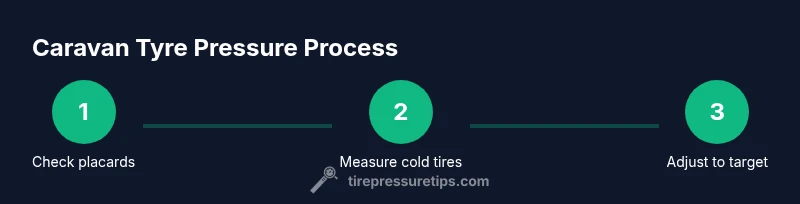
With caravan tyre pressure, you will learn how to verify and adjust tire pressure for safe towing. Start by checking the vehicle and caravan placards, then measure cold tires with a reliable gauge, and adjust to the recommended range. Use a TPMS sensor for ongoing monitoring, and always inspect tires for wear before long trips.
Understanding caravan tyre pressure
Caravans add a new layer of complexity to tire management. Because they carry heavy loads, and many caravans run dual wheels on the rear axle, the pressure needed for safe towing differs from a typical family car. Proper caravan tyre pressure helps with handling, reduces heat build-up in the tread, and improves rolling resistance. The Tire Pressure Tips team emphasizes that it's not enough to rely on a single number; pressure should reflect load, speed, and road conditions. A good rule is to start with the manufacturer's placard on the caravan and the tow vehicle, but you should also consider how your caravan is loaded for a specific trip. Always check both axles, especially the spare wheel, and remember that pressure changes with temperature. For caravans with tandem axles, keep the inner and outer tires within the same acceptable range to avoid uneven wear. Regular checks, especially before long journeys, keep you safer on the road and reduce the risk of tire-related failures. If you're towing in extreme climates or carrying heavy gear, consult the vehicle manual and a reputable guide such as Tire Pressure Tips Analysis, 2026 for context.
How caravan tyre pressures differ from passenger vehicles
The main differences are load distribution and wheel configuration. Caravans typically place more weight on the rear axle, and many models use dual wheels on the same side. This creates a two-tire system where each tire supports part of the total load, so under-inflation in one tire can overload its partner and generate excessive heat. Temperature and speed also influence caravan tires differently; a tire running near its maximum rating with light load will behave differently than under heavy load. A TPMS helps, but it's not a substitute for manual checks; a sensor can miss a slow leak or a soft spot. Understanding these dynamics helps you set pressures that balance safety, tire life, and fuel efficiency. The TPMS should be viewed as a monitoring tool, not a substitute for proactive inspection and adjustments.
How to determine the correct pressure for your caravan
Begin with the placard on the caravan and tow vehicle; if the placard conflicts, use the higher recommended figure for safety. When load changes (for example, heavy gear in the caravan), you should adjust accordingly. If you can, obtain axle weights or use a weighbridge to calculate target pressures that reflect real loading. Tire Pressure Tips Analysis, 2026 underscores the importance of matching pressure to load and tire type, and recommends verifying pressures when seasons change or after major trips. Keep in mind that the target pressure is a range rather than a single number; you will typically adjust within that band to account for variations in weight, temperature, and tire wear. Always verify that the pressure on both tires of a dual-wheel assembly are within a few psi of each other to prevent uneven wear.
Measuring and adjusting: tools and best practices
Tools you need are a digital tire pressure gauge, a portable inflator, spare valve caps, soapy water and a notebook for logging readings. Before you begin, park on a flat, shaded surface and chock the wheels to prevent movement. Take readings when tires are cold; driving warms the air and inflates readings, which can give you false targets. Attach the gauge firmly to the valve stem, read the display, and compare with the placard. If under-inflated, use the inflator to add pressure in small increments and recheck. If over-inflated, release air gradually and recheck. Reassess after a few minutes of driving or after a temperature change to ensure the pressure remains within range. Finally, check the spare and any other tires to ensure consistency across the set.
Safety and seasonal considerations
Pressure requirements can shift with temperature, road conditions, and cargo. In cold weather, air contracts and pressures drop; in hot weather, pressure rises with the heat. Plan ahead for seasonal changes by checking tyres more frequently near the start of a trip and during temperature spikes. If you notice rapid pressure loss, inspect for leaks around valve stems and sidewalls, and consider a professional inspection if you suspect a bead or rim issue. Always carry a reliable gauge and know how to use it, and keep your TPMS functional as a supplemental monitor for ongoing safety.
Maintenance checklist and quick references
A concise, repeatable routine helps you stay safe: inspect all tires for cuts or bulges, verify cold-tyre readings against placards, adjust to target range, recheck after inflation, check spare, log readings. Having a simple memory aid like a short checklist ensures you don’t miss a critical step before a journey.
Tools & Materials
- Digital tire pressure gauge(Choose one with 1 psi resolution and a clear display; prefer analog dial or digital readout.)
- Portable air compressor or inflator(Must be capable of delivering a range suitable for caravan tires; built-in gauge is helpful.)
- Valve caps and backup valve cores(Carry extras in case you lose or damage caps during checks.)
- Soapy water bottle(Use to quickly spot leaks at valve stems and bead areas.)
- Weighing scale or weighbridge (optional but helpful)(Useful to estimate axle loads for load-based pressure settings.)
- Wheel chocks(Stabilize the caravan while you work.)
- Notebook and pen(Record readings, dates, and load changes for reference.)
- Owner’s placard or manufacturer manual(Baseline pressures from the official guidance.)
- Tire pressure gauge calibration tool (optional)(Calibrate periodically to maintain accuracy.)
Steps
Estimated time: 15-25 minutes
- 1
Park and secure
Find a flat, shaded area and engage the parking brake. Place chocks on both sides of the wheels to prevent movement while you work.
Tip: Always work on a level surface to prevent skewed readings. - 2
Locate correct pressures
Find the pressure placards on the caravan and tow vehicle. If they conflict, use the higher figure as your target.
Tip: If you’ve added heavy gear, plan for the higher end of the range. - 3
Check tires cold
Measure before driving or after the tires have cooled for several hours; hot tires show higher readings.
Tip: Doing this first ensures accuracy across all tires. - 4
Attach gauge and read
Remove the valve cap, firmly attach the gauge, and take a reading for each tire in question.
Tip: Take readings on both tires of any dual-wheeled axle to compare. - 5
Adjust pressures gradually
If under-inflated, add air in small increments and recheck. If over-inflated, release air gradually and recheck.
Tip: Don’t exceed the placard range; small, incremental adjustments are safer. - 6
Recheck after adjustment
Re-measure after the tires cool again or after a short drive to confirm stability within the target band.
Tip: Temperature changes can drift readings; verify again after ambient shifts. - 7
Check spare and others
Don’t forget the spare tire; verify it’s within the same range as the others in the set.
Tip: An under-inflated spare is a common oversight that can bite later. - 8
Record the readings
Log date, location, load, and readings to track changes over time and reduce guesswork.
Tip: A simple log helps when you rotate gear or change loads between trips.
Frequently Asked Questions
What is caravan tyre pressure and why does it matter?
Caravan tyre pressure affects handling, safety, and tire life. Properly inflated tires run cooler, wear evenly, and resist damage from road hazards. Always start with the manufacturer placard and verify with manual checks.
Caravan tyre pressure matters for safety and tire life. Start with the placard and verify with hands-on checks.
Can I use car tire pressure for caravan tires?
Not always. Caravan tires often carry more load and may require different pressures, especially on dual-wheel configurations. Always refer to the caravan placard and consider real load when setting targets.
Caravan tires can differ from car tires; use the caravan placard and load-based targets.
How often should I check caravan tyre pressure?
Check before every trip and at least monthly when the caravan is in regular use. Temperature changes and load shifts can affect pressure.
Check before trips and monthly, especially with load changes.
What should I do if the TPMS shows a fault?
TPMS is a monitor, not a fix. Inspect tires manually for leaks or damage, and replace sensors if needed. If in doubt, seek professional help.
TPMS faults mean you should inspect tires manually and consider professional help if needed.
How does temperature affect caravan tyre pressure?
Temperature changes shift air pressure; cold weather lowers pressure and hot weather raises it. Check pressures when seasons change and after long drives.
Temperature changes shift tire pressure; recheck after weather changes or long drives.
What if I can't reach the target pressure with my inflator?
If you can't reach the target, verify the gauge accuracy, check for leaks, and ensure you’re using the correct target from the placard. If necessary, seek professional help.
If you can't reach the target, verify accuracy, check leaks, and consult a pro if needed.
Watch Video
What to Remember
- Check cold tires before every trip.
- Use the placard as your baseline, and adjust for load.
- Use TPMS as a supplement, not a replacement for checks.
- Record pressures to monitor trends over time.