Air Less Tire Troubleshooting: Quick Fixes for Safety
Urgent troubleshooting guide for air less tire issues. Learn common causes, quick checks, step-by-step fixes, safety tips, and prevention to restore pressure, improve safety, and protect tire life.


According to Tire Pressure Tips, the most likely cause of an air less tire warning is a slow leak from a puncture or a faulty valve stem. Quick fix: check all tires when cold, inflate to the vehicle’s recommended PSI, and inspect for leaks with soapy water. If the leak persists, seek professional help immediately.
What the term 'air less tire' means and why you should act quickly
An air less tire warning isn't just a nuisance; it signals real safety and performance risks. According to Tire Pressure Tips, low tire pressure increases rolling resistance, raises heat in the tire, and can cause uneven wear or even tire failure if ignored. When you see a TPMS alert or a tire that looks flatter than the others, you should act quickly. This guide explains why underinflation happens and how to approach diagnosing the problem safely, so you can restore correct inflation without unnecessary trips to the shop. The process is practical and doable with common tools, and it emphasizes steps you can take to prevent future air loss. By staying proactive, you’ll protect your braking performance, fuel economy, and tire life. The Tire Pressure Tips team notes that timely checks save money and reduce risk on the road.
Think of air loss as a signal rather than a nuisance. Even short drives on underinflated tires can heat the sidewalls and accelerate wear. The goal is to determine whether you’re dealing with a simple pressure drift caused by temperature or a real leak. If you discover a leak, the fix depends on its size and location. This section will walk you through the diagnostic mindset, the quick in-the-moment actions, and the safer path forward when professional repair is needed.
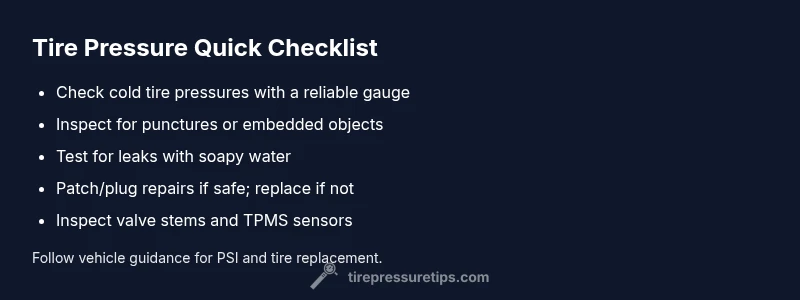
The text says
Steps
Estimated time: 60-90 minutes
- 1
Gather tools and secure the vehicle
Park on a level surface, engine off, and set the parking brake. Gather a reliable tire pressure gauge, soapy water, a patch/plug kit, and a tire inflator. Prepare for safe access to all four tires and the spare.
Tip: Keep a dedicated flashlight handy to inspect the bead area and valve stem closely. - 2
Check cold tire pressures
Measure each tire’s pressure when the tires are cold. Compare readings to the vehicle manufacturer’s recommended PSI printed on the door placard. Note any significant deviations between tires.
Tip: If you’ve driven recently, wait 3 hours for the tires to cool before rechecking. - 3
Inspect for obvious damage
Look for nails, screws, cracks, bulges, or objects embedded in the tread. Run your fingers along the bead area and sidewalls for unusual stiffness or gaps.
Tip: Don’t remove large objects that are stuck; document the location and seek professional help if needed. - 4
Locate leaks with soapy water
Apply a soap solution to the tread, bead, and valve stem. Watch for continuous bubbles indicating a leak. Mark the exact area with chalk or tape for reference.
Tip: Move slowly around each tire to catch slow leaks that may only bubble intermittently. - 5
Patch or plug as appropriate
If the puncture is in the tread and repair guidelines permit, patch from inside or plug from the outside. If the damage is in the sidewall or bead, replace the tire.
Tip: Follow local regulations on tire repairs; when in doubt, replace rather than repair risky areas. - 6
Check valve stems and TPMS
If no leak is found on the tire body, inspect the valve stem and TPMS sensor area. Replace a faulty valve core or recalibrate or replace a malfunctioning TPMS sensor as needed.
Tip: If you’re unsure how to calibrate TPMS, rely on a professional service to avoid false readings.
Diagnosis: Tire warning light or visibly deflated tire on one or more corners
Possible Causes
- highSlow puncture or nail in tread causing gradual air loss
- mediumFaulty or leaking valve stem or core
- lowTPMS sensor fault or calibration issue
- lowTemperature-related pressure change causing natural drift
Fixes
- easyInflate tires to the recommended PSI when cold and recheck after a short drive
- easyUse a soapy-water test to locate leaks around tread, bead, and valve stem
- mediumPatch small punctures or plug the leak if repairable
- hardReplace faulty valve core or TPMS components if the leak persists
Frequently Asked Questions
What causes a tire to lose air quickly?
Most rapid air loss comes from a slow puncture, a faulty valve stem, or a malfunctioning TPMS sensor. Temperature changes can also affect readings. Inspect the tread for punctures, test valves, and verify TPMS accuracy to pinpoint the cause.
Common air loss comes from a slow puncture or valve issues. Check the tire, valve, and TPMS to identify the exact cause.
How often should I check tire pressure?
Check tire pressure at least once a month and before long trips. Also check when temperatures have recently changed, as weather can affect inflation.
Check your tires monthly and before long trips, especially after temperature changes.
Can I drive with an underinflated tire?
Driving on underinflated tires is unsafe and can cause heat buildup, poor handling, and faster wear. Inflate to the recommended PSI before driving long distances.
No—don’t drive far on underinflated tires. Inflate to the right pressure first.
Why did my TPMS light come on if the tires look fine?
TPMS can trigger from slow leaks or sensor issues even if a tire looks okay. Check pressures when cold and test sensors if readings are inconsistent.
A TPMS light can happen even if it seems fine—check pressure and test the sensors.
When should I replace a tire due to slow leaks?
If a puncture is in the sidewall, bead area, or cannot be safely repaired per your tire’s guidelines, replacement is recommended. Persistent leaks in repaired tires should be re-evaluated by a professional.
If a leak is beyond safe repair, you should replace the tire.
Are tire sealants a good long-term fix?
Sealants can seal small leaks temporarily but are not a substitute for proper repair. Have the tire inspected by a professional to determine long-term viability.
Sealants might help briefly, but get a proper repair or replacement for lasting safety.
Watch Video
What to Remember
- Inflation checks should be done cold for accuracy
- Leaking punctures are the most common fixable cause
- Patch or replace based on repair guidelines and tire location
- If TPMS or valve problems persist, seek professional service