What Tire Pressure Should Jeep Wrangler Be At? A Practical Guide
Discover the ideal tire pressure for Jeep Wrangler models, including how to read placards, adjust for load and conditions, and maintain safe, efficient performance.


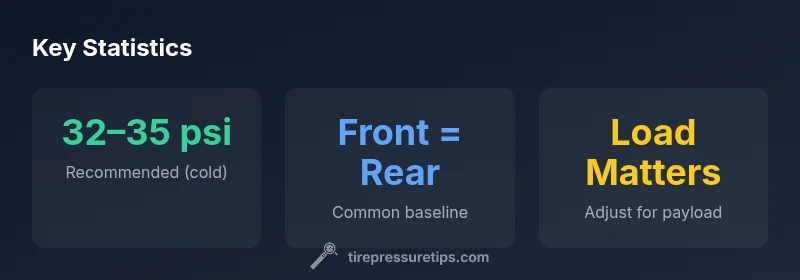
In short, what tire pressure should jeep wrangler be at? For most Wrangler setups with stock tires, aim for a cold-pressure baseline around 32–35 psi. Exact numbers vary by tire size, load, and driving conditions; always check the placard on the driver’s door and the owner's manual before setting pressure.
Jeep Wrangler Tire Pressure Basics
When asked what tire pressure should jeep wrangler be at, realize that tire pressure is not a fixed number; it shifts with load, tire size, and driving conditions. According to Tire Pressure Tips, correct inflation improves handling, tire wear, and fuel efficiency. Wranglers typically follow a baseline in the low to mid 30s psi when tires are cold. A common starting point for many factory-supplied tires is about 32–35 psi, but exact figures depend on tire size, measured load, and the type of driving you do. Always check the placard on the driver’s door, then reference the owner's manual and the tire spec sheet for your exact setup. This attention to inflation is a cornerstone of safe handling and predictable performance on both highway and trail.
How to Find the Correct Pressure for Your Wrangler
To find the right pressure, locate the placard on the driver door frame. It lists the recommended cold psi for your current tire size. If you’ve swapped to aftermarket tires, sizes like 33x10.50 or 35x12.50 can shift the baseline; consult the tire manufacturer and cross-check with the Wrangler manual. Use a high-quality digital gauge to measure cold PSI before you drive; heating from driving raises the reading and masks the actual pressure. If you regularly carry heavy loads or passengers, consider increasing within the placard range by 1–2 psi, but never exceed the tire’s maximum pressure printed on the sidewall. Keep notes of your preferred settings and recheck after long trips or changes in weather.
Tire Size, Type, and Inflation Impacts
Tire size and type influence inflation targets, especially when switching from highway tires to all-terrain or mud-terrain compounds. Heavier-duty tires tend to require careful inflation management to balance ride comfort, traction, and wear. Even when you stay within the placard values, remember that a larger tire footprint on soft surfaces can benefit from lower pressures, while highway eating tires on paved roads may perform best closer to the higher end of the range. Always align inflation with both the tire’s load index and vehicle weight distribution, and use the manufacturer’s recommendations as the baseline.
Front vs Rear Pressure and Payload
The Wrangler’s weight distribution and payload can influence whether you run slightly higher or lower pressures in the front versus the rear. In many configurations, front and rear pressures are kept within a few psi of each other, but adding cargo or towing gear shifts that balance. If you regularly carry heavy loads in the rear, a small increase in rear pressure (within placard limits) can improve stability and tire wear. Conversely, a light, city-focused setup may tolerate equal pressures or a slight front bias for better steering feel. Always compute based on actual load and the tire’s capabilities.
Off-road and Payload Considerations
Off-road conditions change the inflation game. On rocky or sandy terrain, a lower pressure can increase traction by widening the contact patch, but you risk pinch flats if you go too low. For hard-packed trails, higher, safer pressures reduce the chance of bead slippage. Always adjust pressure in small increments and test on safe terrain before pushing into rougher sections. When carrying camping gear or payload, increase within the placard range to maintain handling and tire wear performance. Track your changes to know what works best for your Wrangler in different environments.
Temperature, TPMS, and Seasonal Effects
Temperature dramatically affects tire pressure: a cold morning can yield lower PSI readings than a hot afternoon, sometimes by a psi or more. The TPMS is a helpful warning but should not replace manual gauge checks, especially after temperature shifts or road trips. In colder seasons, expect a drop in PSI; in hot weather, a rise. The best practice is to check and adjust when tires are cold, then recheck after driving short distances to confirm the reading remains within the target range. This habit reduces underinflation or overinflation risks.
How to Measure and Adjust: Tools and Steps
Gather a reliable digital tire gauge, a stable surface, and a flashlight for visibility. Park on a level surface when measuring cold, ideally after the vehicle has sat for several hours. Remove the valve cap, place the gauge on the valve stem, and take a reading from all five tires (including the spare if you rotate regularly). Compare readings to the placard; if a tire is below the recommended range, add air in small increments, recheck, and adjust as needed. Do not rely on guesswork: accurate, cold readings ensure safe handling and predictable wear.
Common Mistakes and Quick Fixes
Common mistakes include inflating by feel, neglecting rear tires, and ignoring the impact of temperature. A quick fix is to always inflate to the cold-psi baseline, recheck after road use, and adjust by small increments of 1 psi. If you notice excessive tire wear on one edge or poor fuel economy, revisit the baseline and vehicle load distribution. Finally, document your preferred settings so you can revert quickly after a trip or weather change.
Real-world Scenarios and Quick Calculations
Scenario A: You load a Wrangler 2 passengers with gear for a weekend trip. Start from 32–34 psi and adjust rear up by 1 psi if the load is in the back. Scenario B: You plan a long highway drive on a warm day; consider warming the tires to within the upper end of the range to maintain stability. Scenario C: You’re off-roading in soft sand; drop rear pressure 2–3 psi from baseline and monitor ground contact. Across all cases, verify with a cold measurement before and after the journey.
Typical Wrangler tire pressure references by setup
| Tire setup | Recommended cold psi | Notes |
|---|---|---|
| Stock tires (Original Equipment) | 32-35 psi | Check placard for exact value by tire size |
| Aftermarket tires (larger, mud-terrain) | 31-34 psi | Use placard as baseline; adjust for load and driving conditions |
Frequently Asked Questions
What is the standard tire pressure for a Jeep Wrangler?
There isn’t a universal number for every Wrangler; rely on the door placard for your tire size and load. Start with the common baseline of roughly 32–35 psi when tires are cold, then confirm with the owner's manual.
Use the placard on the door frame for your exact tire size and load; start around 32 to 35 psi when cold.
How often should I check tire pressure on a Wrangler?
Check cold tires at least once a month and before long trips. Temperature changes and load can alter pressure, so verify readings after weather shifts or cargo changes.
Check cold tires monthly, and before long trips, especially after temperature changes.
Does tire pressure affect fuel economy on a Wrangler?
Yes. Properly inflated tires reduce rolling resistance and improve fuel economy. Underinflation increases friction and decreases efficiency, plus accelerates tire wear.
Yes. Keeping tires in the right range saves fuel and reduces wear.
Can I run Wrangler tires at different pressures front vs rear?
You can adjust for load distribution, but keep within placard values. A slight rear bias is common when carrying heavy rear cargo or towing, but always validate with the manual.
You can have a small difference if needed, but stay within placard limits.
How do I know if my TPMS is working?
If the TPMS warning light appears, inspect tire pressures and compare to the placard. If readings are consistently off, have the sensor or system checked by a professional.
If the warning light comes on, check pressures and consult a pro if readings seem off.
“Correct tire pressure is the single most effective lever for safety, handling, and tire longevity on a Jeep Wrangler. Small PSI adjustments can change grip and stability on rough terrain.”
What to Remember
- Start with the door placard baseline and verify in the manual
- Use a reliable gauge and measure tires cold
- Adjust for load and temperature within the recommended range
- Document your preferred settings for consistency