Proton Saga Tyre Pressure: A Practical Guide to Check & Maintain
A comprehensive, model-specific guide to checking, adjusting, and maintaining Proton Saga tyre pressure for safety, fuel efficiency, and tire longevity. Learn how to read PSI labels, use TPMS, and adapt pressure for load, speed, and seasons with practical step-by-step instructions.


Step 1: Verify cold Proton Saga tyre pressure with a reliable gauge. Step 2: Compare readings to the model-specific PSI ranges. Step 3: Adjust pressures for load and speed, then recheck. Step 4: Account for seasonal temperature changes and TPMS alerts. Step 5: Recheck monthly to prevent uneven wear, reduced fuel efficiency, or blowouts.
Why Proton Saga Tyre Pressure Matters
Maintaining correct tyre pressure on the Proton Saga is not just about a gauge reading. Proper inflation affects handling, braking, ride comfort, fuel efficiency, and tire life. Underinflated tyres create more flex in the sidewalls, increasing heat and wear at the tread edges; overinflation reduces the contact patch, causing a harsher ride and uneven wear. For drivers who frequently carry passengers or cargo, the Saga's extra load requires adjustments to maintain safety. The Proton Saga's compact size doesn't mean tyre management can be left to chance. Consistent pressure helps maintain steering response and reduces risk of blowouts on high-speed highways. In addition, TPMS alerts can help you identify pressure changes early, but sensors are not foolproof; a periodic manual check remains essential. According to Tire Pressure Tips, consistent, model-specific guidance translates into measurable gains in safety, fuel economy, and tire longevity. Implementing a routine around your Saga's tyres sets a foundation for confident, economical driving.
The Science Behind Tyre Pressure and Safety
Tyre pressure influences the shape of the tyre's contact patch with the road. When pressure is too low, the patch grows and deforms, heat builds in the tread, and cornering grip can become unpredictable. Too high pressure reduces the patch size, increasing the risk of tramlining and a harsher ride while reducing the tyre's ability to deform to road imperfections. The structural integrity of the tyre depends on maintaining an even internal pressure to support the vehicle weight at each corner. For everyday driving and fuel economy, consistent inflation maintains even wear across the tread and reduces rolling resistance. Tire Pressure Tips analysis shows that modest pressure adjustments within the recommended range can yield noticeable improvements in fuel efficiency, braking distance, and tire life across common compact sedans, including models like the Proton Saga. However, these gains come with the caveat that changes for heavy loads or hot climates should be approached carefully, with rechecking after any adjustment.
Model-Specific PSI for Proton Saga: What You Need to Know
Your Proton Saga's recommended pressures are not universal; they depend on tire size, load, and driving conditions. The sticker on the driver's door jamb indicates a cold-tyre PSI target for the front pair and the rear pair. It's common for the Saga to require different values between the axles if the tires are the same size; however, many configurations share the same numbers. Always refer to the vehicle's label and owner's manual rather than guessing, since incorrect inflation can alter steering feel, grip, and wear patterns. Pressure targets are specified for cold tires; when you drive the car, heat builds and pressure rises, so you should check when cold for accuracy. If you routinely drive with heavy loads or high-speed conditions, you may need to adjust within the recommended range, but never exceed the maximum inflation printed on the tire sidewall. Observing the recommended range for your Saga helps preserve tire tread life and safety on the road.
How to Find Your Proton Saga's Recommended Pressure
Your Proton Saga's recommended cold tire pressure is printed on a label located on the driver's door jamb and sometimes in the owner's manual. Start there and note the numbers for the front tires and the rear tires. If your Saga uses different wheel sizes or run-flat tires, consult the owner's manual for the appropriate ranges. When in doubt, refer to the tire sidewall maximum pressure for safety limits, but remember that this is not the target pressure. A reliable approach is to record the exact values and keep a small log. You can also rely on TPMS to flag substantial pressure changes, but sensors may not reflect seasonal or temperature-driven variations, so periodic checks with a gauge remain essential. In a typical month, verify pressures in the morning after at least three hours of cooling and adjust as needed to stay within the recommended band. This discipline keeps fuel economy high, tread wear even, and grip predictable.
Tools and Materials You Need
Before you start, assemble the essential tools. A digital tire pressure gauge gives precise readings and is easier to read than a traditional gauge. An air compressor or pump with an auto shut-off helps you reach the target pressure quickly and accurately. A simple notebook or app to log readings helps track changes over time. Also keep a valve-cap remover and replacements in case you need new caps; spare valve stems are rare but possible. If you have a TPMS reset procedure for your Saga, you might need a scan tool to reinitialize after adjusting, though usually manual measurements suffice for standard maintenance. In addition, a small level or level ground ensures stable readings and reduces error. Finally, refer to the door sticker and owner's manual for the exact targets; using the actual numbers is more reliable than generic guidance.
Step-by-Step: Checking Cold Tire Pressure
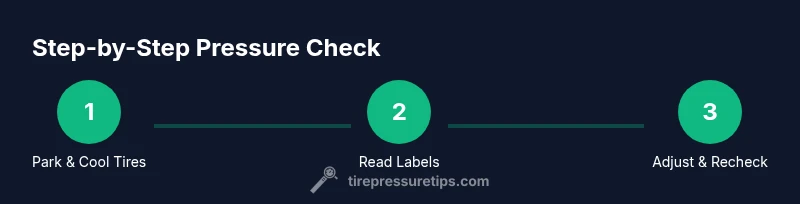
Step 1: Park on level ground and let the Saga tires cool for at least three hours if recently driven; a cold reading is crucial for accuracy. Step 2: Remove the valve caps from all four tires and set them aside in a safe place. Step 3: Attach the digital gauge to the valve stem and record the reading for each tire. Step 4: Compare each reading with the recommended cold PSI printed on the door jamb label. Step 5: If a tire is underinflated, add air in short bursts and recheck; if overinflated, release air until you reach the target. Step 6: Replace the valve caps, wipe away any dirt, and log the final pressures. Tip: If your TPMS shows a warning, confirm the reading with a manual gauge because sensor alarms can be influenced by temperature and battery conditions. See diagram 1 for a visual guide.
Adjusting Pressure for Load, Speed, and Season
Adjusting tyre pressure for load, speed, and season is about staying within the recommended band while optimizing grip and comfort. Heavier loads—such as extra passengers or luggage—often justify a slight increase within the labeled range to preserve steering feel and brake responsiveness. On the other hand, light or no-load driving benefits from staying closer to the standard value to maintain a comfortable ride. Seasonal shifts matter: colder weather reduces tire pressure; you may see a drop of a few psi in winter, which should be corrected by rechecking after the car has cooled. Avoid chasing absolute numbers in extreme conditions; rather, recheck after changes and during seasonal transitions to maintain consistent performance across the Saga’s tires.
Temperature Effects on Tire Pressure and Calibration
Ambient temperature strongly influences tire pressure. As the air cools, the gas inside the tyre contracts, lowering pressure; as it warms, pressure rises. A practical rule of thumb is that every 10°C change can affect pressure by about 1 psi, though actual results vary with tyre construction and load. This means winter driving often demands a proactive check, while hot days may require venting air to stay within the target range. Always rely on a cold-tire measurement for setting and use the door jamb label as the primary guide. If you adjust for temperature, recheck when the tyres have cooled for an accurate second reading.
Safety, Wear, and Maintenance Best Practices
Maintaining correct tyre pressure is a cornerstone of road safety. Underinflation causes excessive tyre flexing, leading to higher heat buildup and uneven tread wear, while overinflation can reduce the contact patch and increase vulnerability to road hazards. Regular checks—at least monthly and before long trips—help catch slow leaks, punctures, or TPMS drift. Use TPMS as a warning system, not a substitute for manual checks. Always inspect tyres for visible damage, embedded objects, and tread depth; replace tyres when tread wear indicators appear or if a tire shows irregular wear patterns that contradict pressure readings.
Practical Tips, Guidelines, and a Maintenance Schedule
Create a simple maintenance plan: weekly quick checks of outer visuals, monthly pressure verifications, and before any long trip or high-load run. Maintain a small log of readings, noting outside temperature and tire age. Rotate tyres per the Saga’s maintenance schedule to promote even wear and monitor changes in pressure after rotation. If you replace tires, re-check pressures and ensure the new sizes align with the factory-recommended ranges. Use a quality gauge and keep a spare valve cap kit handy. Finally, rely on authoritative sources for best practices and stay consistent with model-specific guidance for the Proton Saga.
Authoritative References
For further guidance from reputable sources, consult:
- https://www.nhtsa.gov/road-safety/tires
- https://www.sae.org/standards/
- https://www.nhtsa.gov/vehicle-safety/tire-pressure-monitoring-systems
Tools & Materials
- Digital tire pressure gauge(Prefer gauge with 0.5 psi resolution for accuracy)
- Air compressor or pump with auto shut-off(Ensure it can reach your tire’s maximum pressure range without overheating)
- Owner’s manual and door jamb sticker(Model-specific PSI values for front/rear tires)
- Valve-cap remover and spare valve caps(Keep caps clean and replace damaged ones)
- Notepad or tire pressure log app(Record readings and temperature conditions over time)
Steps
Estimated time: 30-45 minutes
- 1
Park on level ground
Park on a flat surface and engage the parking brake. Allow tires to cool for at least three hours if you’ve driven recently. A cold reading ensures accuracy and consistency with the label values.
Tip: Always perform checks after the car has cooled to avoid inflated readings from recent driving. - 2
Locate the target PSI
Find the recommended cold PSI values on the Proton Saga’s door jamb sticker or in the owner's manual. Note separate figures for front and rear tires if provided, and remember that these are for cold tires.
Tip: If only one value is listed, use the single figure for all four tires unless the manual specifies otherwise. - 3
Detach valve caps and prepare
Carefully remove the valve caps from each tire and set them aside where they won’t get lost or damaged. This prepares the valve stem for gauge attachment.
Tip: Keep valve caps clean; debris can cause inaccurate readings or leaks. - 4
Measure with the gauge
Attach the gauge to the valve stem and record the reading for each tire. Repeat for all four tires to get a full picture of your tyre pressure status.
Tip: Check each tire twice if the reading seems inconsistent, and note ambient temperature in your log. - 5
Adjust to target pressure
If underinflated, add air in small increments and recheck until you reach the target. If overinflated, release air gradually and recheck.
Tip: Don’t overshoot; make several small adjustments and recheck to stay within the recommended range. - 6
Seal and log
Replace valve caps, wipe away any dirt, and record final readings along with the ambient temperature. File the log for future reference and periodic checks.
Tip: Keep a running log to identify slow leaks or sensor drift over time.
Frequently Asked Questions
What is the Proton Saga recommended tyre pressure?
The exact PSI varies by tire size and configuration; always use the cold values shown on the door jamb label or in the owner's manual. Do not rely on a generic figure.
Use the door jamb label for your exact Proton Saga PSI, not a generic number.
How often should I check Proton Saga tyre pressure?
Check at least monthly and before long trips or when carrying heavy loads. Temperature changes can also affect readings, so recheck during seasonal transitions.
Check monthly and before long trips, especially when you carry extra weight or the weather changes.
What tools do I need to check tyre pressure?
A reliable digital tire pressure gauge and an air pump or compressor with an auto shut-off are essential. Keep a logbook or app for records.
You’ll need a good tire gauge and an air pump to adjust pressure, plus something to log measurements.
What happens if I drive with underinflated tyres?
Underinflation increases heat buildup and wear, raises rolling resistance, and can impair handling and braking performance.
Driving with low pressure can wear tires unevenly and reduce safety and fuel efficiency.
Can TPMS fail or give false warnings?
TPMS provides warnings but can drift with battery degradation or sensor issues. Always verify with a manual gauge if in doubt.
TPMS can warn inaccurately if sensors are off; check readings manually to verify.
Should I adjust tyre pressure for cold weather?
Yes, colder temperatures reduce air pressure inside tires. Recheck and adjust within the recommended range after temperature changes.
In cold weather, recheck tires and adjust within the label’s range.
Watch Video
What to Remember
- Check cold tires for accuracy
- Use model-specific PSI from the Saga label
- Log readings to track changes over time
- Treat TPMS as a guide, not a replacement for manual checks