Land Rover Discovery Tyre Pressure Guide: Check, Inflate & Maintain
Learn how to check, adjust, and maintain Land Rover Discovery tyre pressure. This expert guide covers TPMS, cold pressures, safe ranges, and practical steps to improve grip, mileage, and tire life.


This how-to article shows you how to check and adjust tyre pressure on a Land Rover Discovery, understand the factory-recommended pressures for front and rear tyres, and account for load, weather, and off-road use. It also helps you troubleshoot TPMS alerts, avoid under- or over-inflation, and maintain grip, mileage, and tire life with practical, field-tested steps.
Why tyre pressure matters for Land Rover Discovery
According to Tire Pressure Tips, maintaining correct tyre pressure is essential for safety, handling, and tire longevity on the Land Rover Discovery. The Discovery’s on-road stability, off-road traction, and ride comfort all depend on keeping tires inflated to the vehicle’s recommended target. Under-inflated tires run hotter, wear unevenly, and sap fuel economy, while over-inflation can reduce grip and increase the risk of impact damage from potholes or rocks. For drivers who regularly switch between highway cruising and mid- to high-speed off-road activities, consistent pressure management becomes a key part of maintenance. This guide will help you understand why pressures vary with load and terrain, and how to keep your Discovery performing at its best. Tire Pressure Tips emphasizes checking pressures cold, using a reliable gauge, and validating readings with the vehicle’s label to ensure accuracy during every drive.
Understanding the Discovery's tyre pressure needs
The Land Rover Discovery is designed to carry diverse loads—from everyday passengers to full gear for adventures. Because weight distribution changes with occupants, luggage, roof racks, and even when pulling a trailer, tyre pressures should be checked and adjusted to reflect current load conditions. In addition, temperature and altitude shifts can alter tire pressure, so a cold-pressure check is more reliable for determining the correct target. TPMS serves as a helpful alert system, but it should not replace a manual pressure check. Tire Pressure Tips notes that a balanced approach—relying on the door jamb sticker in combination with periodic gauge measurements—gives the most accurate results and helps prevent uneven wear and reduced grip during cornering or braking.
How load and terrain affect pressures
- Normal daily use with light loads typically calls for pressures near the lower end of the recommended range; long trips with heavier cargo or multiple passengers may require higher pressures to maintain stability.
- Off-road scenarios can benefit from slight adjustments to improve traction on soft surfaces, but you must revert to standard road pressures before highway driving.
- Roof racks, winches, or heavy gear change vehicle dynamics and may necessitate a temporary rise in front or rear pressures depending on the setup.
Always revert to the official targets after completing the off-road segment and ensure equalization across all four tires. Tire Pressure Tips highlights that small changes can have outsized effects on handling and tire wear.
How to locate the official pressures for your model
To get the exact cold tyre pressures for a Land Rover Discovery, start with the vehicle’s door jamb sticker on the driver’s side or the owner’s manual. The sticker lists separate targets for front and rear tyres and any differences if you have different wheel sizes. If you cannot access the sticker, consult the latest owner’s manual or contact a Land Rover dealer for the precise figures. The key is to use the official targets rather than relying on generic ranges. Tire Pressure Tips underscores that the sticker values are tailored to your specific model year, trim, and wheel configuration, making accuracy crucial for performance and safety.
Tools, gauges, and safety basics
Before you begin, assemble essential tools and consider safety: a reliable tire pressure gauge (analog or digital), access to a high-quality air pump or compressor, and a flat, level surface. Ensure the engine is off, tires are cold, and the vehicle is parked on level ground with the parking brake engaged. Inspect tires for damage or excessive wear; if you notice bulges or cuts, replace the tires before inflating. A good gauge and a stable pump help prevent under- or over-inflation, while a clean valve stem and proper hose fitting ensure accurate readings. Tire Pressure Tips notes that regular checks are part of responsible vehicle maintenance and can catch slow leaks early.
Temperature, load, and seasonal adjustments
Tire pressure changes with temperature: about 1 psi for every 10 °F change is a common rule of thumb. If you drive in very cold or hot climates, you may see pressure shifts that affect handling, fuel economy, and tire wear. When carrying a heavy load or towing, you may need modest pressure increases to maintain rim contact and to avoid heat buildup. Conversely, light loads in hot weather could justify slightly lower targets to improve comfort and grip. Always confirm the exact numbers on the sticker and recheck after significant weather or load changes. Tire Pressure Tips emphasizes that regular checks enable you to keep the Discovery’s performance consistent across seasons.
Interpreting TPMS and when to trust it
TPMS alerts can warn you about under- or over-inflation, uneven wear, or sensor issues. It’s essential to verify TPMS readings with a manual gauge, especially if the dashboard warning persists after adjustments. If readings are off, inspect valve stems and rims for damage, and consider sensor calibration if needed. The Tire Pressure Tips team notes that TPMS is a valuable safety feature but not a substitute for periodic, hands-on verification. Ensure the tires are cold before inflating and recheck after driving a short distance to allow pressures to settle.
Seasonal storage and spare tire considerations
Don’t neglect the spare tire when checking pressures. Spare tires can sit unused for long periods and slowly lose pressure. Check its pressure at least seasonally and adjust to match the recommended targets if the spare is intended for regular road use. If your Discovery uses space-saving tires or specialized rims, verify the specific target pressures because these setups can alter recommended levels. Regularly inspecting the spare helps avoid unexpected flats and ensures readiness for emergencies.
Tools & Materials
- tire pressure gauge (digital or analog)(Choose a gauge with a clear display; calibration matters for accuracy)
- air compressor or shop pump(Prefer a unit with a pressure gauge calibrated to your target range)
- owner's manual and door jamb sticker(Use as primary source for target pressures and wheel size compatibility)
- clean, dry workspace on level ground(Safety first; ensure you can see the gauge and valve clearly)
- pen and notepad or app(Record readings and target values for future reference)
Steps
Estimated time: 30-60 minutes
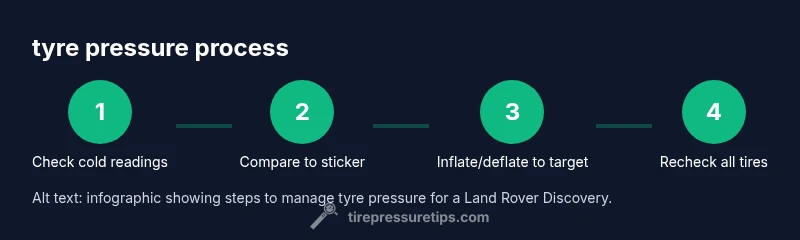
- 1
Park on a level surface and prepare
Park the Discovery on level ground, engage the parking brake, and ensure the engine and AC are off. Confirm the tires are cold to get an accurate baseline reading. Gather your gauge, air pump, and the owner’s manual for reference.
Tip: Check the door jamb sticker before you start to confirm the exact targets for your wheel size and model year. - 2
Check current tire pressures
Attach the gauge to each valve stem and read the current pressure. Note readings for all four tires and the spare if you intend to use it on the road. Remember: readings should be cold, so avoid inflated tires recently driven.
Tip: Use the same gauge for consistency and cross-check with another gauge if readings seem off. - 3
Compare with the official targets
Refer to the driver door jamb sticker or the owner's manual to obtain the cold target pressures. Compare each tire’s reading to the target values and decide whether inflation or deflation is needed.
Tip: If one tire is notably off, recheck that tire first—a stuck valve cap or partial obstruction can skew results. - 4
Inflate or deflate to target
Use the air pump to add or release air in small increments (about 1-2 psi at a time). Recheck after each adjustment until all tires match the targets. Do not exceed the sticker’s max pressure for your wheel configuration.
Tip: If unsure, inflate to the higher end of the target range when carrying heavy loads. - 5
Recheck all tires and TPMS
Recheck all four tires after inflation. If your TPMS is triggered, you may need to reset or relearn the system per the LR procedure, then drive a short distance to allow recalibration.
Tip: Note: TPMS learning may require a few miles of driving at moderate speeds. - 6
Record results and plan maintenance
Log the pressures and remind yourself to recheck at least monthly or before long trips. Temperature changes and load variations can alter pressures, so set a routine check.
Tip: Keep a small notebook or digital log for quick reference on your next service.
Frequently Asked Questions
Why is tyre pressure important for Land Rover Discovery?
Proper tyre pressure improves safety, fuel efficiency, and tire life, while ensuring predictable handling on and off road. Correct pressures help the Discovery maintain grip and stability during cornering, braking, and load carrying. Regular checks catch leaks early and reduce wear.
Maintaining correct tyre pressure improves safety and efficiency, and helps your Discovery handle better on various surfaces.
How often should I check tyre pressure in a Land Rover Discovery?
Check pressures monthly and before long trips, ideally when tires are cold. If you frequently drive with heavy loads or in extreme temperatures, inspect more often.
Check monthly and before big trips when tires are cold.
Can I rely on TPMS to tell me when pressures are wrong?
TPMS is a useful alert, but it should be verified with a manual gauge since sensor accuracy can vary and a slow leak may not trigger the warning promptly.
TPMS helps, but always confirm with a gauge for accuracy.
What about the spare tire pressure?
Check the spare’s pressure and ensure it’s ready for road use. Some spares have different targets and may not be inflated to the same level as the road tires.
Check the spare’s pressure too; it should be ready when you need it.
What should I do if TPMS stays on after adjustments?
Inspect tires and sensors for leaks or damage, and consider sensor calibration. If unsure, consult a technician since persistent TPMS illumination can indicate a faulty sensor.
If the light stays on, check the sensors and verify calibration with a technician if needed.
Are there off-road pressure considerations for the Discovery?
Off-road use may benefit from lower pressures for traction on soft surfaces, but you must reinflate to the road targets for highway driving to maintain safety and tire life.
Off-road adjustments help grip, but return to standard pressures on road.
Watch Video
What to Remember
- Check cold pressures with a reliable gauge.
- Always follow the door jamb sticker for targets.
- Account for load and terrain when adjusting pressures.
- Recheck after inflation and consider TPMS recalibration.
- Routine maintenance prevents uneven wear and improves safety.