Fiat 500X Tyre Pressure: Check, Adjust, Maintain
Learn to check, adjust, and maintain Fiat 500X tyre pressure for safety, fuel efficiency, and reliable TPMS performance. Read placards, measure cold tyres, avoid common mistakes.


Set Fiat 500X tyres to the manufacturer’s specification shown on the door jamb placard or in the owner’s manual, then verify each tyre with a gauge and adjust for cold weather or load. Check all four tyres and address any TPMS alerts promptly.
Why Fiat 500X tyre pressure matters
Maintaining correct tyre pressure on a Fiat 500X is essential for safe handling, balanced tire wear, stable braking, and efficient fuel use. Tyre pressure influences how the tyre makes contact with the road, distributing load across the tread. When pressures are too low, the tyre can overheat and wear unevenly, increasing fuel consumption and reducing cornering precision. When pressures are too high, the footprint narrows, reducing grip and ride comfort.
According to Tire Pressure Tips, keeping your Fiat 500X tyres at the recommended pressure helps preserve tire integrity and vehicle dynamics across everyday driving and loaded trips. The manufacturer-specified values account for the car’s weight, axle load, and suspension geometry. Always start with these numbers and adjust only for seasonal temperature changes or additional cargo. The TPMS provides a helpful alert when a wheel drifts from spec, but it’s not a substitute for regular manual checks.
Understanding the manufacturer specifications for the Fiat 500X
The Fiat 500X uses a placard on the driver’s door jamb (and often the owner's manual) to list the recommended pressures. Many trims have separate values for front and rear axles, reflecting weight distribution and suspension tuning. If the placard shows two numbers, use the value for the axle your tyre is on. If you ever see conflicting guidance between the placard and the manual, the placard value is usually the correct one, since it’s tied to the vehicle’s actual build. Regularly confirm that you are using the correct front-rear targets for your load and driving style. The Tire Pressure Tips team emphasizes keeping this reference close during maintenance.
How cold weather and driving conditions affect tyre pressure
Air pressure changes with temperature. Colder mornings can cause the pressure to drop, while hot days can increase it. Seasonal shifts, high-speed driving, or long trips with luggage can also move the numbers away from the target. Because the gauge reads the pressure at a single moment, readings should be taken when tyres are cold and have rested for a few hours. If you’ve been driving recently, wait for tyres to cool before inflating to spec. Remember that rapid temperature swings can require more frequent checks.
How to measure tyre pressure accurately
To measure tyre pressure accurately, start with a reliable gauge—digital gauges are often easiest to read. Remove the valve cap, press the gauge onto the valve stem squarely, and note the reading. Repeat on every tyre, including the spare if you intend to use it. Compare each reading to the target printed on the placard. If a tyre reads low, add air in small increments, recheck, and stop when you reach the target. If a tyre reads high, release air in small amounts and recheck. Always perform the check when tyres are cold, and ensure the gauge is calibrated for precision.
Adjusting tyre pressure step-by-step (practical workflow)
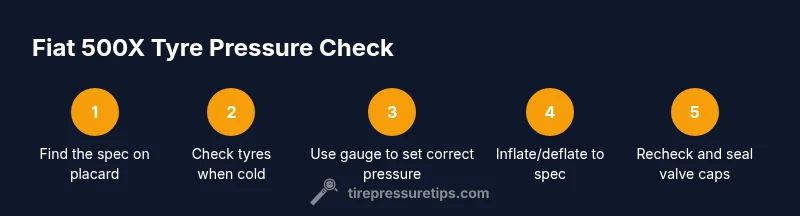
This section provides a clear workflow you can follow in one sitting. It’s designed to be a practical, repeatable process that minimizes errors and protects tyre health. Start by locating the exact spec, then prepare the vehicle and tools, and perform measured inflation or deflation as needed. Finally, recheck all pressures and replace valve caps to prevent leaks.
Checking and maintaining the spare tyre pressure
The spare tyre often gets overlooked, but it should be checked as part of your routine. Many spares are stored compressed or in a space with limited airflow, which can cause pressure loss over time. Check the spare using the same gauge you use for the other tyres and ensure it is within the vehicle’s recommended range. If the spare is low, inflate to the specified level and recheck after a few days of storage. A properly inflated spare is a vital safety backup.
TPMS: what triggers and how to manage
Tire Pressure Monitoring System (TPMS) alerts are designed to warn you before pressure becomes critically low. TPMS can trigger due to a slow leak, temperature swings, or a rapid drop from a puncture. If TPMS activates after adjusting pressures, drive for a few miles to allow the system to recalibrate. If the light stays on, inspect for leaks, check valve stems, or sensor faults. Regular manual checks complement TPMS and help you catch gradual losses that the system might miss.
Common mistakes and how to avoid them
Avoid inflating to mindless “feel” or guessing based on ride comfort. Don’t ignore the spare tyre, despite its infrequent use. Don’t forget to check the valve caps—they prevent dirt and moisture from entering the valve. Finally, never exceed the maximum pressure printed on the tyre sidewall, and avoid inflating beyond the placard recommendations. By staying methodical, you’ll protect tyre integrity and vehicle performance.
Tools & Materials
- Digital tyre pressure gauge(Calibrated and accurate to +/- 1 psi)
- Air compressor or tyre inflator(Optional for topping up pressures at home)
- Valve cap replacement caps(Keep caps clean and replace after checking)
- Owner’s manual or door placard(Primary reference for correct pressures)
- Spare tyre pressure gauge (optional)(Useful if you store a compact spare)
Steps
Estimated time: 25-35 minutes
- 1
Find the official tyre-pressure spec
Locate the recommended PSI values on the driver’s door placard or in the owner’s manual. Note any different targets for front and rear axles, and for varied load conditions. This is your reference point before any inflation.
Tip: Always start with the placard values; manuals may repeat or differ slightly. - 2
Park on a level surface with cold tyres
Ensure the car is stationary on a flat surface and hasn’t been driven for several hours. Cold readings are the most accurate and consistent, especially in changing weather.
Tip: If you’ve just driven, wait at least 3 hours or drive 2 miles and cool down before measuring. - 3
Remove valve caps and attach the gauge
Take off the valve cap and press the gauge firmly onto the valve stem to get a reading. Do this for each tyre, keeping track of which reading corresponds to which wheel.
Tip: Check the gauge alignment to avoid air leakage during measurement. - 4
Inflate or deflate to the target pressure
If a tyre is low, add air in small increments and recheck. If high, release air gradually and recheck. Ensure all four tyres meet the respective front/rear targets.
Tip: Avoid going past the target; small adjustments ensure accuracy. - 5
Recheck all tyres and secure caps
Once each tyre reaches its spec, recheck quickly to confirm, then replace all valve caps. This seals the stem and keeps moisture out.
Tip: A quick final check reduces the chance of slow leaks later. - 6
Record readings and monitor
Note the readings and the date of the check in your maintenance log. Regular checks (monthly or with seasonal changes) help you stay aligned with targets.
Tip: Set a reminder on your phone to prompt the next check. - 7
Reset or verify TPMS after adjustments
If your TPMS warned during the process, drive a short distance to allow it to recalibrate. If the light remains on, inspect sensors and refer to the manual for reset procedures.
Tip: Do not ignore a persistent TPMS warning; it could indicate a slow leak.
Frequently Asked Questions
Where can I find the Fiat 500X tyre pressure specification?
The specification is usually on the driver’s door jamb placard and in the owner's manual. Use the placard values for accuracy, paying attention to front vs rear targets.
Check the door jamb placard and owner’s manual for the exact numbers, including any front and rear differences.
Should I adjust tyre pressure for load or speed?
Yes. Increase pressure for heavier loads or varied driving conditions if the placard specifies different targets by axle. Do not exceed the recommended limits.
Yes, adjust according to the placard guidance for load and conditions, without exceeding the spec.
What if my TPMS light stays on after inflating?
If the light remains on, inspect for leaks, faulty sensors, or valve issues. A persistent TPMS warning may require a dealership or mechanic check.
If TPMS stays on after inflation, check for leaks or sensor problems and consult a professional if it continues.
Is it safe to check tyre pressure when tyres are hot?
No. Hot tyres can give inaccurate readings; always measure when tyres are cold for a true target alignment.
No—measure only when tyres are cold to get an accurate reading.
Should I check the spare tyre pressure?
Yes. The spare tyre should be kept at the specified pressure and checked periodically, as it’s critical in emergencies.
Yes, don’t skip the spare—keep it properly inflated and ready.
Watch Video
What to Remember
- Check the placard for Fiat 500X tyre pressures
- Measure when tyres are cold for accuracy
- Verify each tyre with a gauge and adjust as needed
- Address TPMS alerts promptly
- Regular checks improve safety and fuel efficiency