Chevrolet Trax Tire Pressure Guide
Learn how to check, set, and maintain tire pressure on the Chevrolet Trax. Practical steps, TPMS tips, seasonal guidance, and gear recommendations from Tire Pressure Tips.


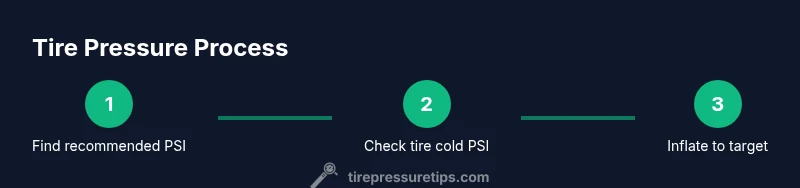
To keep your Chevrolet Trax safe and efficient, check your cold tire pressure against the vehicle placard, inspect all tires, and adjust with a gauge. Start with the recommended cold PSI from the door jamb placard, then use an air compressor to reach that target. Always recheck after inflation.
Why tire pressure matters for the Chevrolet Trax
According to Tire Pressure Tips, maintaining correct tire pressure for your Chevrolet Trax is essential for safety, handling, fuel efficiency, and tire wear. The Trax uses different pressures depending on load, tire size, and trim, so always start with the door jamb placard or owner's manual rather than guessing. Underinflation can reduce cornering stability and increase heat buildup, while overinflation can make the ride harsher and wear the center tread. This section explains why PSI is a moving target and how climate and driving style influence the numbers you see on the gauge. Tire Pressure Tips Team emphasizes consistency: check regularly, prefer cold readings, and document changes to build a reliable maintenance habit.
Finding the Chevrolet Trax recommended tire pressure
Vehicle manufacturers publish a recommended cold tire pressure for front and rear tires, and sometimes for the spare. For the Trax, the exact PSI can vary by model year, tire size, and trim level, so the correct source is the door jamb placard on the driver’s side or the owner’s manual. If you’ve installed non-stock tires, consult the tire pressure chart for your size. The goal is to match the spec rather than chasing a generic number. Keeping to the recommended PSI improves grip, braking response, and wear patterns over the life of the tires.
TPMS and how it helps maintain correct pressure
Tire Pressure Monitoring Systems (TPMS) provide real-time alerts when a tire drops below the recommended pressure. The Trax may use indirect or direct TPMS depending on the year and equipment. When the TPMS light comes on, confirm readings with a gauge and recheck after inflation or deflation. Remember that TPMS alerts reflect a deviation from the factory spec and do not replace regular manual checks. Tire Pressure Tips Team notes that a TPMS warning is a reminder to verify actual psi rather than a final verdict on pressure health.
Temperature and tire pressure: what drivers should know
Air pressure changes with temperature, and the Trax’s tires are no exception. As ambient temperatures drop, tire pressure falls; as it warms, pressure rises. This is why winter and summer checks require attention to the current ambient conditions and recent driving. The goal is to maintain the cold-Reading PSI that matches the placard while accounting for temperature shifts. The Tire Pressure Tips analysis highlights the importance of logging readings across seasons to spot slow leaks or gradual pressure loss.
How to measure cold tire pressure accurately
Always measure tire pressure when the tires are cold, ideally after the car has cooled for several hours. Remove the valve cap, press the gauge onto the valve stem, and read the PSI. Do this for all tires and the spare if applicable. Compare each reading to the placard, and adjust using a compatible air compressor or at a gas station air pump. After inflating or deflating, recheck to ensure you’ve reached the target PSI. Wipe the valve stem and reseal the caps to prevent dust entry.
Troubleshooting common tire pressure issues on the Trax
If a tire consistently loses air, investigate the cause: a puncture, faulty valve stem, or a bead leak can all cause slow deflation. A TPMS light may illuminate if one tire is markedly low despite a recent refill. Inconsistent readings can result from a faulty gauge or an improper seal when connecting the valve. When in doubt, repeat measurements and consider a professional inspection for persistent leaks. Tire Pressure Tips Team recommends periodic checks, especially after tire rotation or a repair.
Seasonal considerations and maintenance routine
Seasonal shifts can impact tire pressure on the Trax. In colder months, check pressures more frequently and consider a slightly higher target when temperatures rise again. In hot weather, verify that the tires aren’t overinflated, which can shorten tread life. Establish a quarterly tire pressure routine: inspect all tires, verify placard values, log readings, and adjust as needed. The habit pays off in safety, comfort, and longer tire life.
Choosing tools and keeping records
Select a reliable tire pressure gauge (digital or mechanical) and have convenient access to an air compressor or gas station pump. Keep a small notebook or digital log of readings, dates, and the PSI you set. For convenience, store a spare valve cap and a tire pressure reference card in the glove box. Regular documentation helps you notice trends and catch slow leaks early.
Common mistakes to avoid when inflating Trax tires
Avoid inflating to a rough guess or the maximum tire sidewall pressure. Do not ignore temperature effects or mix tire sizes without confirming the correct spec. Always measure when cold, recheck after adjustment, and don’t rely solely on TPMS readings for exact PSI. Finally, don’t neglect the spare tire: it should be kept at a safe, specified pressure for emergencies.
Next steps: keeping your Trax tires in top condition
Now that you know how to check and adjust tire pressure, commit to a simple routine: verify cold PSI against the placard, inspect tread wear, and log changes. If you notice persistent leaks or TPMS warnings, seek professional inspection. By maintaining correct pressure, you’ll improve safety, efficiency, and ride quality on your Chevrolet Trax.
Tools & Materials
- Tire pressure gauge (digital or mechanical)(Choose one that reads in psi; verify accuracy with a known reference.)
- Air compressor or gas station air pump(Ensure it operates reliably and can reach the target PSI.)
- Door jamb placard and owner's manual(Identify the recommended cold PSI for front and rear tires.)
- Notebook or digital log(Track PSI readings over time for trends and leaks.)
- Valve cap wrench or small tool(Useful for quick valve stem maintenance and sealing.)
Steps
Estimated time: 15-25 minutes
- 1
Find the recommended pressure
Locate the exact cold PSI for each tire on the driver-side door jamb placard or in the owner's manual. Note any difference between front and rear tires, and check if the spare has a spec as well.
Tip: Use the placard as the primary reference; non-stock tires may have a different spec. - 2
Check that tires are cold
Ensure the tires have not been driven for at least three hours. If you must check after recent driving, wait until tires cool before taking readings.
Tip: Cold readings are the only reliable basis for inflating to the spec. - 3
Read current pressure with a gauge
Remove the valve cap, firmly place the gauge on the valve stem, and record the PSI for each tire. Repeat for all four tires and the spare if applicable.
Tip: Take multiple readings and average them to avoid a faulty single measurement. - 4
Inflate or deflate to target PSI
Add or release air until each tire matches the recommended cold PSI exactly. If you can’t reach the target, inspect for leaks or consult a professional.
Tip: Do not guess; small adjustments yield big safety and wear benefits. - 5
Recheck and seal
After adjusting, recheck all tires to confirm the target is reached. Reattach valve caps and wipe away any debris from the stems.
Tip: Keeping valve caps on protects the stem from dirt and moisture.
Frequently Asked Questions
Where can I find the recommended tire pressure for my Chevrolet Trax?
The recommended cold PSI is listed on the driver’s door jamb placard and in the owner's manual. If you’ve changed tire sizes, consult the tire pressure chart for your tire size. Always use the placard as the baseline.
Check the door jamb placard or owner's manual for your Trax's exact cold PSI. If you changed tire sizes, consult the chart for your size.
Should I check tire pressure when the tires are cold or hot?
Check when tires are cold for the most accurate reading. Temperature and recent driving can inflate readings, leading to an over- or under-inflation error if you measure after driving.
Check tires when they're cold for the most accurate PSI.
Does TPMS show the exact tire pressure?
TPMS provides alerts when pressure falls below a threshold, but it may not reflect the exact PSI. Use a gauge to confirm actual pressure and adjust accordingly.
TPMS warns you, but you should still measure with a gauge for the exact PSI.
Can I use a digital gauge at the gas station?
Yes. A digital gauge is convenient and accurate when calibrated. Ensure you zero or reset it if your device supports that feature before use.
Absolutely, a digital gauge works well at stations.
What if the TPMS light stays on after inflating to spec?
If the light remains, there may be a sensor issue, a tire leak, or the system needs a reset. Check all tires again and consult a technician if the warning persists.
If the light won’t go off after inflation, have the system inspected.
How often should I check Trax tire pressure?
Check at least monthly and before long trips, and whenever you notice changes in handling or weather conditions. Seasonal transitions are a good reminder to recheck all tires.
Check monthly, before trips, and during seasonal changes.
Watch Video
What to Remember
- Check cold PSI against door jamb placard
- Use a reliable gauge and recheck after inflation
- Account for temperature changes when maintaining PSI
- Keep TPMS warnings in context with actual readings
- Maintain logs for trends and leaks