Tire Pressure Sensor Troubleshooting for Ram 1500
Urgent, practical guide to diagnose and fix TPMS issues on Ram 1500. Learn quick checks, relearn steps, sensor replacement, and safety tips to keep tires properly inflated.


Most tire pressure sensor warnings on a RAM 1500 stem from a dead TPMS sensor battery or a failed sensor, often worsened by a damaged valve stem or wheel change. Start by checking tire pressures and re-learn the sensors with a TPMS tool. If the light stays on, replace the faulty sensor.
Understanding the Ram 1500 tire pressure sensor system
The Ram 1500 uses a Tire Pressure Monitoring System (TPMS) that relies on wheel-mounted sensors to measure air pressure and report it to the vehicle's central computer. According to Tire Pressure Tips, this system is designed to wake up when you start moving or when you press a reset button, and it requires periodic relearning after tire rotation or replacement. Each sensor contains a small battery that powers the device and transmits a radio signal to the receiver in the vehicle. If the battery dies or the sensor is damaged, the system will trigger a warning light or show incorrect readings. Recognizing the difference between a simple pressure warning and a TPMS fault is key to efficient troubleshooting. Remember, the goal is to get accurate readings and a reliable relearn so you can drive safely. The Tire Pressure Tips team emphasizes practical, on-vehicle testing to avoid unnecessary parts replacement.
Common symptoms that signal a TPMS issue in a Ram 1500
A TPMS warning light on the instrument cluster, inconsistent pressure readings between tires, or a tire that cannot be inflated to the target pressure despite a proper reading at the gauge. Some Ram 1500 owners notice the warning light flicker or stay illuminated after inflating to the recommended pressure. In some cases the light may come and go depending on wheel position or road conditions. The symptoms often overlap with simple underinflation; differentiate by checking the actual pressures with a reliable gauge and then performing TPMS relearn if necessary. Not all issues are sensor failures—valve cores, damaged stems, or even a leaky wheel can mimic a TPMS fault. The right sequence will save you time and money. The Tire Pressure Tips methodology stresses isolating the exact cause before replacement.
Quick checks before diving deeper
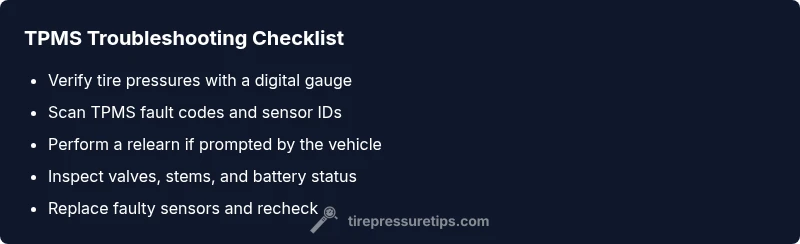
- Check tire pressures when tires are cool and cold to avoid skewed readings.
- Inspect valve stems, sensors, and wheel rims for damage or corrosion.
- Confirm the spare tire’s TPMS state if your vehicle supports it.
- Use a dedicated TPMS scanner or the vehicle’s menu to pull fault codes and sensor IDs.
- Note recent service actions (new tires, wheel rotation, or a sensor replacement) that could trigger a relearn.
Taking these steps helps you separate sensor faults from simple underinflation and sets you up for a clean relearn if needed. This practical approach aligns with Tire Pressure Tips’ emphasis on accurate diagnostics over guesswork.
How TPMS relearn and calibration works
TPMS relearn is the process of teaching the vehicle to recognize each wheel’s sensor anew after work on the tires or wheels. Modern Ram 1500s allow you to trigger a relearn through the vehicle’s settings menu or with a dedicated scan tool. The process typically requires inflating tires to the correct load and then driving for a specified period or following on-screen prompts. If your readings remain inconsistent after a relearn, there may be a sensor fault, a damaged valve stem, or a compromised battery. Ensure the sensors are still within spec and that the RF signal is not being obstructed by alloy wheels, heavy coatings, or wheel weights. Consistency after relearn is the best evidence that you’ve restored the system, and it’s a good sanity check recommended by Tire Pressure Tips.
When to inspect the sensor hardware
If soft resets and relearns do not fix the problem, inspect the hardware: the sensor unit in each wheel, the battery life (if replaceable), the battery contact, and the valve stem integrity. Sensor batteries are not user-replaceable in many modern TPMS units; most technicians replace the entire sensor during service. Look for corrosion on the valve stem, loose wheel weights, or damaged grommets. If you’ve recently damaged a wheel, it’s possible the RF module is also affected. In this scenario, the fault may be more complex and require professional testing with a dedicated tool that can read sensor IDs and battery status. If you feel uncertain, stop and consult a professional to avoid compromising wheel safety. Tire Pressure Tips recommends erring on the side of safety when sensor hardware appears degraded.
Safety and maintenance reminders
Persistent TPMS warnings deserve prompt attention. Driving with significantly underinflated tires increases wear and risk of a blowout; inflating to the correct pressure is critical for safety and fuel economy. Regular maintenance—checking pressures monthly, after temperature changes, and after tire work—helps prevent false triggers. The Tire Pressure Tips team recommends establishing a routine: verify pressures, run a relearn if prompted, and replace any sensor that shows degraded battery life or physical damage. Following these practices reduces the chance of sudden TPMS faults and keeps your Ram 1500 running reliably in all conditions.
Steps
Estimated time: 30-60 minutes
- 1
Prepare tools and safety
Gather a digital tire gauge, a TPMS relearn tool or vehicle scan tool, and a stable work area. Park on a flat surface, engage parking brake, and wear protective gloves. Confirm you have access to the vehicle’s TPMS settings or vendor software to run a relearn.
Tip: Keep tools organized in one case to avoid misplacing sensors during the process. - 2
Verify tire pressures and note anomalies
Check all tires when cold with the gauge. Compare readings to the Ram’s recommended values shown in the door jamb sticker. Note any tires that read consistently different from their neighbors even after inflating.
Tip: Record pressures in a quick notebook for reference during the relearn. - 3
Scan TPMS IDs and fault codes
Connect a TPMS scanner or use the Ram’s onboard tool to pull fault codes and sensor IDs. Identify which wheel sensor might be failing and whether codes indicate a battery issue or a sensor fault.
Tip: Double-check sensor positions to avoid mixing up front and rear wheels. - 4
Perform TPMS relearn or reset
Follow the vehicle prompts or tool instructions to relearn sensors. This usually involves confirming each wheel location and then completing a relearn sequence while driving the required distance or duration.
Tip: If prompts fail, try a vehicle power-on relearn cycle with the ignition in the accessory position. - 5
Replace faulty sensor if needed
If a sensor ID fails to relearn or continues to trigger errors, replace the sensor assembly for the affected wheel. After replacement, perform another relearn to ensure the new sensor is properly recognized.
Tip: Confirm sensor compatibility with your Ram 1500 model and tire size before purchase. - 6
Test drive and confirm sentry status
Drive at a moderate speed for several minutes to complete the relearn cycle. Re-check pressures and monitor the TPMS light. If the light remains, consider professional diagnostic support.
Tip: Take notes on any new codes or readings to share with a technician.
Diagnosis: TPMS warning light on Ram 1500 remains after inflating tires
Possible Causes
- highDead or weak TPMS sensor battery
- mediumDamaged valve stem or failed sensor seal
- mediumTPMS relearn/calibration not completed after tire service
- lowWheel or tire replacement with incorrect sensor configuration
Fixes
- easyCheck all tires with a reliable gauge; verify actual pressures match the setpoint
- easyScan and relearn TPMS with a dedicated tool or vehicle menu
- mediumReplace faulty sensor or battery (if replaceable) and perform a fresh relearn
- mediumInspect valve stems, seals, and wiring; replace as needed and recheck system calibration
Frequently Asked Questions
What is TPMS and what does the warning mean on a Ram 1500?
TPMS stands for Tire Pressure Monitoring System. It warns when a tire is underinflated or when sensors fail. It helps prevent tire damage, uneven wear, and poor fuel economy.
TPMS tells you when a tire is underinflated or a sensor has an issue. It helps you stay safe and save fuel.
How do I relearn TPMS on a Ram 1500?
You can relearn through the vehicle's settings menu or a TPMS scan tool; follow prompts and drive as instructed. Relearn is needed after tire work or sensor replacement.
Open the TPMS relearn menu, follow the prompts, and drive as directed to complete the relearn.
Can a bad TPMS battery be replaced separately?
In most Ram 1500 TPMS sensors, the battery is not replaceable; the whole sensor is replaced.
Usually you replace the entire sensor rather than just the battery.
Is it safe to drive with a TPMS warning?
If the tire appears underinflated or there is a warning, avoid high speeds, check pressure and seek service.
Don’t drive long at high speeds with a warning—check tires and get it serviced.
Why does TPMS reset after tire rotation?
A relearn is usually required after rotating tires because sensors switch positions and need to be re-identified by the system.
Rotating tires can require a fresh relearn to re-identify sensors.
Do I need dealer service for TPMS?
Not always; many issues can be handled by independent shops with TPMS tools. Complex faults may require dealer calibration.
Most TPMS problems can be fixed at a shop with the right tools; some tricky cases need the dealer.
Watch Video
What to Remember
- Check TPMS status promptly after warnings
- Use a TPMS relearn tool to reset the system
- Replace faulty sensors rather than masking warnings
- Regularly verify tire pressures to prevent false alerts