Tire Pressure Sensor Calibration: A Practical Guide for 2026
Learn how to calibrate TPMS sensors, when it’s needed, tools and steps, plus best practices to keep readings accurate and safe in 2026.


By the end of this guide you will be able to calibrate your tire pressure sensor system (TPMS) and verify accurate readings after maintenance. You’ll know when calibration is needed, what tools to use, the exact steps to reset or relearn sensors, and how to confirm that the system reports the correct tire pressures across all wheels.
Why TPMS calibration matters
TPMS sensors provide real-time tire pressure data and alerts, but only if they are calibrated to reflect the current state of your tires. According to Tire Pressure Tips, proper calibration ensures the sensor learnings align with actual tire pressures, reducing false warnings and improving safety. When calibration is off, you may see inconsistent readings across wheels, or the system may warn even when pressures are correct. This misalignment is particularly common after tire service, sensor replacement, or significant changes in temperature and altitude. In modern vehicles, TPMS includes two main approaches: direct sensing using mounted transmitters and indirect estimation using wheel-speed data. Calibration reconciles these methods with your vehicle’s target pressure specs, so you can trust the readouts as you drive. The Tire Pressure Tips team emphasizes patience and accuracy—small measurement differences can affect fuel economy, tire wear, and handling. By calibrating, you’re helping the system reflect reality, not just a baseline from the shop floor.
When calibration is required
Calibration is typically needed after services that touch TPMS, such as tire rotation, tire replacement, or sensor replacement. If you notice a persistent TPMS warning light, or if one wheel shows a noticeably different pressure from the others after service, a relearn may be necessary. Some vehicles relearn automatically when you drive, while others require a manual step via the vehicle’s infotainment screen or a scan tool. Temperature fluctuations can also affect readings, so consider calibrating after a warm-up or after driving in extreme heat or cold. The goal is to align the system with your current tire-pressure targets and vehicle configuration, ensuring the light and readouts reflect reality rather than a stale baseline. The Tire Pressure Tips team recommends checking the owner’s manual for your exact model’s relearn procedure and following it closely to avoid false warnings or missed alerts.
Tools and environment
To calibrate TPMS reliably, gather these essentials:
- Digital tire pressure gauge — required for accurate baseline pressures
- Air compressor or inflator — used to adjust pressures to target levels
- Vehicle owner’s manual — contains model-specific relearn steps
- TPMS relearn tool or access to vehicle relearn procedure — may be required for some cars
- Wheel chocks — keeps the vehicle secure while you work
- Clean rag — for valve stem cleanup and basic tidying
Tip: perform calibration in a shaded, level area with the tires cool to ambient temperature for consistent readings.
Understanding relearn approaches across vehicles
TPMS relearn methods vary by manufacturer and sometimes even by trim level. Some vehicles support automatic relearn simply by driving after correcting pressures, while others require a deliberate sequence via the infotainment screen or an aftermarket scan tool. Direct-sensor systems store data on the individual wheel sensors and usually need a deliberate relearn, whereas indirect systems rely on the vehicle’s learning algorithms. The Tire Pressure Tips team emphasizes checking your specific model’s procedure early, as using the wrong method can leave the system in an inconclusive state or trigger false warnings.
Troubleshooting common issues after calibration
If readings still seem off after a relearn, investigate common culprits: a weak or failed sensor battery, a damaged sensor, a slow leak in a tire, or a valve-stem issue. Ensure that all tires are inflated to the correct targets before concluding a relearn; a single outlier can skew the system’s learning. If the warning light persists, verify that the wheel positions match the vehicle’s sensor IDs (some systems swap IDs when tires are rotated). Finally, temperature changes, altitude shifts, and tire wear can gradually drift readings again—recalibrate as part of your regular maintenance cycle.
Maintenance and best practices after calibration
After calibration, keep monitoring tire pressures regularly and recheck after any tire service, rotation, or replacement. Use a consistent gauge and record the baseline figures to compare against after changes. Temperature swings can cause short-term pressure changes, so avoid relying on readings taken during extreme heat or cold. The Tire Pressure Tips team recommends scheduling a quick check every few weeks during season transitions and confirming that the TPMS warning lights are quiet and stable on the drive to your next destination.
Tools & Materials
- Digital tire pressure gauge(Calibrated for accuracy; use the same gauge for baseline readings)
- Air compressor or tire inflator(Ensure clean air and safe pressure delivery)
- Vehicle owner’s manual(Look up your model’s relearn procedure)
- TPMS relearn tool or access to relearn procedure(Some cars require a scan tool or dealer tool)
- Wheel chocks(Chock opposite wheels for safety)
- Clean rag(Optional for valve stems and surfaces)
Steps
Estimated time: 45-75 minutes
- 1
Prepare the vehicle and safety gear
Park on a flat surface and apply the parking brake. Place wheel chocks on the opposite tires to prevent rolling. Open the hood to access the air supply if needed and gather your tools.
Tip: Always work in a well-lit area and wear eye protection when using air tools. - 2
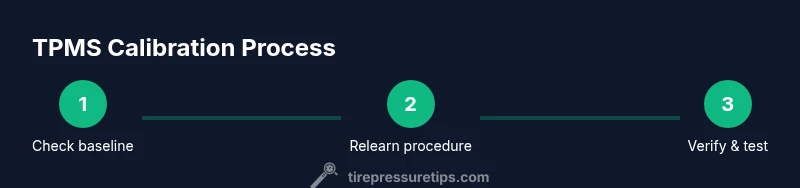
Measure baseline pressures
Before changing anything, measure each tire’s current pressure with your digital gauge and record the values. Compare to the vehicle’s recommended pressures in the door jamb or owner’s manual.
Tip: Use the same gauge throughout the process for consistency. - 3
Select relearn method
Consult the owner’s manual or a trusted TPMS guide to determine whether your car uses automatic relearn, manual relearn via the infotainment system, or a scan-tool relearn.
Tip: If in doubt, choose the manual relearn path to ensure you’re following the correct steps. - 4
Initiate the relearn procedure
Follow the vehicle-specific steps or tool prompts to start the relearn cycle. Ensure all tires are inflated to target pressures during the relearn.
Tip: Don't rush; some steps require waiting periods for sensors to register. - 5
Verify after relearn
Check the TPMS display again and confirm that the readouts match the target pressures. Listen for warning lights to ensure they stay off.
Tip: Drive a short distance to allow the system to validate the new readings. - 6
Document and finalize
Record the final pressures and notes about the relearn method used. If any warning lights return, revisit steps or consult professional support.
Tip: Keep a maintenance log for future reference and seasonal checks.
Frequently Asked Questions
Do TPMS sensors require calibration after tire rotation?
Yes, many vehicles require a relearn after tire rotation to ensure the sensors are associated with the correct wheels and the readings are accurate.
Most cars need a relearn after rotation to keep TPMS readings accurate.
Can I calibrate TPMS myself without tools?
Some vehicles support automatic relearn simply by driving after correcting pressures, but many require a relearn procedure via the vehicle menu or a scan tool.
Some cars relearn automatically; others need a manual relearn with a tool.
How long does TPMS calibration take?
A typical relearn takes about 30 to 60 minutes, depending on the vehicle and whether a scan tool is needed.
Most relearns take around half an hour to an hour.
What if the TPMS warning stays on after calibration?
If a warning remains, recheck tire pressures, verify sensor IDs, and consult your vehicle manual or a professional for sensor health checks.
If warnings persist, recheck pressures and IDs, and seek professional help if needed.
Are all vehicles calibratable via relearn?
Most modern vehicles support some form of relearn, but the exact method varies by make and model. Some require dealer tools.
Most cars can relearn, but methods vary and some need a dealer tool.
Watch Video
What to Remember
- Calibrate after relevant TPMS service to restore accuracy.
- Follow model-specific relearn steps for reliable results.
- Verify readings post-relearn and drive to complete learning.
- Maintain a simple maintenance routine to sustain TPMS reliability.