Tire Pressure Monitoring System (TPMS) for Hyundai Elantra: A Practical Guide
Learn how the Tire Pressure Monitoring System (TPMS) works on Hyundai Elantra, interpret warnings, reset after service, and maintain proper tire pressure for safety and efficiency.


A Tire Pressure Monitoring System (TPMS) on Hyundai Elantra continuously monitors each tire's air pressure and alerts you with a dashboard warning if any tire drops below the recommended level. It uses direct or indirect sensors and can trigger ABS/ESP indicators. You can reset TPMS after tire service, replace faulty sensors, and maintain proper pressure per the door placard.
How the tire pressure monitoring system Hyundai Elantra works
The tire pressure monitoring system Hyundai Elantra is designed to alert you when one or more tires are underinflated, reducing the risk of poor handling, increased tire wear, and reduced fuel efficiency. In most Elantra configurations, the system relies on sensors to report tire pressure data to the vehicle’s control modules. If a sensor detects a pressure that falls outside the recommended range, a warning message appears on the dashboard, often accompanied by a warning light. According to Tire Pressure Tips, understanding what TPMS is telling you—and why it matters—helps drivers avoid risks associated with underinflated tires. The overall goal is simple: maintain the manufacturer-recommended tire pressures to keep the vehicle handling predictable, improve fuel economy, and extend tire life. This section outlines the basics so you can confidently read TPMS alerts when driving your Hyundai Elantra, and know the practical steps to correct a low-pressure condition.
Direct TPMS vs Indirect TPMS: What Hyundai Elantra Uses
Hyundai Elantra models can employ either direct or indirect TPMS, depending on year, trim, and market. Direct TPMS uses wheel-mounted sensors that report real pressure values to the car’s computer, while indirect TPMS estimates pressure by comparing wheel speeds from ABS sensors. Direct systems provide a precise PSI reading for each tire, whereas indirect systems rely on changes in rotation speed to infer a pressure drop. The optimal choice for your vehicle depends on the hardware installed by the factory, but both systems aim to alert you before a tire becomes dangerously underinflated. In practice, if your TPMS warns, you should check all tires with a gauge and adjust to the recommended specification on the door placard, then monitor the warning behavior as you drive.
Reading TPMS warning lights and messages
TPMS warnings cover a few common scenarios. A steady warning icon on the dashboard typically means at least one tire is below the recommended pressure. A flashing TPMS indicator may indicate a malfunction or sensor issue rather than just low pressure. In some cases, a warning can occur due to rapid temperature changes, a recent tire repair, or sensor battery drain. To avoid misinterpretation, compare the live TPMS readings (if your model displays them) with the official door placard values and perform a cold-pressure check. If the warning persists after inflating to spec, the issue may involve a faulty sensor or a need for relearn.
Proper tire inflation and its impact on TPMS readings
Maintaining correct tire pressure starts with knowing the recommended values for your Hyundai Elantra, usually listed on the door jamb placard near the driver’s door. These values specify a cold-inflation pressure for the front and rear tires. Ambient temperature, speed, and driving conditions can affect readings, so it’s best to check tires when they’re cold and compare against the placard. Underinflated tires wear unevenly, reduce fuel economy, and can trigger TPMS alerts; overinflated tires can lead to harsher ride and increased risk of damage. Regular checks using a quality gauge help ensure consistent TPMS behavior and road safety.
Resetting TPMS after tire service or inflation
After inflating tires or performing service on a tire, many Hyundai Elantra models require a TPMS relearn or reset. This process re-syncs the system with the current tire pressures and resets the warning thresholds. Procedures vary by model year and trim, but common methods include using the vehicle’s settings menu to trigger a relearn, or pressing a dedicated TPMS reset button located under the dash or in the glove box. Always refer to the owner’s manual for model-specific steps, as an incorrect reset can keep the warning active.
Troubleshooting common TPMS issues and sensor maintenance
If a TPMS warning remains on after inflation to the proper level, there may be a sensor fault, a battery issue, or a wiring problem. Damaged valve stems, corroded sensors, or dead batteries are typical culprits. In some cases, a tire repair can trigger a TPMS fault, especially if the wheel weight or sensor was disturbed. Regular maintenance includes inspecting sensors during tire changes and ensuring proper relearn procedures are followed after wheel work. If you notice intermittent warnings or inconsistent readings, consult a tire service professional to diagnose sensor health and battery status.
Safety considerations and when to seek professional TPMS service
TPMS is a safety feature designed to keep you aware of unsafe tire pressures. If warnings persist or you notice uneven tire wear, erratic vehicle behavior, or a non-resettable light, schedule service promptly. Prolonged driving with underinflated tires increases the risk of blowouts and reduces braking performance. Regularly verifying pressures, especially before long trips or extreme temperature changes, is a practical habit. Tire Pressure Tips recommends treating TPMS diagnostics as part of routine maintenance and seeking professional help for sensor replacement or systemic faults.
Tools & Materials
- Owner's manual (Hyundai Elantra)(For model-specific TPMS details and reset instructions.)
- Tire pressure gauge (digital preferred)(Use cold tires for an accurate reading; verify against placard values.)
- Flat, level testing surface(Safety first; avoid working on inclined surfaces or busy roads.)
- Replacement TPMS sensors (if needed)(Only if a sensor is diagnosed as faulty or its battery is dead.)
- Otherwise optional: Service manual or access to Hyundai service portal(Helpful for advanced relearn procedures beyond basic resets.)
Steps
Estimated time: 20-40 minutes
- 1
Check cold tire pressures
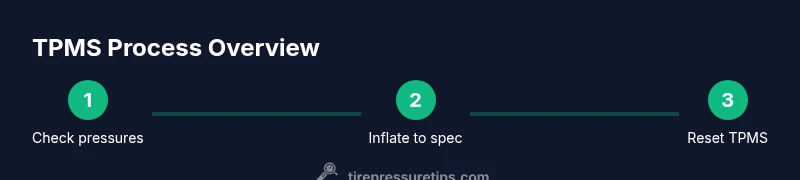
With tires cold, use a reliable tire gauge to measure the pressure on all four tires. Compare each value to the door placard on the driver’s side door jamb. If any tire is below the recommended PSI, plan to inflate before proceeding.
Tip: Record readings for reference and check pressure again after driving 3-5 miles. - 2
Inflate to the recommended specification
Inflate each tire to the cold-vehicle PSI specified on the placard. Avoid over-inflation, which can cause a harsh ride and uneven wear. If you use a near-max tire pressure, recheck after a short drive.
Tip: Use a trusted gauge and re-check after at least 3 miles of driving. - 3
Reset or relearn TPMS
If your Elantra requires a relearn, access the vehicle’s settings menu or locate the TPMS reset button and follow the on-screen prompts or manual instructions. This step re-syncs the system with the current tire pressures.
Tip: If you can’t locate the reset option, consult the owner’s manual or dealer for model-specific steps. - 4
Drive to verify the reset
Drive for 5-10 miles at normal speeds to allow the TPMS to complete its self-check cycles. Watch for the TPMS warning light to stay off once the tires are properly inflated.
Tip: If the light returns, recheck pressures and consider sensor inspection. - 5
Inspect sensors or replace if needed
If warnings persist, inspect the valve stems and wheel sensors for damage or corrosion. Replace batteries in direct TPMS sensors when necessary or replace faulty sensors through a professional service.
Tip: Do not attempt to disassemble sensor components yourself unless trained. - 6
Schedule professional service for stubborn issues
Persistent TPMS faults typically require diagnostic tools to relearn or replace sensors. A tire service professional can confirm sensor health, battery status, and wiring integrity.
Tip: Document warning patterns to share with your technician.
Frequently Asked Questions
What is TPMS in Hyundai Elantra and how does it work?
TPMS in the Hyundai Elantra monitors tire pressure to warn you if a tire drops below the recommended level. It can be direct (sensor-based) or indirect (estimates from wheel speed). The system aims to improve safety, fuel efficiency, and tire longevity by ensuring proper inflation.
TPMS in the Elantra checks your tire air pressures and warns you if any tire is low. It can use sensors or wheel speed data to estimate pressure, helping keep you safe and efficient. If you hear a warning, check pressures against the placard.
Why did my TPMS light come on after inflating tires?
Sometimes the TPMS light stays on if a tire was underinflated or if a reset is required after changing pressures. Temperature changes and recent tire service can also trigger a warning. Recheck all pressures and perform a relearn if your model requires it.
The light can stay on if a tire is still low or if a reset is needed after changing pressure or temperature. Recheck pressures and relearn if required.
How do I reset TPMS on Hyundai Elantra?
Reset procedures vary by year and trim. Generally, you use the vehicle’s settings menu or a TPMS reset button to relearn current pressures after inflating. Always consult the owner’s manual for model-specific steps.
Use the car’s menu or a reset button to relearn current pressures, following your manual for exact steps.
Is TPMS maintenance necessary if I rarely drive long distances?
Yes. Even with low mileage, tires can lose pressure over time. Regular checks ensure safety and prevent unexpected warnings. TPMS maintenance remains important for consistent tire performance.
Even with little driving, check tire pressure regularly to avoid warnings and unsafe pressures.
Can TPMS sensors fail and how can I tell?
Sensors can fail due to battery depletion, damage, or corrosion. A persistent warning after inflation usually signals a sensor issue. A professional diagnostic can confirm sensor health and battery status.
Sensors can fail from battery or damage. If warnings persist after inflating, get a diagnostic test.
Watch Video
What to Remember
- Check cold pressures against the placard before driving.
- Know whether your Elantra uses direct or indirect TPMS for accurate troubleshooting.
- Reset TPMS after tire service or inflation to avoid false warnings.
- Drive a short distance to allow TPMS to relearn the current pressures.
- If warnings persist, inspect sensors or seek professional service promptly.