Discount Tire Pressure Sensor Warranty Guide
Explore discount tire pressure sensor warranty terms, how they differ from OEM protections, and practical steps to maximize coverage when buying TPMS sensors at a discount.


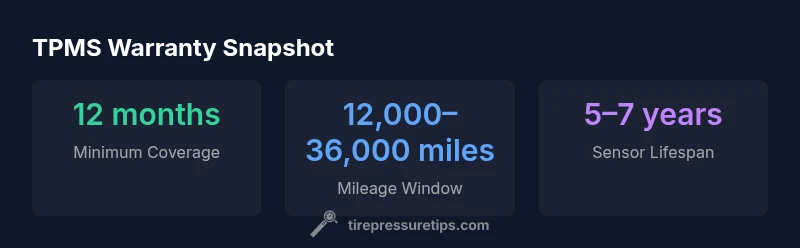
Discount TPMS sensor warranties vary by retailer and sensor type, but most programs cover manufacturing defects for about 12 months or up to 12,000–36,000 miles. Some retailers include installation labor, while others cover only the sensor unit. Discounted sensors from third-party sellers may have shorter coverage or require professional installation, so always read the terms before purchase.
Understanding discount tire pressure sensor warranty
Discount TPMS sensor warranties vary by retailer and sensor type, but most programs cover manufacturing defects for about 12 months or up to 12,000–36,000 miles. Some retailers include installation labor, while others cover only the sensor unit. Discounted sensors from third-party sellers may have shorter coverage or require professional installation, so always read the terms before purchase. For drivers, this means you should compare the warranty duration, what events trigger coverage (defects vs. wear), and whether any labor or mounting fees are included. According to Tire Pressure Tips, warranty terms can vary widely even among reputable retailers, so diligence is essential.
How TPMS sensor warranties typically work
TPMS sensors monitor tire pressure and alert you to under-inflation. Warranties for these sensors typically cover manufacturing defects that cause the sensor to fail or report incorrect pressure. Coverage is usually limited to the sensor itself, not to tires, wheels, or TPMS system components elsewhere on the vehicle. Terms vary widely by seller, and OEM sensors often carry manufacturer-based warranties while aftermarket sensors may rely on retailer terms. When you buy discount TPMS sensors, be aware that some warranties are pro-rated or require proof of installation by a qualified technician.
Discounted vs. OEM vs. aftermarket sensors: what changes warranty
Discounted sensors can come from OEM suppliers at a discount or from aftermarket manufacturers. OEM TPMS sensors generally follow the warranty patterns set by the vehicle manufacturer, which can include longer terms or stricter coverage for defects. Aftermarket sensors may have more variable terms that depend on the retailer or distributor. When you purchase discount TPMS sensors, confirm whether the warranty applies to the sensor only or to the broader TPMS system, and whether calibration or reprogramming is required to maintain coverage.
Common warranty terms you should expect
Most TPMS warranties cover defects in materials or workmanship for a defined period, often ranging from 12 months to a few years, or a mileage-based limit. Watch for exclusions such as improper installation, physical damage, or non-compliance with installation guidelines. Some programs require you to retain original receipts and register the sensor with the retailer. If the sensor is replaced under warranty, ask about the process for receiving a replacement unit and whether labor costs are included.
Steps to evaluate and claim a TPMS warranty on a discounted sensor
- Identify sensor type (OEM or aftermarket) and retailer. 2) Gather proof of purchase, serial numbers, and installation date. 3) Read the warranty terms carefully to confirm coverage scope and duration. 4) If a defect occurs, file a claim per the retailer’s process and keep all correspondence. 5) Document any labor performed and ensure you follow calibration requirements after installation. This diligence helps prevent claim denial and speeds up resolution.
Practical tips to maximize value and avoid common pitfalls
- Compare warranty duration, coverage scope, and whether labor is included. - Verify if calibration or reprogramming is required after installation. - Keep receipts and warranty documents in a labeled folder. - Prefer retailers with clear transferability if you plan to sell the vehicle. - Be wary of ultra-short warranty windows that barely cover initial defects.
Bottom line: shopping smart for TPMS warranties
When evaluating discount TPMS sensors, prioritize warranty terms that cover defects for a reasonable period and include installation if possible. Read the fine print, compare multiple retailers, and keep records. The Tire Pressure Tips team recommends building a simple checklist to quickly compare terms before purchase.
Typical warranty structures for TPMS sensors including OEM vs aftermarket and labor considerations
| Aspect | Typical Coverage | Typical Term | Notes |
|---|---|---|---|
| Sensor Type | OEM TPMS sensor defects only | 12 months | Manufacturer-based terms may apply |
| Sensor Type | Aftermarket sensor defects + some wear | 12-36 months | Coverage varies by seller |
| Labor Coverage | Usually not included | N/A | Some promotions cover installation |
| Transferability | Often transferable with the vehicle | Varies by program | Check terms |
Frequently Asked Questions
What does a discount TPMS sensor warranty typically cover?
Most warranties cover manufacturing defects in the sensor itself. Installation labor may be included or excluded depending on the retailer. Always read the terms for specifics.
Most warranties cover sensor defects; installation labor may be included or not, depending on the retailer.
Does the warranty differ between OEM and aftermarket TPMS sensors?
Yes. OEM sensors usually carry manufacturer-based warranties, while aftermarket sensors vary by retailer. Confirm what’s covered and for how long before purchasing.
OEM sensors often have stricter warranty terms; aftermarket ones vary; check the retailer’s terms.
Can I transfer the warranty if I replace the car?
Some warranties are transferable with the sensor to a new owner, but terms differ by program. Verify transfer rules before buying.
Some warranties transfer with the sensor, but check the exact terms.
What should I do to file a warranty claim?
Keep the purchase receipt, sensor serial numbers, and installation proof. Follow the retailer’s claim process and provide requested documentation.
Keep receipts and sensor numbers, then follow the retailer’s claim steps.
Are there common exclusions I should know about?
Yes. Exclusions often include wear, damage from improper installation, and non-compliant systems. Read the policy for a full list.
Wear or improper install can exclude coverage; read the policy.
“Warranty terms for TPMS sensors can be confusing; always compare terms, read the fine print, and document installation to ensure you’re covered.”
What to Remember
- Evaluate warranty terms before buying discounted sensors.
- OEM and aftermarket sensors have different warranty frameworks.
- Keep receipts and document installation for claims.
- Check whether labor and calibration are covered.
- Compare multiple retailers to maximize value.