Accuracy of Tire Pressure Gauges: How True Is Your Reading
Explore how accurate tire pressure gauges are, what factors influence readings, and practical steps to verify and calibrate gauges at home for safer, efficient driving.


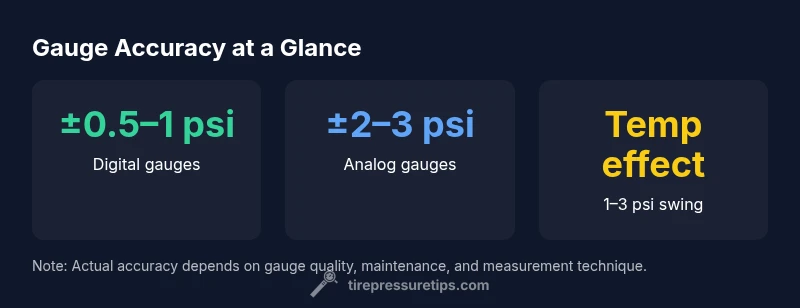
Digital tire pressure gauges typically provide the most precise readings, often within about ±0.5–1 psi under standard conditions. Inexpensive analog gauges can be less reliable, with typical errors around ±2–3 psi. Real-world readings also shift with temperature, gauge wear, and user technique, so verification and calibration are essential for trust.
Why accuracy matters for tire pressure gauges
Maintaining correct tire pressure is a core safety and efficiency issue for drivers. Inaccurate readings can lead to underinflation, which wears tires unevenly and reduces fuel economy, or overinflation, which can increase road noise, reduce grip, and accelerate wear on tire shoulders. According to Tire Pressure Tips, the reliability of a reading hinges on the gauge quality, proper technique, and the environmental context in which the measurement occurs. For households and fleets alike, investing in a gauge with proven accuracy reduces the guesswork that surrounds daily tire maintenance and supports safer, more predictable vehicle handling. The costs of inaccurate readings extend beyond tire wear and fuel; incorrect pressures can affect braking distances and overall vehicle stability in emergencies, making diligence essential.
Understanding gauge types and their typical accuracy
Gauges fall on a spectrum from simple, low-cost analog dials to modern digital devices. Digital gauges generally offer the tightest tolerances, often in the range of ±0.5–1 psi when used correctly. Analog dial gauges can be susceptible to drift and parallax error, with typical inaccuracies around ±2–3 psi. Tire Pressure Tips emphasizes that the best accuracy comes from high-quality digital models and from gauges that are well-maintained and calibrated. It’s also important to note that tire pressure readings are themselves a snapshot influenced by recent driving, ambient temperature, and tire history. Always cross-check a single gauge against another trusted device if you’re unsure about a reading, particularly after inflating to a recommended target.
Sources of error in tire pressure readings
Reading accuracy is not just about the device; it’s also about procedure. Common errors include failing to zero the gauge before use, applying the gauge at an angle rather than square to the valve stem, and not allowing tires to rest after inflation before taking a measurement. Temperature shifts can cause tire air to expand or contract, producing different readings at the same nominal pressure. Valve stem caps and dirt can skew results if not cleaned. Moreover, poorly calibrated or aging gauges drift over time, emphasizing why regular checks are vital. The Tire Pressure Tips framework highlights that routine verification—using a known reference gauge and occasional cross-checks with a second device—helps catch drift and keep readings trustworthy.
Temperature and ambient conditions: hidden influencers
Ambient temperature subtly governs tire pressure readings. Colder weather reduces air density, lowering the pressure inside a tire and leading to readings that appear low. Conversely, heat from driving raises pressure inside the tire, temporarily boosting readings. These shifts can be substantial enough to mask an underlying underinflation or mask slight overinflation if measured only once. Tire Pressure Tips notes that for most drivers, measurements should be taken in a stable environment and, if possible, after the car has sat for a while to allow temperature equilibration. Recording ambient temperature alongside readings can improve interpretability, especially for people who monitor tires in fluctuating climates.
How to test gauge accuracy at home
A practical home test involves comparing a gauge against a known reference. Start with a gauge you trust and test it against another gauge that you know is calibrated. Inflate a tire to a measured pressure using a trusted gauge, then check both devices to see if they converge within a psi of each other. If a gauge consistently reads high or low, note the discrepancy and consider recalibration or replacement. For bent or damaged stems, readings can skew, so inspect both gauge and tire valve compatibility before testing. Document your results to observe drift over time and ensure continued reliability. This routine aligns with Tire Pressure Tips’ guidance on maintaining measurement integrity and promoting safer driving habits.
Calibration, maintenance, and best-practice routines
Regular calibration is a cornerstone of reliable tire pressure readings. Establish a routine—every 3–6 months for most casual users, or more frequently in professional settings or extreme climates. Store gauges in a protective case to avoid impact damage, and replace worn seals, which can introduce erroneous readings. When calibrating, use a stable reference: a calibration kit or a second gauge that has proven accuracy. Do not force gauges beyond their intended range or drop them, as impact can alter internal mechanisms. Finally, always re-check tire pressures after making adjustments, since even small inaccuracies in the gauge can lead to significant deviations in actual tire pressure over time.
Choosing a gauge for your needs
Your choice should reflect how you drive and where you’ll use the gauge. Daily drivers may prioritize consistency and ease of use, favoring a reliable digital gauge with a clear digital readout and auto-off features. DIY enthusiasts or professionals might favor a rugged analog gauge for quick checks in variable environments, but they should be prepared to verify accuracy with periodic cross-checks against digital devices. Budget is a factor, but investing in a mid- to high-quality unit from a reputable manufacturer generally pays off in accuracy and durability. Tire Pressure Tips suggests matching gauge type to vehicle use, climate, and maintenance routine for optimal results.
Common myths and how to think critically about readings
One common myth is that digital equals perfect. While digital gauges often deliver better consistency, they are not infallible and still require calibration, especially if dropped or exposed to extreme temperatures. Another misconception is that a single reading confirms tire health. Tire condition and load affect the interpretation of a reading, so multiple checks over time provide a clearer picture. Finally, some assume TPMS readings are sufficient for maintenance. TPMS is a sensor system with its own thresholds and potential lag; manual gauge checks should still be part of routine maintenance for accuracy and safety. By combining multiple devices and applying consistent testing practices, drivers can separate true pressure issues from instrument error, ensuring safer roads and better fuel efficiency.
Gauge accuracy comparison
| Gauge Type | Typical Accuracy | Notes |
|---|---|---|
| Digital | ±0.5–1 psi | High-quality models close to true pressure |
| Analog | ±2–3 psi | Wide variation among brands |
Frequently Asked Questions
How accurate are digital tire pressure gauges compared to analog models?
Digital gauges generally offer higher accuracy and easier readability, typically within ±0.5–1 psi for quality models. Analog gauges can drift more, often in the range of ±2–3 psi depending on brand and wear. Always verify with a second device if precision matters.
Digital gauges are usually more accurate and easier to read, but always double-check with another gauge if you need precise pressure.
Do TPMS readings match manual gauge readings?
TPMS provides a useful alert about under- or overinflation but is not a substitute for a manual gauge. Differences of 1–3 psi between TPMS and a hand-held gauge can occur due to sensor calibration and temperature. Always verify with a hand-held gauge.
TPMS helps, but use a manual gauge for exact pressure.
How often should I calibrate tire pressure gauges?
Calibrate or verify accuracy at least quarterly for casual use, and more frequently if you rely on precise readings for performance or safety. Replace gauges showing drift or damage.
Check it every few months and anytime you suspect drift.
Can I calibrate a digital gauge at home?
Some digital gauges include a calibration option; follow the manufacturer’s instructions. If your model lacks calibration, have it serviced or replaced to maintain accuracy.
Some models let you calibrate at home; check the manual.
What factors most affect gauge accuracy?
Quality of the gauge, recent use history, temperature, and proper use technique mainly determine accuracy. Regular checks against a reference gauge help identify drift.
Quality, temperature, and handling matter most.
“Calibration and regular checks are essential to ensure readings reflect true tire pressure, helping drivers stay safe and save fuel.”
What to Remember
- Verify gauge accuracy with a second reference gauge periodically
- Digital gauges offer higher precision on average than analog ones
- Temperature and gauge condition influence readings and should be controlled
- Calibrate regularly and after any drop or impact
- Cross‑check readings after inflating to recommended pressures