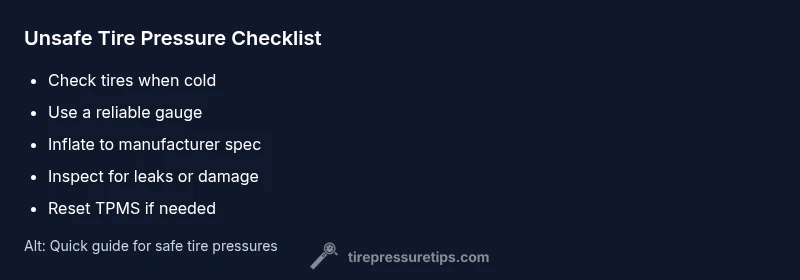
Unsafe Tire Pressure: Quick Fixes for Drivers
Urgent guidance on diagnosing and correcting unsafe tire pressure to protect safety, fuel efficiency, and tire life. Learn practical checks, fixes, and prevention with Tire Pressure Tips.


Unsafe tire pressure is the most common factor behind sudden handling changes and tire failures. Check your tires now: use a reliable gauge, compare against vehicle manufacturer recommendations, and adjust to the correct range. If you’re seeing warning lights or abnormal wear, address the issue immediately and avoid driving long distances with wrong pressure.
What unsafe tire pressure means for safety
Unsafe tire pressure affects more than just the feel of the ride. Underinflation can cause the tire to flex and heat up, increasing the chance of a blowout at highway speeds. Overinflation reduces the tire's contact patch, diminishing grip and making you more vulnerable to road hazards. The Tire Pressure Tips team's practical guidance emphasizes that 'unsafe tire pressure' is a sign you should address immediately. Regularly checking pressures against the vehicle's recommended range helps maintain predictable handling, stable braking, and even wear. If you notice the TPMS warning light, or if a tire appears visibly low (or high) when parked, treat it as urgent. In any case, correcting pressure should be your first response before continuing a trip, especially on long drives or in harsh weather. Always ensure tires are cold before measuring and rechecking after a drive.
How unsafe tire pressure impacts handling and safety
When tires run too low, the sidewalls flex excessively, causing sluggish steering, longer stopping distances, and uneven tread wear. Excessive pressure can make the ride feel harsh and reduce the tire’s ability to grip irregular surfaces, such as potholes or wet roads. These dynamics increase the risk of skidding, hydroplaning, or a blowout in critical moments. The result is a higher probability of loss-of-control events, especially at highway speeds or in rain and snow. The Tire Pressure Tips team stresses that safety hinges on keeping every tire within the manufacturer-specified range across all speeds and loads. Even small deviations can accumulate into meaningful safety gaps over time. Regular checks are a simple, high-impact habit that protects you and others on the road.
How to check tire pressure accurately at home
Start with a cold tire check, ideally before driving or after the car has sat for several hours. Remove the valve cap and attach a reliable tire pressure gauge. Note the reading and compare it to the vehicle’s recommended cold pressure printed on the door jamb label or owner’s manual. If the pressure is low, inflate in small increments until you reach the target. If it’s high, release air in small amounts and re-check. Don’t forget to re-install the valve caps and recheck all four tires; TPMS readings can lag behind actual pressure, especially after temperature shifts. After inflating, drive a short distance (3–5 miles) and re-check to confirm stability.
Common causes of unsafe tire pressure
Temperature changes are a major driver of pressure variation; a cold start can feel different after a warm drive. Slow leaks from valve stems, bead seating, or punctures can quietly reduce pressure over days. A failing or miscalibrated TPMS sensor can also misreport readings, masking an unsafe condition. Improper tire maintenance, such as forgetting to check spare or neglecting wheel valve stems during seasons, contributes to inconsistent pressures. The mix of environmental factors and wear patterns makes regular verification essential.
Quick fixes you can perform safely today
If you notice a low tire before a trip, inflate it to the recommended cold pressure. Inspect the tire for punctures, nails, or obvious damage around the tread and sidewalls; if you find damage, avoid driving on it and seek professional repair or replacement. If the TPMS warning persists after inflation, perform a TPMS reset following the vehicle manual and monitor readings; if it remains inconsistent, have the TPMS sensor inspected or replaced by a tire professional.
Prevention: maintenance routines to keep tires in spec
Make tire pressure checks a monthly habit, plus before long trips and after significant temperature swings. Always use a proper gauge and record readings so you can spot trends. Pair pressure checks with tread depth inspection and wheel alignment checks to ensure even wear. Finally, keep the door jamb placard with your vehicle specs handy and verify them whenever you replace tires or change tire sizes.
Steps
Estimated time: 15-25 minutes
- 1
Park safely and gather tools
Find a flat, safe spot and collect a tire pressure gauge, the vehicle’s door jamb label, and any repair kit you might need. Ensure the tires are cold before starting, as driving heats air and skews readings. This step sets the foundation for accurate measurements.
Tip: Lock the car and use hazard lights if you’re roadside. - 2
Read the target pressure
Locate the recommended cold tire pressure on the door jamb sticker or owner's manual for each axle. Note both front and rear values if the car has different specs. Record these numbers so you don’t guess.
Tip: Pressure can vary by load, but starts with the base spec. - 3
Take the measurement
Remove the valve cap, press the gauge onto the valve stem firmly, and read the value immediately. If your gauge isn’t digital, repeat with a second gauge to confirm. Document the reading for all four tires.
Tip: Make sure the valve stem is clean for an accurate seal. - 4
Adjust to spec
If a tire is low, inflate in small increments and recheck until you reach the target. If overinflated, release air slowly and recheck. Don’t exceed the recommended cold pressure.
Tip: Check after you drive 3–5 miles to confirm stability. - 5
Recheck and seal
Replace valve caps securely and recheck all four tires. Confirm that each tire matches the spec. Replace any visibly damaged valve caps if needed.
Tip: Keep caps on to prevent dirt entry. - 6
Test drive and verify
Drive a short distance and recheck tire pressures to ensure they remain within spec after warming up. Take note of any persistent TPMS alerts and address promptly.
Tip: If readings drift, consider professional inspection.
Diagnosis: TPMS warning light on, or tires feel under- or overinflated, or handling seems off
Possible Causes
- highTemperature changes causing air pressure fluctuation
- mediumSlow leaks from valve stems, punctures, or bead leaks
- lowTPMS sensor fault or calibration drift
Fixes
- easyInflate tires to the recommended cold pressure using a reliable gauge
- mediumInspect tires, valves, and seals for leaks; repair or replace damaged components
- mediumReset or calibrate TPMS per manual; replace faulty sensors if readings stay wrong
Frequently Asked Questions
What counts as unsafe tire pressure?
Unsafe tire pressure means any tire is outside the manufacturer’s recommended range. Both underinflation and overinflation increase risk, but underinflation is more likely to cause heat buildup and blowouts. Regular checks help keep you safe.
Unsafe tire pressure means a tire is not within the recommended range; check both underinflation and overinflation to stay safe.
How often should I check tire pressure?
Check pressures monthly and before long trips, especially after temperature changes. Always inspect when you notice handling changes or a TPMS warning light.
Check tire pressure monthly and before long trips, especially if the weather changes.
Can TPMS be faulty?
Yes. TPMS can misreport after tire work, valve changes, or temperature shifts. If a TPMS reading seems off, verify with a gauge and consider a sensor check if the issue persists.
TPMS can misreport; verify with a gauge and seek professional help if readings don’t match actual pressure.
What should I do if I notice a nail in a tire?
If you observe a puncture or nail, don’t drive long distances. Check pressure, and consult a tire professional for repair options; some punctures may require a patch or replacement.
If you see a nail, don’t drive far—see a professional for repair or replacement.
Is it safe to drive with a TPMS warning?
Driving with a TPMS warning is risky. Pull over safely, recheck pressures, and inflate to spec. If the warning persists, seek professional inspection promptly.
No—if TPMS warns, recheck pressure and seek help if it stays on.
What to Remember
- Check cold pressures monthly, and before long trips.
- Use a reliable gauge and verify against OEM specs.
- Address leaks or damaged valves promptly.
- Recalibrate TPMS if readings don’t align with actual pressure.